|
Gay Wisdom for Daily Living brought to you by White Crane Institute ͏ ͏ ͏ ͏ ͏ ͏ ͏ ͏ ͏ ͏ ͏ ͏ ͏ ͏ ͏ ͏ ͏ ͏ ͏ ͏ ͏ ͏ ͏ ͏ ͏ ͏ ͏ ͏ ͏ ͏ ͏ ͏ ͏ ͏ ͏ ͏ ͏ ͏ ͏ ͏ ͏ ͏ ͏ ͏ ͏ ͏ ͏ ͏ ͏ ͏ ͏ ͏ ͏ ͏ ͏ ͏ ͏ ͏ ͏ ͏ ͏ ͏ ͏ ͏ ͏ ͏ ͏ ͏ ͏ ͏ ͏ ͏ ͏ ͏ ͏ ͏ ͏ ͏ ͏ ͏ ͏ ͏ ͏ ͏ ͏ ͏ ͏ ͏ ͏ ͏ ͏ ͏ ͏ ͏ ͏ ͏ ͏ ͏ ͏ ͏ ͏ ͏ ͏ ͏ ͏ ͏ ͏ ͏ ͏ ͏ ͏ ͏ ͏ ͏ ͏ ͏ ͏ ͏ ͏ ͏ ͏ ͏ ͏ ͏ ͏ ͏ ͏ ͏ ͏ ͏ ͏ ͏ ͏
|
|
||||
| This Day in Gay History | ||||
October 07Born 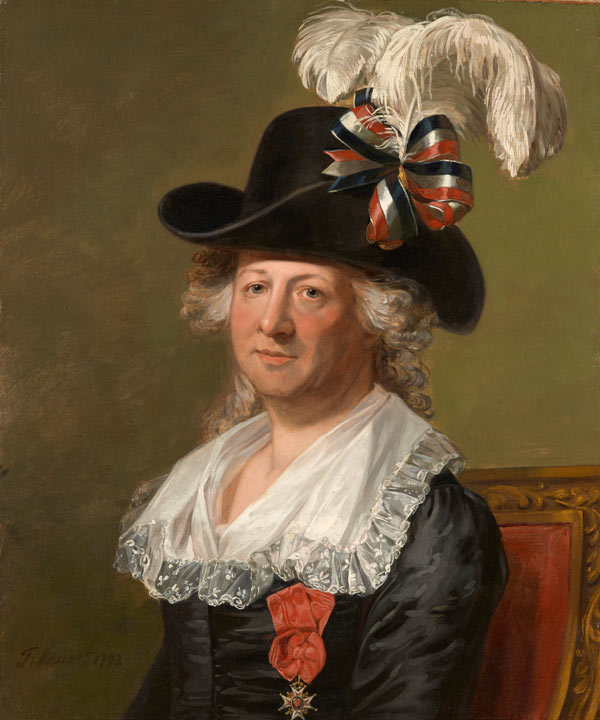 Chevalier d'Eon by Thomas Stewart Chevalier d'Eon by Thomas Stewart1728 - CHEVALIER D’ÉON, (Charles Gemeviéve Louise Auguste André Timothee d’Éon de Beaumont) born (d: 1810); A French diplomat, spy, soldier and Freemason who lived the first half of her life as a man and the second half as a man. If you look up eonism in your dictionary, you may or may not find it. It’s a pseudo-scientific word for transvestism that has the quaint ring of Stekel or other Herr-Doktors who were writing in turn-of-the-century Vienna when people seem to have been having love affairs with their piccolos or putting clown hats on their penises. The Chevalier d’Eon, a century before, loved to dress in drag. Supposedly, the French adventurer originally had been sent on various spying missions disguised as a woman and so liked the feel of silk and satin that he decided to stay dressed in costume the rest of his life. Not that he had much choice. When word got out that he really liked taking four hours to dress each morning, King Louis XV decreed that the chevalier had to wear women’s clothes forever after. For years people laid bets on d’Eon’s sex, but a post mortem examination of his body conclusively established the fact that he was very much a man. Charles Geneviève Louis Auguste André Timothée d'Éon de Beaumont, to give her full name, is one of the most important transvestites in history. She was "a fascinating and inspirational figure", said Lucy Peltz, the London National Portrait Gallery's curator of 18th-century portraits. The painting in the illustration was discovered by a London dealer at a provincial sale outside New York. It was being mistakenly sold as a portrait of an unknown woman by Gilbert Stuart, most famous for painting George Washington on the dollar bill. "Even in its dirty state it was quite clear that this woman had stubble," said Mould, who bought it, brought it to the UK and began further research and restoration. "Cleaning is always a revelation and on this occasion it revealed that not only was it in lovely condition but, more pertinently, the Gilbert Stuart signature cleaned off revealing the name Thomas Stewart, a theatrical painter working in London in the 1780s and 1790s." Everything then began to click into place. "What is so unusual about this portrait is that it is so brazenly demonstrative in a period when you don't normally get that type of alternative persona expressed in portraiture," said Mould. There is no attempt to soften his physiognomy – basically, he was a bloke in a dress with a hat." Even without the cross dressing D'Eon is a seriously interesting person. Before living publicly as a woman he was a famous French soldier and diplomat who had a key role in negotiating the Peace of Paris in 1763, ending the Seven Years War between France and Britain.  James Whitcomb Riley James Whitcomb Riley1849 - JAMES WHITCOMB RILEY, American poet, born (d: 1916); In the days when schoolmarms were intent on seeing to it that schoolboys would grow up hating poetry, they force-fed liberal doses of James Whitcomb Riley, who had gained immense popularity with his series of poems in the Hoosier dialect written under the pseudonym “Benjamin F. Johnson of Boone.” His verses were collected under the title “The Old Swimmin’ Hole” and “’Leven More Poems.” Heck…nowadays that’s qualifies him to run for Vice President, for criminy’s sake! Well, shucks, land’s sakes alive, whaddaya know! It turns out that Old Jimmy Riley acchi’lly liked lovin’ li’l boys ‘bout ‘lebenty-‘leben times more than writin’ poetry. Or, that’s at least what Charles Warren Stoddard, who knew him, claims in his letters and journals. 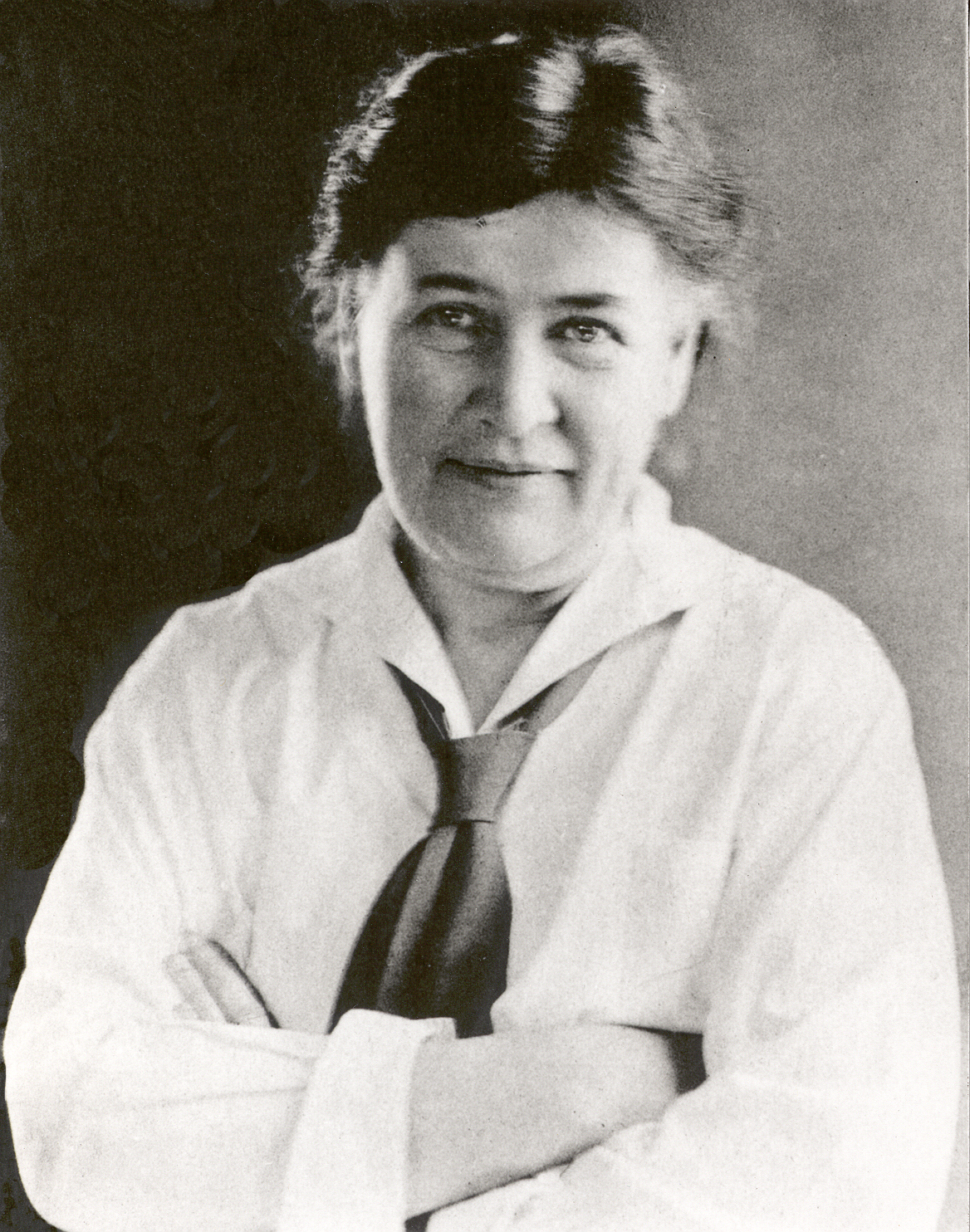 Willa Cather Willa Cather1873 - WILLA CATHER, American novelist, was born (d. 1947); An eminent American author known for her depictions of U.S. life in novels such as O Pioneers!, My Antonia, and Death Comes for the Archbishop. Cather was a classic tomboy, known as “Willie” for most of her childhood. Her novels are stories of strong people caught in small lives and the struggle of the artist in society. She never admitted to being a Lesbian. But all of her meaningful relationships were with strong, independent women. Her first romantic affair was at the turn of the century with Louise Pound. Few writers have taken such pains to destroy as much evidence of their private lives as did Cather. She believed, genuinely perhaps, that an author biography was unimportant, that only events or people in a life that relate to incidents or characters in an author’s works were relevant and worth saving. In her will she ordered that her letters were not to be quoted. She burned all the correspondence between her and the woman who is believed to have been her lover between 1901 and 1915, Isabelle McClung which may have had more to do with the fact that McClung left her to marry a man than an effort, as has been thought, to disguise her personal life. She saw to it that her official biography was to be written by the friend who succeeded Isabelle McClung, Edith Lewis, thus assuring that only what was relevant (i.e. “correct”) was told. All of this would actually be admirable – after all, one does not need to know Shakespeare’s biography (and we don’t) to appreciate his works – if it were not for the fact, after all benefits of doubt are accorded, that such fastidious people who burn their papers generally have something to hide that in their time is considered wrong. In a sense, Willa Cather needn’t have gone to so much trouble, for what little remains of the effects of her life clearly reveal her to have been a Lesbian anyway. The only way to hide is never to have been born at all. Cather and Lewis are buried together in Jaffrey, New Hampshire. Her will forbids any of her books being turned into screenplays and any anthologizing of her work. 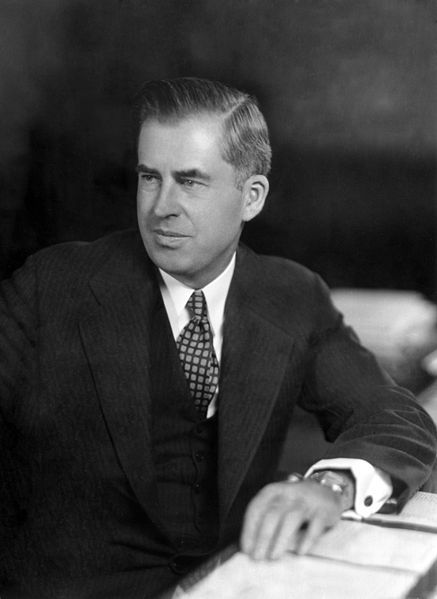 Vice President Henry Wallace Vice President Henry Wallace1888 - Henry A. Wallace, Vice President of the United States, born (d: 1965): No…the 33rd Vice President of the United States, under Franklin Roosevelt, was not a gay man. But his candidacy for President in 1948 marks a momentous turning point in Gay Rights in the United States. On Aug. 10, 1948, Harry Hay first formulated the organizational and political call for what would become in just a few short years the Mattachine Society for “homosexual emancipation.” That was the night that Ray Glazer invited Hay to be one of 90 people at a public signing of presidential hopeful Henry Wallace’s candidacy petition in California. (rf: Stuart Timmons, “The Trouble with Harry Hay” White Crane Books) Hay was thrilled about Wallace’s campaign. Henry Agard Wallace was running for president on the Progressive Party ticket against incumbent Democrat Harry Truman and Republican Thomas Dewey. Wallace had been Franklin D. Roosevelt’s secretary of agriculture during the Depression and then vice president from 1941 to 1945. Wallace was still publicly championing the “New Deal” reforms he helped craft for FDR’s administration — economic concessions designed to save capitalism from a potentially revolutionary movement of workers and oppressed people. As a third-party candidate, he opposed the Cold War already begun by the right wing of the U.S. capitalist class, which had emerged from World War II with military, political and economic supremacy over the world. He supported an end to segregation, full voting rights for blacks, and universal government health insurance. Democrats became enthused and were registering as Progressives. And for many who hungered for progressive change, Wallace’s slogan of faith in “the quietness and strength of grass”— the grassroots — infused them with hope and energy. In virtually every campaign speech, Wallace denounced Jim Crow segregation — even in the rural Deep South. Wallace spoke to 16,000 cheering people in Louisville, Ky., in 1947 — the biggest unsegregated meeting ever held in that city. Students for Wallace at UCLA marched in protest against “whites only” barber shops near the Westwood campus. (Timmons) That night of Aug. 10, still exhilarated by the signing event, Hay went to a party in which the two dozen guests were all men who he later said seemed to be “of the persuasion.” A French seminary student at the party asked if Hay had heard about the recently published “Kinsey Report.” Hay himself had been interviewed and become part of that study eight years earlier. It was a bit of a code for a male stranger to open up with talk about the Kinsey Report. Timmons points out, “Its first volume, Sexual Behavior in the Human Male, was the season’s most talked-about book, especially among homosexuals, with its claim that 37% of adult men had experienced homosexual relations. To Harry, that newly revealed number suggested the dimensions of an organizable minority. He voiced the idea. When his friend protested that organizing homosexuals was impossible, Harry rebutted him. There could be millions of people who might fall into a group that would find great benefit in organizing. Certainly it would be difficult, but it was not impossible.” Others at the party were drawn to this debate. They reportedly disagreed with Hay: “There was too much hatred of homosexuals. Any individual who went public could be entrapped and discredited. There were too many different kinds of homosexuals; they’d never get along. And anyway, people belonging to such an organization would lose their jobs.” As Hay batted away at each argument, he reportedly became more convinced himself that it was possible to organize homosexuals. He raised the idea of creating a “fast bail” fund and seeking out progressive attorneys for victims of anti-Gay police entrapment. This was an important concept, since getting caught in a sting operation by cops meant shelling out lots of money to shady lawyers and crooked officials. Hay also suggested incorporating education about homosexuality in high school hygiene classes. Soon Hay was leading a discussion about building a Gay male organization to support Wallace’s presidential bid, which in turn might win a sexual privacy plank in the Progressive Party platform. By then, Hay was winning over some of his audience. They suggested some defiantly campy names, but Hay put forward a more subtle one: “Bachelors for Wallace.” While still at the party, Hay wrote out all the ideas that had been discussed that night about homosexual organizing on a sheet of butcher block paper. Biographer Stuart Timmons offers the following detailed account of what Hay thought about and did that night after the party: As he drove home, Hay thought about how the reactionary post-war period “was already of concern to many of us progressives. I knew the government was going to look for a new enemy, a new scapegoat. It was predictable.” African Americans were galvanizing a movement for civil rights, buttressed by world horror at the mass extermination of Jews by German fascism. But those he called “the Queers” would be a natural scapegoat. “They were the one group of disenfranchised people who did not even know they were a group because they had never formed as a group. They—we—had to get started. It was high time.” That night he sat up in his study writing two papers. The first was a proposed plank for the Progressive Party platform. The second was a proposal for an organization of Gay men that could continue after the party convention was over. Timmons described the document concerning homosexual organizing in some detail. “This second, much more elaborate paper, based in a Marxist perspective, forged a principle that Hay had struggled years to formulate: that homosexuals were a minority, which he temporarily dubbed ‘the Androgynous Minority.’” Hay referred to the shared characteristics of what constitutes a nation to argue that homosexuals were a cultural minority. Hay wrote, “I felt we had two of the four, the language and the culture, so clearly we were a social minority.”  John Horne Burns John Horne Burns1916 - JOHN HORNE BURNS (d: 1953) was an American author born on this date. He is best known as the author of the 1947 story-cycle The Gallery, which depicts life in Allied-occupied Naples, Italy, in 1944 from the perspective of several different characters. In this work he explores the themes of material and class inequality, alcoholism, relations between the sexes, and sexuality in general, including homosexuality, with the encounter between American and Neapolitan culture as a general thematic backdrop. The "Gallery" referred to is the Galleria Umberto in down-town Naples. At the time of its release, Burns was considered to be a peer of the hot shot authors of his day, including James A. Michener (whom he later offended with a sneering pan of one of Michener’s novels) Irwin Shaw, Alfred Hayes and Gore Vidal whose The City and The Pillar came out a year after The Gallery. Burns was born in 1916 in Andover, Massachusetts. He was the eldest of seven children in a prominent Irish Catholic family. He was educated at the Sisters of Notre Dame convent school and then Andover Academy, where he pursued musical, rather than literary, endeavors. In 1937 he graduated Phi Beta Kappa from Harvard with a degree in English, and became a teacher at the Loomis School in Windsor, Connecticut. At some point he learned Italian. Entering the U.S. Army as a private in 1942, he served in military intelligence in Casablanca and Algiers until Pentagon officials sent him to the Adjutant General's School in Washington D.C. Subsequently commissioned a second lieutenant, he spent the remainder of the war censoring prison-of-war mail in Africa and Italy. These experiences were to provide material for The Gallery. After his discharge in 1946 he taught at Loomis for another year before returning definitively to Italy. By far Burns's best-known work, The Gallery was published in the summer of 1947. His second novel, Lucifer with a Book, appeared in 1949, but received little praise, and he wrote travel pieces for Holiday magazine to survive. Disheartened by the critical reception of his novel, he retreated to Italy, where he began his last published work, A Cry of Children (1952). When this work also received witheringly negative press, he wrote a fourth novel, never to be completed. After a sailing trip, he lapsed into a coma and died from a cerebral hemorrhage on August 11, 1953. Initially buried in Rome, his remains were disinterred and reburied in Boston. Burns's works often feature homosexual themes, and he is known as a gay novelist. As recorded by his contemporary Gore Vidal, Burns said that "to be a good writer, one must be homosexual, perhaps because his or her marginalized status provides the gay or lesbian author with an objectivity not attainable within mainstream culture." Burns's fiction though, is not exclusively restricted to gay themes. Some of his fictional pieces use a heterosexual female perspective, and conformity to class as well as gender expectations plays a large role in these texts. | ||||
|
|8|O|8|O|8|O|8|O|8|O|8|O|8|O|8| Gay Wisdom for Daily Living from White Crane Institute "With the increasing commodification of gay news, views, and culture by powerful corporate interests, having a strong independent voice in our community is all the more important. White Crane is one of the last brave standouts in this bland new world... a triumph over the looming mediocrity of the mainstream Gay world." - Mark Thompson Exploring Gay Wisdom & Culture since 1989! |8|O|8|O|8|O|8|O|8|O|8|O|8|O|8| | ||||

|
|||||

|
