|
Gay Wisdom for Daily Living brought to you by White Crane Institute ͏ ͏ ͏ ͏ ͏ ͏ ͏ ͏ ͏ ͏ ͏ ͏ ͏ ͏ ͏ ͏ ͏ ͏ ͏ ͏ ͏ ͏ ͏ ͏ ͏ ͏ ͏ ͏ ͏ ͏ ͏ ͏ ͏ ͏ ͏ ͏ ͏ ͏ ͏ ͏ ͏ ͏ ͏ ͏ ͏ ͏ ͏ ͏ ͏ ͏ ͏ ͏ ͏ ͏ ͏ ͏ ͏ ͏ ͏ ͏ ͏ ͏ ͏ ͏ ͏ ͏ ͏ ͏ ͏ ͏ ͏ ͏ ͏ ͏ ͏ ͏ ͏ ͏ ͏ ͏ ͏ ͏ ͏ ͏ ͏ ͏ ͏ ͏ ͏ ͏ ͏ ͏ ͏ ͏ ͏ ͏ ͏ ͏ ͏ ͏ ͏ ͏ ͏ ͏ ͏ ͏ ͏ ͏ ͏ ͏ ͏ ͏ ͏ ͏ ͏ ͏ ͏ ͏ ͏ ͏ ͏ ͏ ͏ ͏ ͏ ͏ ͏ ͏ ͏ ͏ ͏ ͏ ͏
|
|
||||
| This Day in Gay History | ||||
November 14Born 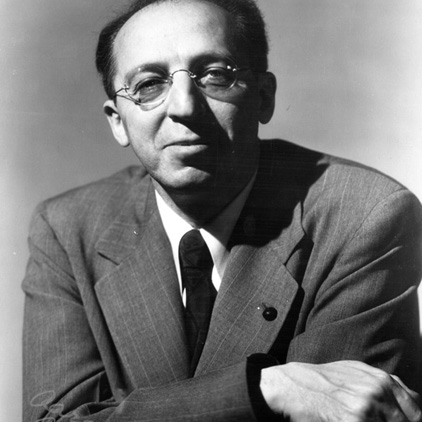 Aaron Copland Aaron Copland1900 - AARON COPLAND, American composer (d. 1990); an American composer of concert and film music, as well as an accomplished pianist. Instrumental in forging a distinctly American style of composition, he was widely known as “the dean of American composers.” Copland's music achieved a difficult balance between modern music and American folk styles, and the open, slowly changing harmonies of many of his works are said to evoke the vast American landscape. He incorporated percussive orchestration, changing meter, polyrhythms, polychords and tone rows. Aside from composing, Copland taught, presented music-related lectures, wrote books and articles, and served as a conductor (generally, but not always, of his own works). Copland was born in Brooklyn, NY, of Lithuanian Jewish descent. Throughout his childhood Copland and his family lived above his parents' Brooklyn shop. Although his parents never encouraged or directly exposed him to music, at the age of fifteen he had already taken an interest in the subject and aspired to be a composer. His musical education included time with Leonard Wolfsohn, Rubin Goldmark (who also taught George Gershwin), and Nadia Boulanger at the Fontanbleu School of Music in Paris from 1921 to 1924. He was awarded a Guggenheim Fellowship in 1925 and again in 1926. Copland defended the Communist Party USA during the 1936 presidential election. As a result he was later investigated by the FBI during the Red scare of the 1950s, and found himself blacklisted. Because of the political climate of that era, A Lincoln Portrait was withdrawn from the 1953 inaugural concert for President Eisenhower. That same year, Copland was called before Congress where he testified that he was never a communist. Outraged by the accusations, many members of the musical community held up Copland's music as a banner of his patriotism. The investigations ceased in 1955, and were closed in 1975. Copland was never shown to have been a member of the Communist Party. Despite this insult, only a decade later, in 1964, President Lyndon B. Johnson awarded Copland the Medal of Freedom for his contributions to American culture. Copland exerted a major influence on the compositional style of his friend and protege Leonard Bernstein. Bernstein was considered the finest conductor of Copland's works. British progressive rock band Emerson, Lake & Palmer recorded two pieces based on Copland works: Fanfare for the Common Man and Hoe-Down. Several of their live recordings of Fanfare for the Common Man incorporated the closing of the second movement of Copland's Symphony no. 3 as well. Copland was a frequent guest conductor of orchestras in the U.S. and the U.K. He made a series of recordings of his music, especially during the 1970s, primarily for Columbia Records. In 1960, RCA Victor released Copland's recordings with the Boston Symphony Orchestra of the orchestral suites from Appalachian Spring andThe Tender Land; these recordings were later reissued on CD, as were most of Copland's Columbia recordings (by Sony). Copland's sexuality was documented in Howard Pollack's biography, Aaron Copeland: The Life and Work of An Uncommon Man. Unlike many gay men of his age, Copland was neither ashamed of nor tortured by his sexuality. He apparently understood and accepted it from an early age, and throughout his life was involved in relationships with other men. In later years, his affairs were mostly with younger men, usually musicians or artists, whom he mentored, including composer Leonard Bernstein, dancer and artist Erik Johns (who wrote the libretto for The Tender Land), photographer Victor Kraft, and music critic Paul Moor. Given the social prejudices of the times in which he lived, Copland was relatively open about his sexuality, yet this seems not to have interfered with the acceptance of his music or with his status as a cultural figure. The likely explanation is that Copland conducted his personal life with the characteristic modesty, tactfulness, and serenity that marked his professional life as well. Copland died of Alzheimer’s and respiratory failure in North Tarrytown, NY (now Sleepy Hollow), on December 2, 1990.  Joseph Ted McCarthy Cruz Joseph Ted McCarthy Cruz1908 - JOSEPH R. MCCARTHY, U.S. Senator, born, (d: 1957); No one wants to claim the Red-baiting senator from Wisconsin, especially when one thinks of the number of lives he destroyed, Gay and straight. But there’s no getting around the fact that Drew Pearson, who had a nose for news, recorded in his diaries the rumors that were swirling around Washington regarding McCarthy’s alleged homosexual activities. C.A. Tripp in The Homosexual Matrix suggests that the senator was, in fact, homosexual (we won’t call him “Gay” just as we don’t call Log Cabin Republicans “Gay” and for the same reasons.) If it’s so, then we are reminded of the sad truth that it sometimes takes one to hate one. 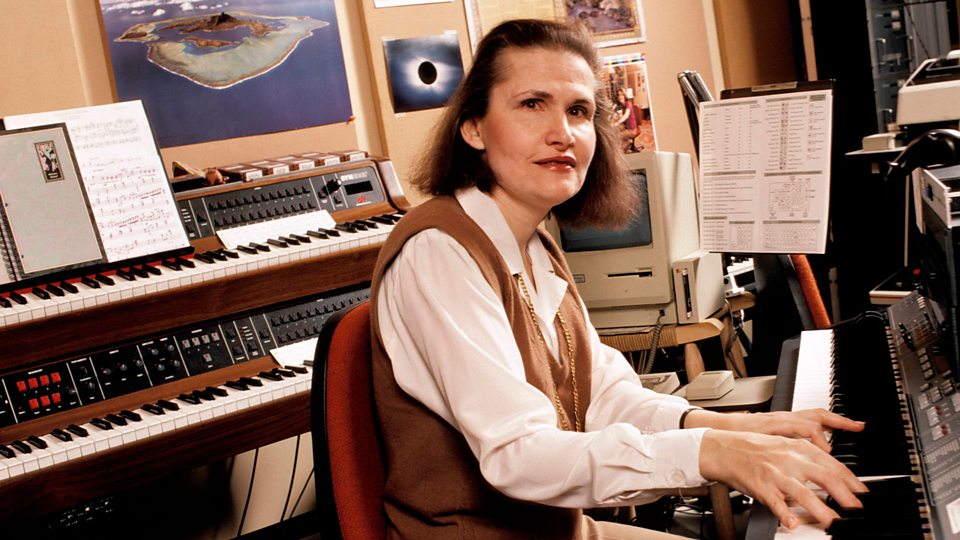 Wendy Carlos Wendy Carlos1939 - WENDY CARLOS, American composer, born; A composer and electronic musician, Carlos is one of the first famous performers of electronic music using synthesizers, most famously, Switched On Bach and the Well-Tempered Synthesizer. Born Walter Carlos, in 1972, Carlos underwent gender reassignment surgery. The last release to be credited to her as Walter Carlos was By Request (1975). The first release credited to her as Wendy Carlos was Switched-On Brandenburgs (1979). Carlos's first public appearance after her gender transition was in an interview in the May 1979 issue of Playboy magazine, a decision she would come to regret because of the unwelcome publicity it brought to her personal life. On her official site, her transition is discussed in an essay stating that she values her privacy on the subject. Carlos composed and recorded music for the soundtrack of the film A Clockwork Orange. She worked with Stanley Kubrick again on the score for The Shining, although in the end, Kubrick used mostly pre-existing music cues from other composers. In 1982, she scored the theatrical film Tron for Disney. Died 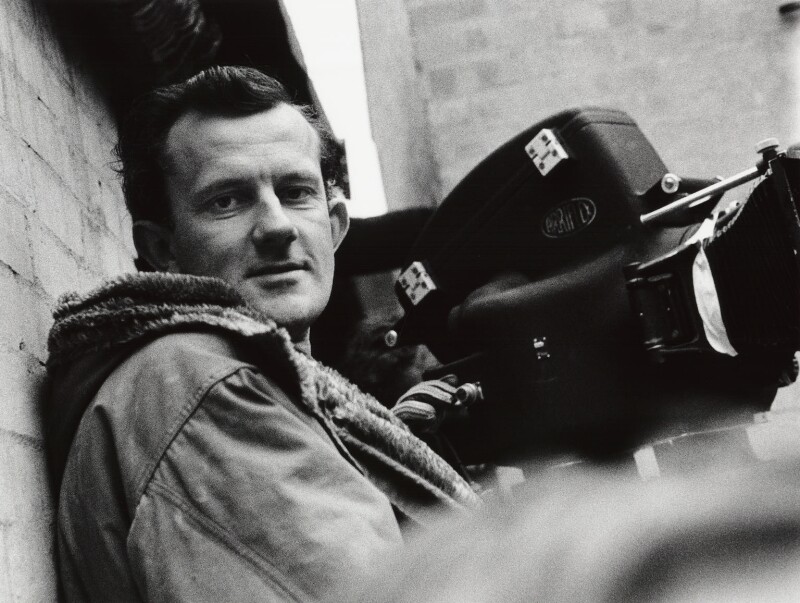 Tony Richardson Tony Richardson1991 - TONY RICHARDSON, English film director died (b. 1928); an English theater and Academy Award-winning-winning film director and producer. In 1964 Richardson received two Academy Awards (Best Director and Best Picture) forTom Jones (1963). He was married to the actress Vanessa Redgrave between 1962 and 1967 (he left her for actress Jeanne Moreau), and had two daughters, Natasha Richardson (born 1963) and Joely Richardson (born 1965), both of whom are actresses. Richardson was bisexual (which he had carefully hidden for as long as possible), and died of complications from HIV-AIDS at 63 in 1991.  Tom Villard Tom Villard1994 - TOM VILLARD, American actor died (b. 1953); Villard starred in television and in film. His best known TV role was in the 1980s series We Got It Made as Jay Bostwick. His best known film role was in the 1986 film One Crazy Summer as Clay Stork. He also starred in the 1991 horror film Popcorn, and the 1992 movie Shakes the Clown with his "One Crazy Summer" co-stars Joel Murray and Bob Goldthwait. Villard also appeared in the 1994 comedy movie In the Army Now. Villard made numerous guest appearances on TV shows as well. He was a panelist on two weeks' worth of To Tell the Truth in the early '90s. His other TV appearances include CHiPs, Taxi, The Golden Girls, The A-Team and Star Trek: Deep Space Nine. Villard was openly gay. He died of pneumonia and other complications of HIV-AIDS on November 14, 1994 in Los Angeles. | ||||
|
|8|O|8|O|8|O|8|O|8|O|8|O|8|O|8| Gay Wisdom for Daily Living from White Crane Institute "With the increasing commodification of gay news, views, and culture by powerful corporate interests, having a strong independent voice in our community is all the more important. White Crane is one of the last brave standouts in this bland new world... a triumph over the looming mediocrity of the mainstream Gay world." - Mark Thompson Exploring Gay Wisdom & Culture since 1989! |8|O|8|O|8|O|8|O|8|O|8|O|8|O|8| | ||||

|
|||||

|
