|
Gay Wisdom for Daily Living brought to you by White Crane Institute ͏ ͏ ͏ ͏ ͏ ͏ ͏ ͏ ͏ ͏ ͏ ͏ ͏ ͏ ͏ ͏ ͏ ͏ ͏ ͏ ͏ ͏ ͏ ͏ ͏ ͏ ͏ ͏ ͏ ͏ ͏ ͏ ͏ ͏ ͏ ͏ ͏ ͏ ͏ ͏ ͏ ͏ ͏ ͏ ͏ ͏ ͏ ͏ ͏ ͏ ͏ ͏ ͏ ͏ ͏ ͏ ͏ ͏ ͏ ͏ ͏ ͏ ͏ ͏ ͏ ͏ ͏ ͏ ͏ ͏ ͏ ͏ ͏ ͏ ͏ ͏ ͏ ͏ ͏ ͏ ͏ ͏ ͏ ͏ ͏ ͏ ͏ ͏ ͏ ͏ ͏ ͏ ͏ ͏ ͏ ͏ ͏ ͏ ͏ ͏ ͏ ͏ ͏ ͏ ͏ ͏ ͏ ͏ ͏ ͏ ͏ ͏ ͏ ͏ ͏ ͏ ͏ ͏ ͏ ͏ ͏ ͏ ͏ ͏ ͏ ͏ ͏ ͏ ͏ ͏ ͏ ͏ ͏
|
|
||||
| This Day in Gay History | ||||
November 15Born  Charlotte Mew Charlotte Mew1870 - CHARLOTTE MEW, English poet, born (d: 1928); an English poet, whose work spans the cusp between Victorian poetry and Modernism. She was born in Bloomsbury, London the daughter of the architect Frederick Mew, who designed Hampstead town hall. Her father died in 1898 without making adequate provision for his family; two of her siblings suffered from mental illness, and were committed to institutions, and three others died in early childhood leaving Charlotte, her mother and her sister, Anne. Charlotte and Anne made a pact never to marry for fear of passing on insanity to their children. In 1894, she succeeded in getting a short story into The Yellow Book, but wrote very little poetry at this time. Her first collection of poetry, The Farmer’s Bride, was published in 1916, in chapbook format, by the Poetry Bookshop; in the US, it was entitled Saturday Market and published in 1921. It earned her the admiration of Sydney Cockerell. Her poems are varied: some of them (such as 'Madeleine in Church') are passionate discussions of faith and the possibility of belief in God; others are proto-modernist in form and atmosphere ('In N unhead Cemetery'). Mew gained the patronage of several literary figures, notably Thomas Hardy, who called her the best woman poet of her day, Virginia Woolf, who said she was 'very good and quite unlike anyone else', and Siegfried Sassoon, and obtained a small Civil List pension with the aid of Cockerell, Hardy, John Masefield and Walter de la Mare. This helped ease her financial difficulties. After the death of her sister, she descended into depression, and she was admitted to a nursing home where she committed suicide by drinking Lysol. It used to be believed by the credulous that Mew was a perfectionist who destroyed poems that did not measure up to her exacting standards. But times change and it is now more or less accepted that Mew destroyed any evidence of her Lesbianism in her works. Since what remains is very fine indeed, the destruction of the majority of her work can only be called a major loss to English literature. Mew is buried in the northern part of Hampstead Cemetery, London. 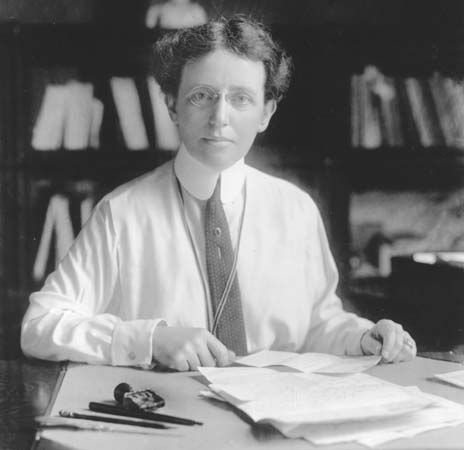 Dr. S. Josephine Baker Dr. S. Josephine Baker1873 - DR. S. JOSEPHINE BAKER, pioneering public health physician, born (d: 1945); Jo, as she preferred, was born in Poughkeepsie, New York in 1873 to a middle class Unitarian or Quaker family. When she was sixteen, her father and brother died from typhoid, which left her family with no means of support. Early in her career, she had helped to twice catch Mary Mallon, also known as Typhoid Mary. Mary Mallon was the first known healthy carrier of typhoid who infected countless people through her job as a cook. Mallon was not the only repeat offender in being a typhus-contagious cook, but she was the only one put in isolation for the rest of her life. It may have been relevant that the other offenders were male, or that they were not of Irish heritage. Josephine Baker was becoming famous, so much so that New York University Medical School asked her to lecture there on children’s health, or 'child hygiene', as it was known at the time. Baker said she would if she could also enroll in the School. The School had to give in because there was no one else who could give the lectures. So in 1917 Baker graduated with a doctorate in public health. After the United States entered WWI, Baker became even better known. Most of this publicity was generated from her comment to a NY Times reporter. She told him that it was safer to be on the front lines than to be born in the United States because the soldiers died at a rate of 4%, whereas babies died at a rate of 12%. She was able to start a lunch program for school children due to the publicity this comment brought. Over the years of her career, she made intelligent use of the press to advance the goals she had for public health. She made use of the publicity around the high rate of young men being declared 4F (not eligible for draft due to poor health) as a motivating factor for support in her work on improving the health of children. Josephine Baker was now known across the world. She was offered a job in London as health director of public schools, a job in France taking care of war refugees, and a job in the United States as Assistant Surgeon General. Baker became the first woman to hold a federal government position when she accepted the position as Assistant Surgeon General of the United States. In 1923 she retired, but she didn't stop working. Josephine Baker became the first woman to be a professional representative to the League of Nations when she represented the United States in the Health Committee. Many government positions, departments, and committees were created because of her work including the Federal Children's Bureau and Public Health Services (now the Department of Health and Human Services) and child hygiene departments in every state. She was also active in many groups and societies including over twenty-five medical societies and the New York State Department of Health. She also became the President of the American Medical Women’s Association and wrote 250 articles (both professional and for the popular press), 4 books, and her autobiography before her death in 1945. Josephine Baker wrote very little about her personal life, however her partner for much of the later part of her life was Ida Alexa Wylie, a novelist and essayist from England, and self-identified as a 'woman-oriented woman'. I.A.R. Wylie is best know for the novel "The Daughter of Brahma", and "Life with George", an autobiography. When Baker retired in 1923, she started to run their household while writing her autobiography. In 1935, Baker and Wylie decided to move to Princeton, NJ, together with their friend Louise Pearce, M.D.. Pearce was a biological researcher at the Rockefeller Institute, working on animal models for trypanosoma (African Sleeping sickness) and syphylis, and the testing of treatments. Pearce later became the President of the Women’s Medical College of Philadelphia. While Baker and Pearce left little documentation of their personal lives, Wylie was open about her orientation. But she did not identify either Baker or Pearce in her writings. Wylie's papers, including some personal letters, were donated to the Women's Medical College of Philadelphia (now the Medical College of Philadelphia), where they are now available in the college's archives. Died 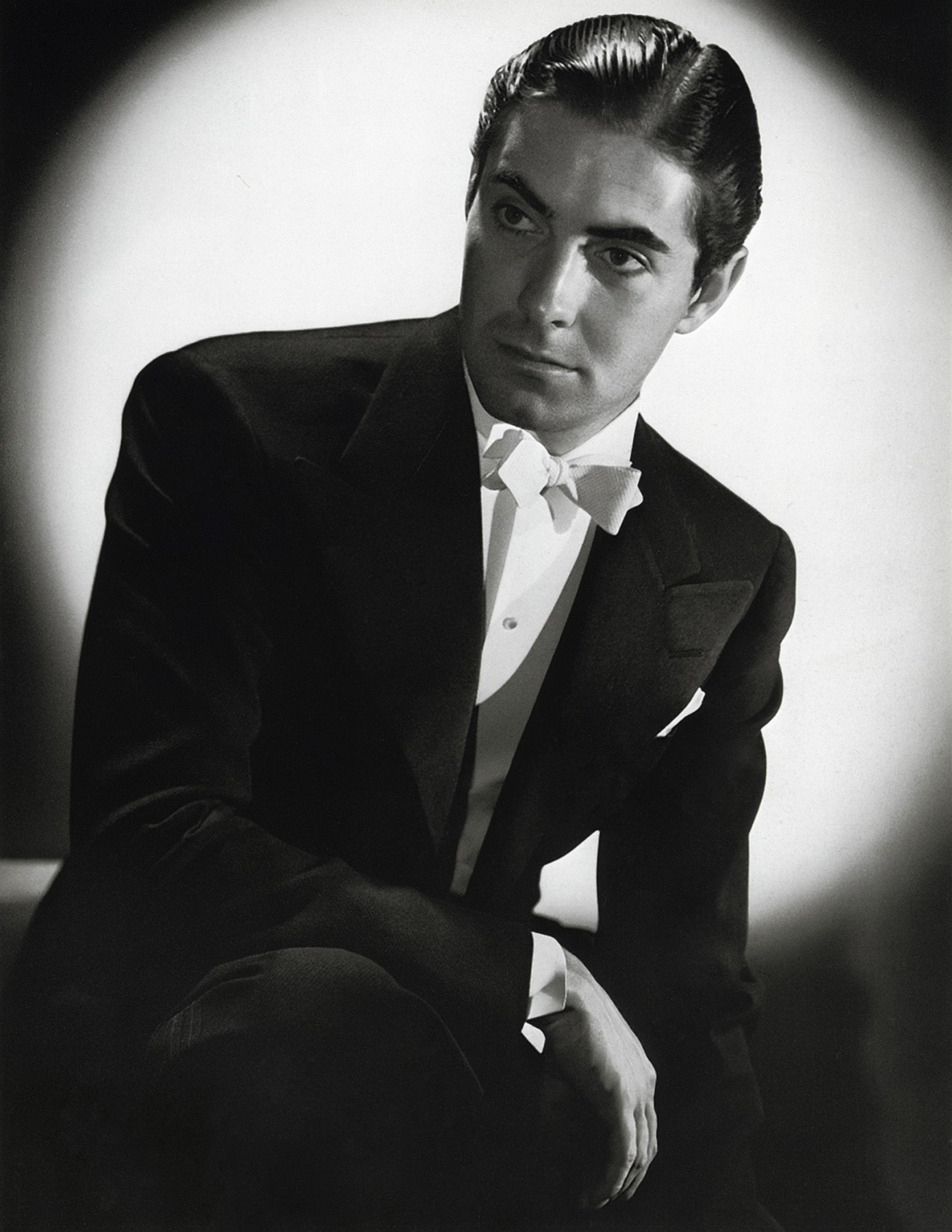 Tyrone Power Tyrone Power1958 - TYRONE POWER, American actor, died (b. 1914); American film and stage actor who appeared in dozens of films from the 1930s to the 1950s, often as a swashbuckler or romantic lead, in such movies as The Mark of Zorro, The Black Swan, Prince of Foxes, The Black Rose and Captain from Castile. Though famous for his dark, classically handsome looks that made him a matinee idol from his first film appearance, Power was not just handsome but very versatile. More than twenty years after Tyrone Power's death, Hector Arce cited anonymous sources to support his claim that Power was bisexual. Up until that time, no claims to this effect had been made. In his 1994 autobiography Crying With Laughter, the British comedian and actor Bob Monkhouse claimed that he had rejected advances from Power. The fashion critic Mr. Blackwell, in his 1995 autobiography From Rags to Bitches claimed that he met Power when a young actor for "romantic moments in his dressing room and took long rides speeding down Sunset to Malibu". According to William J. Mann, in his book Behind the Screen: How Gays and Lesbians Shaped Hollywood, 1910-1969, Power was involved in homosexual relationships. In his book,The Evening Crowd at Kirmser's: A Gay Life in the 1940s, Ricardo J. Brown confirms that he had heard in New York that there were "a lot of queer people in the theater and the movies", among them Tyrone Power and Tallulah Bankhead. In Oops, I Lost My Sense of Humor, Lois M. Santalo writes that "many stars of the silver screen, dating back to Tyrone Power, had been gay".In Robert Aldrich and Garry Wotherspoon's (both of Sydney University) Who's Who in Contemporary Gay and Lesbian History: From World War II to the Present Day, Power is listed among the "Top box office stars who were Gay or bisexual". Noteworthy 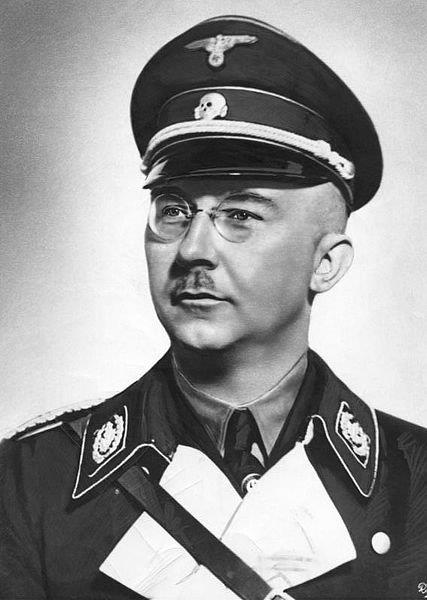 SS Reichsführer Heinrich Himmler SS Reichsführer Heinrich Himmler1941 - Holocaust SS chief Heinrich Himmler orders the arrest and deportation to concentration camps of all homosexuals in Germany, with the exception of certain top Nazi officials.  ONE Magazine ONE Magazine1952 - ONE, the official publication of the MATTACHINE SOCIETY, Articles of Incorporation signed in the Los Angeles law office of Eric Julber. In January 1953 ONE, Inc. began publishing ONE Magazine, the first U.S. pro-gay publication, and sold it openly on the streets of Los Angeles. In October 1954 the U.S. Post Office Department declared the magazine 'obscene'. ONE sued, and finally won in 1958, as part of the landmark First Amendment case, Roth v United States. The magazine continued until 1967. ONE also published ONE Institute Quarterly (now the Journal of Homosexuality). It began to run symposia, and contributed greatly to scholarship on the subject of same-sex love (then called homophile studies'). ONE readily admitted women, and Joan Corbin (as Eve Elloree), Irma Wolf (as Ann Carrl Reid), Stella Rush (as Sten Russell), Helen Sandoz (as Helen Sanders), and Betty Perdue (as Geraldine Jackson) were vital to its early success. ONE and Mattachine in turn provided vital help to the Daughters of Bilitis in the launching of their newsletter The Ladder in 1956. The Daughters of Bilitis was the counterpart lesbian organization to the Mattachine Society, and the organizations worked together on some campaigns and ran lecture-series. Bilitis came under attack in the early 1970s for 'siding' with Mattachine and ONE, rather than with the new separatist feminists.] In 1965, ONE separated over irreconcilable differences between ONE’s business manager Dorr Legg and ONE Magazine editor Don Slater. After a two-year court battle, Dorr Legg’s faction retained the name “ONE, Inc.” and Don Slater’s faction retained most of the corporate library and archives. In 1968, Slater’s faction became the Homosexual Information Center or HIC, a non-profit corporation that survives today.  James McGreevey James McGreevey2004 - New Jersey Governor JIM McGREEVEY leaves office, three months after resigning due to a Gay extra-marital affair. State Senator Richard Codey takes over as interim governor. McGreevey has gone on to move in with a man and is studying in an Episcopal seminary. | ||||
|
|8|O|8|O|8|O|8|O|8|O|8|O|8|O|8| Gay Wisdom for Daily Living from White Crane Institute "With the increasing commodification of gay news, views, and culture by powerful corporate interests, having a strong independent voice in our community is all the more important. White Crane is one of the last brave standouts in this bland new world... a triumph over the looming mediocrity of the mainstream Gay world." - Mark Thompson Exploring Gay Wisdom & Culture since 1989! |8|O|8|O|8|O|8|O|8|O|8|O|8|O|8| | ||||

|
|||||

|
