|
Gay Wisdom for Daily Living brought to you by White Crane Institute ͏ ͏ ͏ ͏ ͏ ͏ ͏ ͏ ͏ ͏ ͏ ͏ ͏ ͏ ͏ ͏ ͏ ͏ ͏ ͏ ͏ ͏ ͏ ͏ ͏ ͏ ͏ ͏ ͏ ͏ ͏ ͏ ͏ ͏ ͏ ͏ ͏ ͏ ͏ ͏ ͏ ͏ ͏ ͏ ͏ ͏ ͏ ͏ ͏ ͏ ͏ ͏ ͏ ͏ ͏ ͏ ͏ ͏ ͏ ͏ ͏ ͏ ͏ ͏ ͏ ͏ ͏ ͏ ͏ ͏ ͏ ͏ ͏ ͏ ͏ ͏ ͏ ͏ ͏ ͏ ͏ ͏ ͏ ͏ ͏ ͏ ͏ ͏ ͏ ͏ ͏ ͏ ͏ ͏ ͏ ͏ ͏ ͏ ͏ ͏ ͏ ͏ ͏ ͏ ͏ ͏ ͏ ͏ ͏ ͏ ͏ ͏ ͏ ͏ ͏ ͏ ͏ ͏ ͏ ͏ ͏ ͏ ͏ ͏ ͏ ͏ ͏ ͏ ͏ ͏ ͏ ͏ ͏
|
|
||||
| This Day in Gay History | ||||
February 20Born  William Lygon, Seventh Ear Beauchamp William Lygon, Seventh Ear Beauchamp1872 - WILLIAM LYGON, Seventh Earl Beauchamp, (d. 1967); In the years before the trial of Oscar Wilde, English aristocrats involved in homosexual scandals went into voluntary exile on the Continent until the heat died down at home. In the years immediately following the trial, public exposure was ruinous. The Seventh Earl Beauchamp is included here not because his situation was any better or worse than that of other “disgraced” men of his age, but because his case prompted one of the most famous lines in Gay history. Evelyn Waugh's great novel Brideshead Revisited is said to have been inspired partly by Evelyn's friendship with Lord Beauchamp of the Lygon family. The gay Lord Beauchamp became a government minister under Prime Minister Asquith. Lord Beauchamp is supposed to have been the model for Sebastian's father Lord Marchmain in Brideshead Revisited. Lord Beauchamp, who had numerous Gay affairs with servants, socialites and local lads, was close to King George V's sons Henry, Duke of Gloucester, and George, Duke of Kent. In hearing that the young Beauchamp was homosexual, King George V remarked, “I thought they shot themselves.” Unfortunately, so did far too many young people growing up Gay.  Baron Jacques d'Adelsward-Fersen in his glory. Baron Jacques d'Adelsward-Fersen in his glory.1880 - Baron JACQUES D'ADELSWÄRD-FERSEN (d: 1923) was a French novelist and poet. His life forms the basis of a fictionalized biography by Roger Peyrefitte. In 1903 a scandal involving school pupils made him persona non grata in the salons of Paris, and dashed his marriage plans; after which he took up residence in Capri in self-imposed exile with his long-time lover, Nino Cesarini. He became a "character" on the island in the inter-war years, featuring in novels by Compton MacKenzie and others. His house, Villa Lysis, remains one of Capri's tourist attractions. In 1903 d'Adelsward and his friend, Albert François (Hamelin) de Warren (1881-1928), brother of Rene de Warran were rumored to be holding "entertainments" – tableaux vivants – of pupils from the best Parisian schools – in his house at 18 Avenue de Friedland. One of the first alleged "victims" was Eduardo (Bruno) de Warren (1886-1957), brother of Hamelin. Jacques and Hamelin were arrested on charges of inciting minors to commit debauchery. d'Adelswärd-Fersen was arrested on 9th of July by Octave Hamard, chief of the Paris police and his deputy Blot by order of Charles de Valles, pretrial judge. The order stated the suspicion of indecent behavior with minors and offending the public decency. He was brought to La Santé Prison after arrest. The newspapers and magazines published alleged details of Jacques' and Hamelin orgies, which they called 'Messes Noires' - Black Masses in their homes twice a week with youngsters from high classes, mostly recruited from Lycée Carnot, Chaptal, Condorcet, Janson-deSailly and Saint-Joseph-des-Tuileries school. According to Peyrefitte, the scandal started with a failed blackmail attempt by Jacques' former servant demanding 100000 francs in return for his silence. Jacques' mother refused to pay, he went to the police. At the beginning, police dismissed the allegations. But the story was later confirmed by another arrested blackmailer who was an intimate acquaintance of Albert François de Warren. Will H.C. Ogrinc reports that after investigating French National Archive in 2003, he didn't find any documents about failed blackmail attempt by Jacques’ former valet and it was probably invented by Peyrefitte. By the court documents, the valet, whose name was Velpry told to investigators about the seldom visits of brothers Croisé de Pourcelet to Fersen apartment and that after one of their visits, he had found obscene photos and handkerchiefs stained with sperm on the table. He also claimed that he let know Jacques’ mother about it and quit his job. Some documents mention that Jacques was blackmailed by several rent boys he had relations with. The dossier mentions names of six rent boys: Beret, Boscher, twenty-one-year-old Kothé, Lefebvre, nineteen-year-old Leroy, and fifteen-year-old Verguet, though there is no mention who of them may be the blackmailer. Police started to watch some of schoolboys, which at first sight confirmed the allegations. Hamelin had fled to the United States on 27 June 1903, but d'Adelsward was arrested. His aunt Jeanne d’Adelswärd and former guardian viscount Audoin de Dampierre employed a lawyer who previously defended Alfred Dreyfus The construction of his famous villa was completed in July 1905. Villa Lysis is a notable building. Its style is described by some as "Liberty" but is not Liberty or Art Nouveau in the French manner but may perhaps be described as "Neoclassical decadent". The large garden is connected to the villa by steps leading to an Ionic portico. In the atrium a marble stairway with wrought-iron balustrade leads to the first floor, where there are bedrooms with panoramic terraces, and a dining room. The ground-floor sitting-room, decorated with blue majolica and white ceramic, overlooks the Gulf of Naples. In the basement there is a 'Chinese Room', in which opium was smoked. d'Adelswärd-Fersen and Nino traveled to Paris, where Jacques delivered a manuscript to publishers and went directly to Oxford. After returning to Capri, Jacques, Nino and their four boy servants traveled to Chine. They all returned to Villa Lysis at the beginning of 1907. Jacques d'Adelswärd-Fersen spent the rest of his life based in Capri, and died there in 1923 —allegedly by suicide achieved through drinking a cocktail of champagne and cocaine. His ashes are conserved in the non-Catholic cemetery of Capri. His lover, Nino Cesarini, returned to Rome.  Donald Trump and Roy Cohn Donald Trump and Roy Cohn1927 - ROY COHN, American lawyer born (d. 1986); And this man was probably one of the best reasons that misconception obtained. A dramatic, controversial and dangerous man in life, Cohn inspired many dramatic fictional portrayals after his death. Probably the most famous is his role in Tony Kushner’s Angels in America: A Gay Fantasia on A Theme, in which Cohn is portrayed as a self-hating, power-hungry hypocrite who refuses to accept himself as a homosexual, and is haunted by the ghost of Ethel Rosenberg as he lies dying of AIDS. In the 2003 HBO version of Kushner's play, Cohn was played by Al Pacino, and Rosenberg was played by Meryl Streep. Cohn is also a character in Kushner's one-act play, G. David Schine in Hell. He was a despicable, vile person. His sleazy soul-less mind still haunts us today in the person of his protégé, Donald Trump. Cohn’s influence on Mr. Trump is unmistakable. Mr. Trump’s wrecking ball of a presidential bid — the gleeful smearing of his opponents, the embracing of bluster as brand — has been a Roy Cohn number on a grand scale. Mr. Trump’s response to the Orlando massacre, with his ominous warnings of a terrorist attack that could wipe out the country and his conspiratorial suggestions of a Muslim fifth column in the United States, seemed to have been ripped straight out of the Cohn playbook. For 13 years, the lawyer who had infamously whispered in McCarthy’s ear whispered in Mr. Trump’s. In the process, Mr. Cohn helped deliver some of Mr. Trump’s signature construction deals, sued the National Football League for conspiring against his client and counter-sued the federal government — for $100 million — for damaging the Trump name. One of Mr. Trump’s executives recalled that he kept an 8-by-10-inch photograph of Mr. Cohn in his office desk, pulling it out to intimidate recalcitrant contractors. The two men spoke as often as five times a day, toasted each other at birthday parties and spent evenings together at Studio 54. 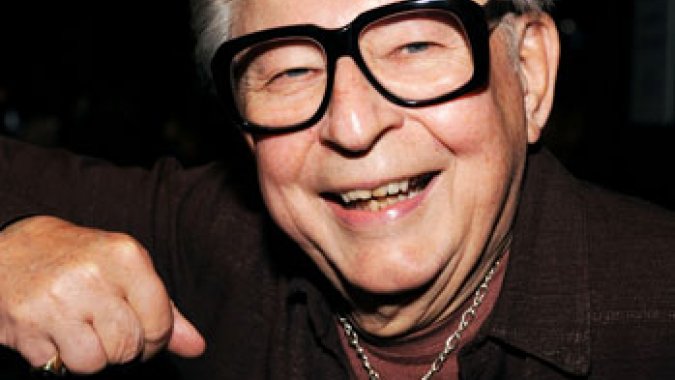 Dale Olson Dale Olson2012 - DALE OLSON, a savvy promoter of Oscar-worthy movies died on this date, which was also his birthdate (b: 1934). Olson helped craft campaigns for stars such as Maggie Smith in "The Prime of Miss Jean Brodie", Shirley Maclaine in "Terms of Endearment" and Robert Duvall in "Tender Mercies". During eighteen years at Rogers & Cowan, he rose to head the agency's motion pictures division, leaving to run his own Beverly Hills publicity firm, Dale C. Olson & Associates, in 1985. That year, Olson found himself in the middle of a media storm when reporters began raising questions about Hudson's health after the actor appeared shockingly gaunt at a public appearance with his former leading lady, Doris Day. Initially, Hudson said he had liver cancer. The actor, who became a matinee idol in the 1950s with a boy-next-door image, feared the damage to his reputation if the public knew he had AIDS, which was then spreading through the gay community. So when Olson, as Hudson's spokesman, was asked about the star's condition, "I had to alter the truth or try to change it sometimes," Olson recalled in a 2001 interview with radio host Larry King. When Hudson finally acknowledged that he had AIDS, Olson helped persuade him to turn his misfortune into an opportunity to educate the public about the disease. "I spoke to him and said, 'You have a terminal disease. This is going to affect a lot of people. And you can be the person who can make people aware of it,' " Olson said. Hudson became the face of the dreaded malady. His message, written by Olson, stirred the audience at a 1985 Hollywood benefit for AIDS organized by actress Elizabeth Taylor. In the letter read by fellow actor Burt Lancaster, Hudson said: "I am not happy that I am sick. I am not happy that I have AIDS, but if that is helping others, I can, at least, know that my own misfortune has had some positive worth." He died a few weeks later. Olson was born in Fargo, N.D. As a teenager in Portland, Ore., he worked for a newspaper chain and snared an interview with screen legend Mae West. In 1951 he moved to Hollywood and joined the Mattachine Society, one of the earliest members of one of the country's first gay-rights organizations. Olson served as its first national secretary. He wrote for Boxoffice magazine and Daily Variety before joining the Mirisch film production company as publicity director. His first major campaign was for the 1967 movie "In the Heat of the Night," starring Rod Steiger and Sidney Poitier; it won five Oscars. In the 1970s he launched the publicity for a number of popular film franchises, including “Rocky”, “Superman” and “Halloween”." He raised money for several charities, including the Actors Fund of America, of which he was a longtime trustee. In 2008, he married singer Eugene Harbin. I was fortunate to have been Dale’s assistant in the early 80s, helping him to set up the Manila International Film Festival. Olson was known for his old Hollywood style. When he found out he had wrongfully suspected a colleague of feeding a story about a client to the National Enquirer, he apologized by buying the colleague a custom three-piece Italian suit. He was also known for his parties, such as one he hosted in 1987 for the independent movie "Anna." The film, which starred his client Sally Kirkland, had disappeared from theaters after its distributor went out of business. There was no money for publicity, but Olson believed Kirkland's performance was worthy of notice. Although he risked breaking fairness rules governing the conduct of Oscar campaigns, he made 50 copies of the film and handed them out at a party at his home for a select group of entertainment journalists and Academy of Motion Picture Arts and Sciences members, who included Shelley Winters, Lainie Kazan, Elliott Gould and Robert DeNiro. Olson cooked the food himself — chicken cordon bleu. The strategy worked. Kirkland received enthusiastic write-ups and was nominated for an Oscar (losing to Cher in "Moonstruck"). Olson's underdog campaign also garnered coverage, with an "Entertainment Tonight" crew "covering Dale promoting me," Kirkland recalled in a recent interview. She said the veteran publicist didn't view his job as "just a gig to get someone an award. He really cared about actors and about the work." | ||||
|
|8|O|8|O|8|O|8|O|8|O|8|O|8|O|8| Gay Wisdom for Daily Living from White Crane Institute "With the increasing commodification of gay news, views, and culture by powerful corporate interests, having a strong independent voice in our community is all the more important. White Crane is one of the last brave standouts in this bland new world... a triumph over the looming mediocrity of the mainstream Gay world." - Mark Thompson Exploring Gay Wisdom & Culture since 1989! |8|O|8|O|8|O|8|O|8|O|8|O|8|O|8| | ||||

|
|||||

|
