|
Gay Wisdom for Daily Living brought to you by White Crane Institute ͏ ͏ ͏ ͏ ͏ ͏ ͏ ͏ ͏ ͏ ͏ ͏ ͏ ͏ ͏ ͏ ͏ ͏ ͏ ͏ ͏ ͏ ͏ ͏ ͏ ͏ ͏ ͏ ͏ ͏ ͏ ͏ ͏ ͏ ͏ ͏ ͏ ͏ ͏ ͏ ͏ ͏ ͏ ͏ ͏ ͏ ͏ ͏ ͏ ͏ ͏ ͏ ͏ ͏ ͏ ͏ ͏ ͏ ͏ ͏ ͏ ͏ ͏ ͏ ͏ ͏ ͏ ͏ ͏ ͏ ͏ ͏ ͏ ͏ ͏ ͏ ͏ ͏ ͏ ͏ ͏ ͏ ͏ ͏ ͏ ͏ ͏ ͏ ͏ ͏ ͏ ͏ ͏ ͏ ͏ ͏ ͏ ͏ ͏ ͏ ͏ ͏ ͏ ͏ ͏ ͏ ͏ ͏ ͏ ͏ ͏ ͏ ͏ ͏ ͏ ͏ ͏ ͏ ͏ ͏ ͏ ͏ ͏ ͏ ͏ ͏ ͏ ͏ ͏ ͏ ͏ ͏ ͏
|
|
||||
| This Day in Gay History | ||||
February 21Born 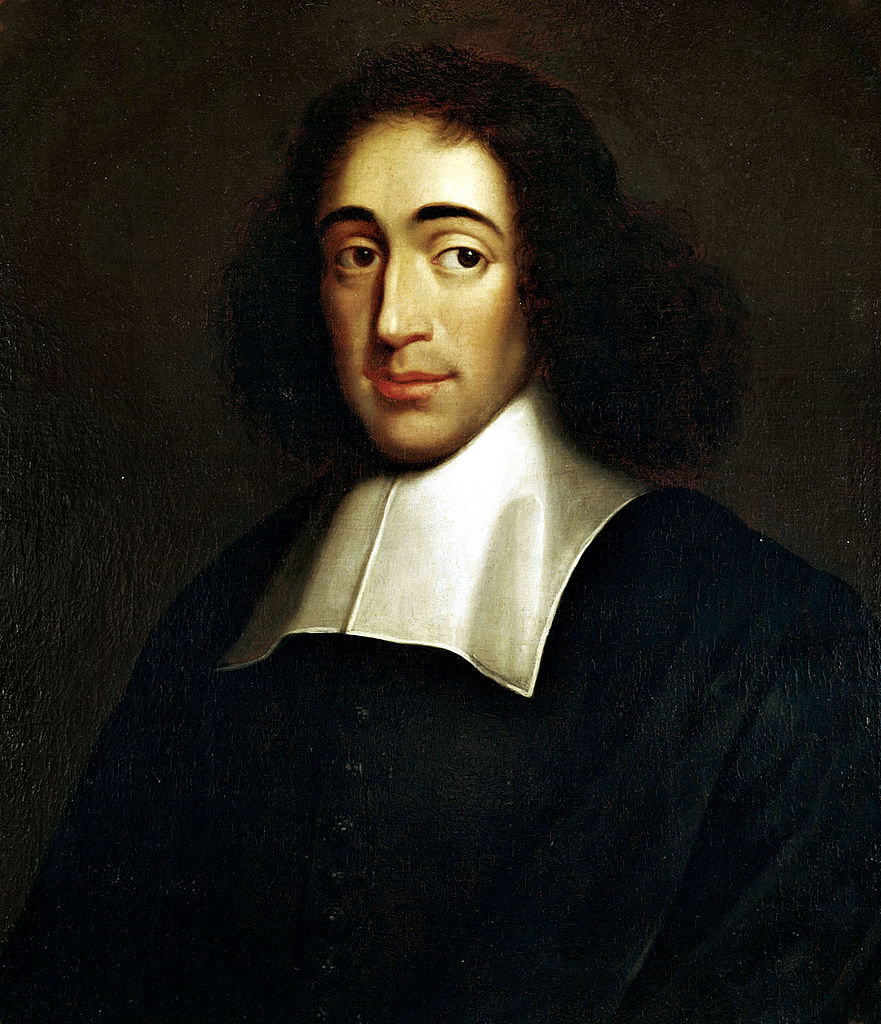 Baruch Spinoza Baruch Spinoza1677 - BARUCH SPINOZA, Dutch philosopher born (b. 1632); One of the great rationalists of 17th century philosophy, he laid the groundwork for the 18th century Enlightenment and modern biblical criticism. By virtue of his magnum opus, the posthumous Ethics, Spinoza is also considered one of Western philosophy's definitive ethicists. He was raised and educated in the Orthodox Jewish fashion, also studying Latin and was thoroughly familiar with European humanism. What exactly is it that caused him to be excommunicated from the synagogue when he was only 24 years old? Many scholars have speculated that the horror Spinoza inspired in the Jewish community may have come not only from his espousal of advanced economic theories, but from his espousal, as well, of Greek love among impressionable students in the liberal circle where he taught. A Dutch physician, J. Roderpoort, wrote at The Hague in 1897: “Spinoza excites the youth to respect women not at all and to give themselves to debauchery.” Was Spinoza merely teaching the Greek and Roman classics, with their inevitable passages on pederasty? What were Roderpoort’s motives for discrediting the Jewish philosopher? Was Spinoza, in fact a pederast? It’s all open to speculation. 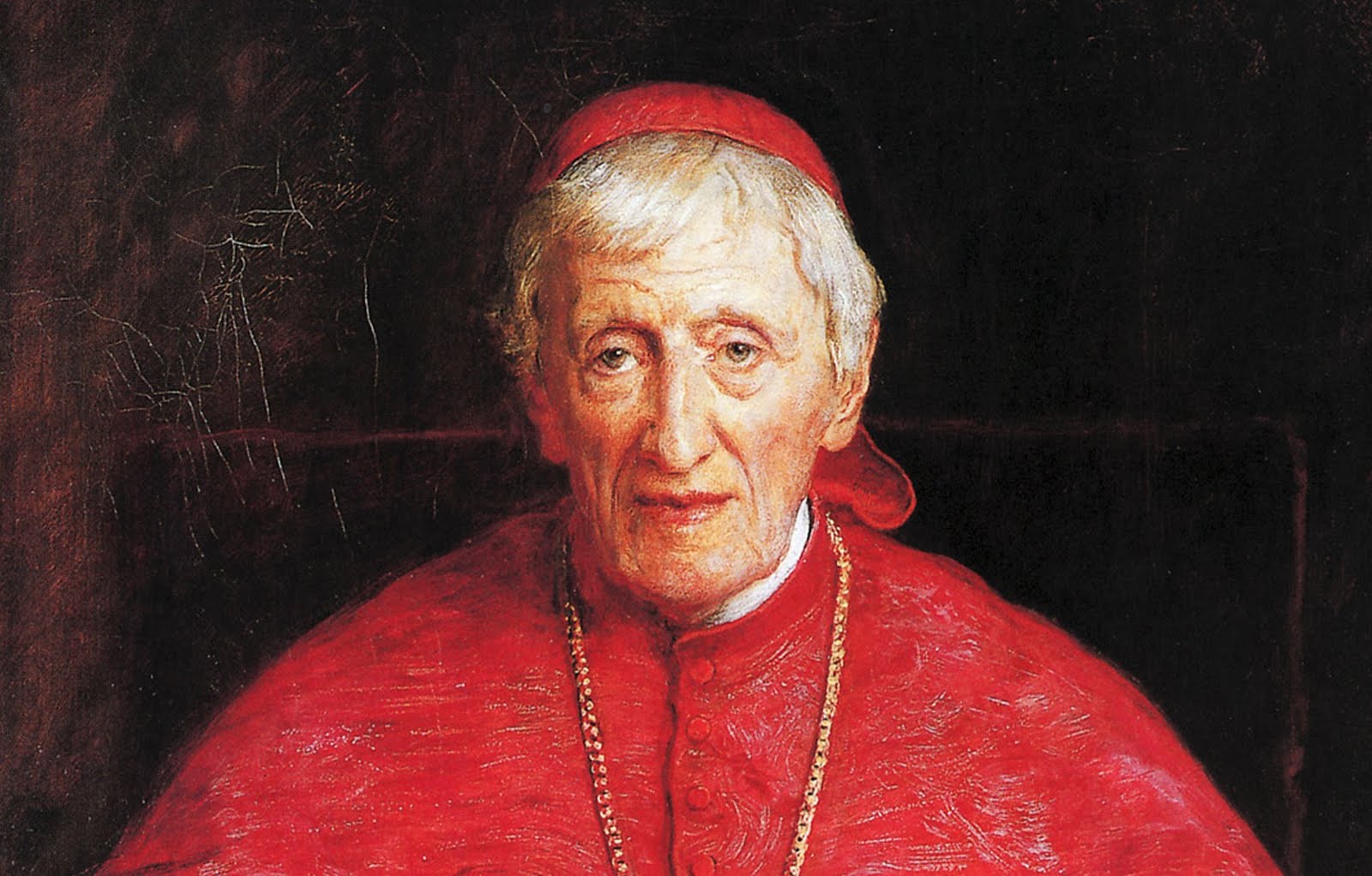 John Henry Cardinal Newman John Henry Cardinal Newman1801 - JOHN HENRY CARDINAL NEWMAN, English Catholic cardinal (d. 1890); There’s no denying that the great English churchman’s most important work, the Apologia pro Vita Sua, contains many homoerotic passages of intense beauty, but there is little reason to suspect that his love for other men extended to the flesh itself. Newman was particularly devoted to his friend Brother Ambrose, fourteen years his junior. Grief-stricken by his death in 1875, the cardinal threw himself upon the deathbed and spent the night with the corpse. Newman joined his friend in death fifteen years later. By his own instructions, his body was buried in the same grave. By any measure, there’s was a close friendship. 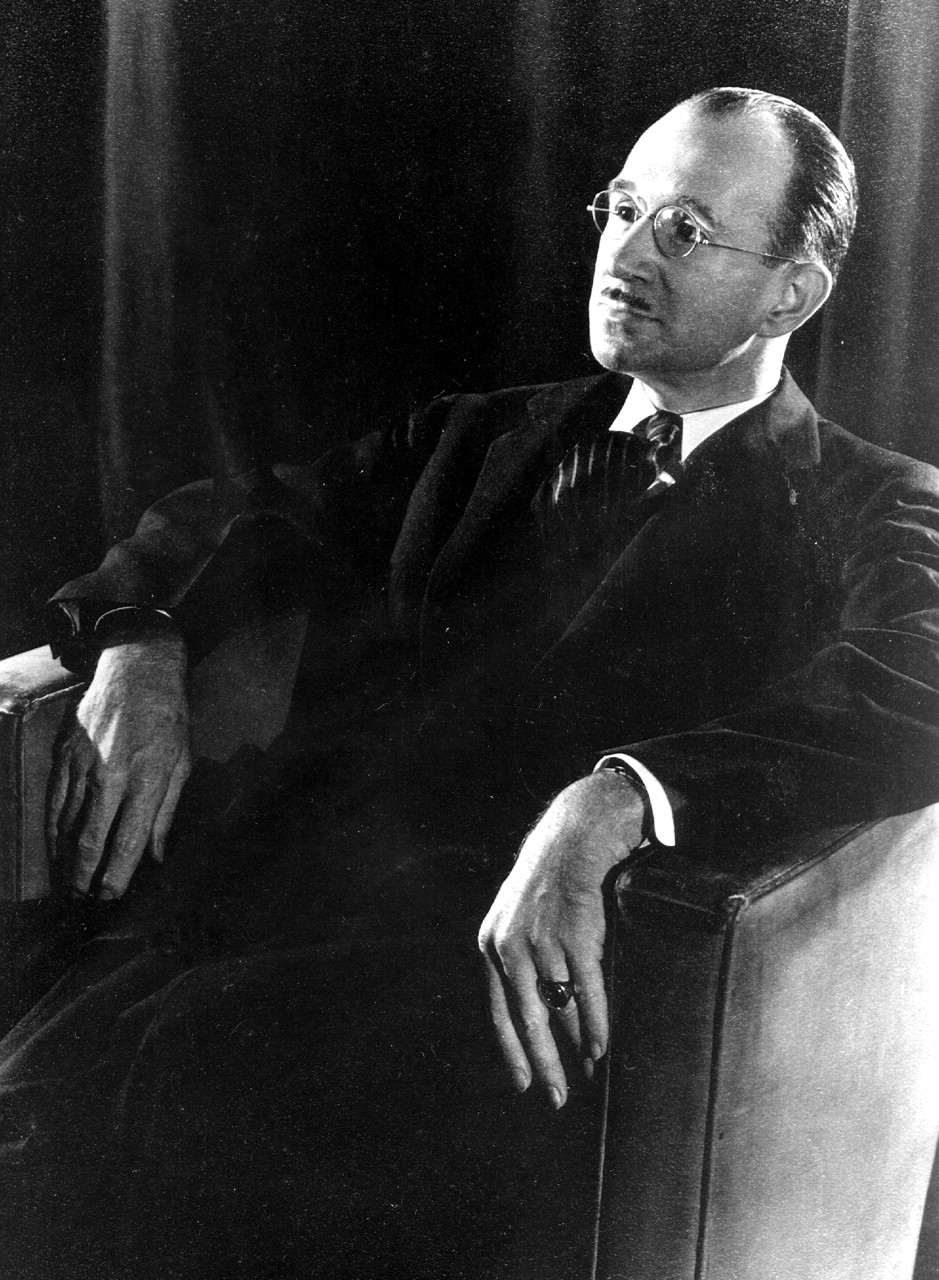 Harry Stack Sullivan Harry Stack Sullivan1892 - HARRY STACK SULLIVAN, American psychiatrist, born (d: 1949); In the understanding of mental disorders, this influential psychiatrist believed that psychoanalysis, although essentially valid, needed to be supplemented by a thoroughgoing study of the impact of cultural forces upon the personality. In the years following his death, recognition of his accomplishments was intentionally overlooked because of his homosexuality. Sullivan, however, is now acknowledged as the prime developer of the interpersonal approach to psychiatry and as one of the great American psychiatrists of the century. Forgotten, finally, is his great “sin.” In middle age, he adopted a fifteen-year-old male patient, with whom he lived as “father” and “son” for more than fifteen years. 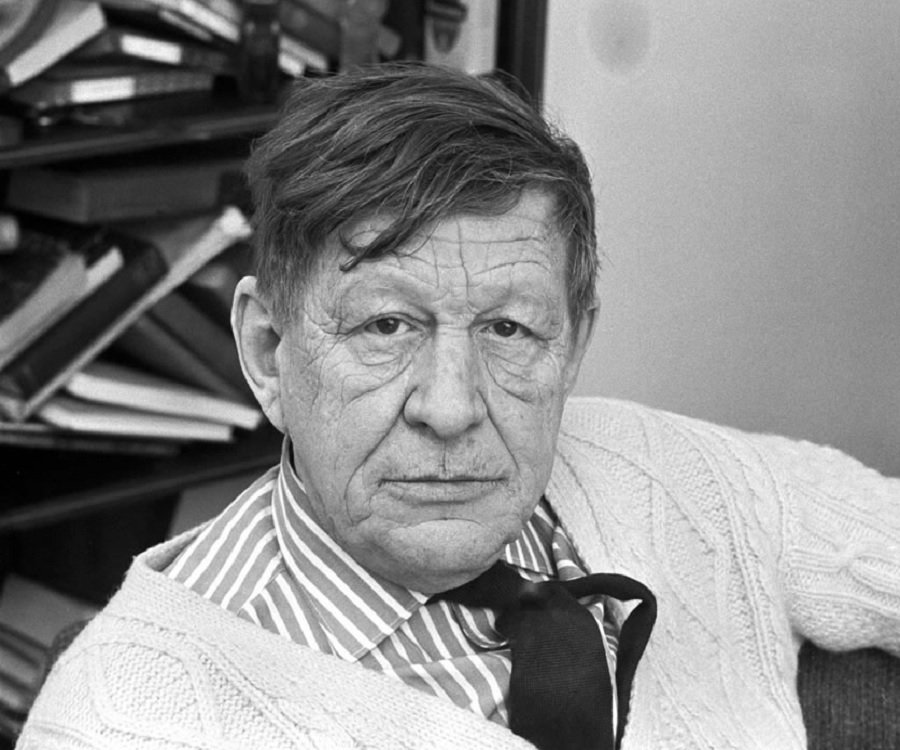 W.H. Auden W.H. Auden1907 - WYSTAN H. AUDEN, English poet born (d. 1973); an Anglo-American poet, regarded by many as one of the greatest writers of the 20th century. His work is noted for its stylistic and technical achievements, its engagement with moral and political issues, and its variety of tone, form, and content. The central themes of his poetry are: personal love, politics and citizenship, religion and morals, and the relationship between unique human beings and the anonymous, impersonal world of nature. Aside from graduate school courses in English literature, where life is taken very seriously, the question about the great English poet that most people want answered is: Did Auden write a poem about a blow job or didn’t he? The answer is yes, he did. The poem, written in 1948 to amuse himself and his friends, is actually called “The Platonic Blow,” although it appears in unauthorized form as “The Gobble Poem,” hardly a title that a poet of Auden’s quality would have chosen. After Fuck You: A Magazine of the Arts published the poem without the poet’s permission in 1965, “A Platonic Blow” was issued in “a Trade edition” of 300 copies and “a Rough Trade edition of 5 numbered copies, each with beautiful slurp drawings by the artist Joe Brainard.” The poem’s first two lines suggest its flavor: “It was a Spring day, a day for a lay, when the air / Smelled like a locker-room, a day to blow or get blown.” Auden proudly admitted authorship in 1968. Until he was fifteen he expected to become a mining engineer, but his "passion for words" had already begun. He wrote later: "words so excite me that a pornographic story, for example, excites me sexually more than a living person can do". Auden and Christopher Isherwood sailed to New York in January 1939, entering on temporary visas. Their departure from Britain was later seen by many there as a betrayal and Auden's reputation suffered. In April 1939 Isherwood moved to California, and he and Auden saw each other only intermittently in later years. Around this time, Auden met an eighteen-year old poet Chester Kallman, who became his lover for the next two years (Auden described their relation as a "marriage" that began with a cross-country "honeymoon" journey). In 1941 Kallman ended their sexual relations because he could not accept Auden's insistence on a mutual faithful relationship, but he and Auden remained companions for the rest of Auden's life, sharing houses and apartments from 1953 until Auden's death. Auden dedicated both editions of his collected poetry (1945/50 and 1966) to Isherwood and Kallman. In 1940-41, Auden lived in a house in Brooklyn Heights which he shared with Carson McCullers, Benjamin Britten and others, and which became a famous center of artistic life. 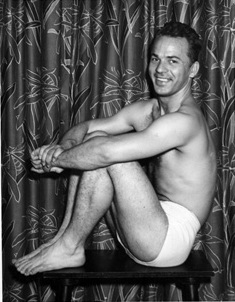 George Birimisa George Birimisa1924 - GEORGE BIRIMISA born (d: 2012) an American playwright, actor and director who contributed to the explosion of gay theater in the mid-1960s during the early years of Off-Off-Broadway. His works feature sexually explicit, emotionally charged depictions of working class Gay men, often closeted, in the years before the Stonewall uprising (1969) triggered a national and international Gay Rights movement. Contemporary Authors said that "Birmisa's plays feature themes of human isolation, frustrated idealism, and rage against needless suffering, usually centered around homosexual characters.“ According to critic and playwright Michael Smith, Birimisa's writing “links the pain of human isolation to economic and social roots.” Birimisa’s first produced play, Degrees (February 1966),[1] a portrait of a Gay relationship, premiered at Theater Genesis in the East Village, Manhattan. At the time, gay plays usually received no serious artistic or critical attention. “For years,” the playwright recalls, “even gay people would ask me, ‘When are you going to write your first real play?’” Degrees included autobiographical elements, which became stronger and more explicit in Birimisa's later works. Above all, he writes out of a need to tell the truth about his own life. "I don't agree that there are ‘shades of truth,’” he says. “We all know the truth, deep inside ourselves. As artists, we have a responsibility to reveal who we truly are, not to work in shades of gray. This truth includes our sexual beings.” Birimisa directed and acted in his best-known Off-Off-Broadway play, Daddy Violet[12] (1967), a semi-improvised indictment of the Vietnam War. Daddy Violet opened at the Troupe Theatre Club, premiered in June 1967 at the Caffe Cino, Joe Cino’s's famous coffeehouse in Greenwich Village that is generally acknowledged as the birthplace of Off-Off-Broadway. The play subsequently toured colleges in the United States and Canada and appeared at the 1968 International Theater Festival in Vancouver. Today, the playwright acknowledges that he wrote Daddy Violet as a parody of the abstract,improvisational theater then in vogue Off-Off-Broadway, an attempt to “out avant-garde everyone else.” For a revival at the Boston Conservatory in 2006, Birimisa revised the script to refer to the war in Iraq. In 1969, Birimisa became the first out gay playwright to receive a grant from the Rockefeller Foundation. This enabled him to attend rehearsals for the London production of his first two-act play, Mr. Jello (April 1968), an arrangement of realistic vignettes that intersect to form a surrealistic social statement, with characters that include a female impersonator, a Gay married man, and a hustler. In 1976, Birimisa moved to Los Angeles, California. He dismisses the three plays he wrote there, A Dress Made of Diamonds (1976), Pogey Bait (1976), and A Rainbow in the Night (1978) as inferior to his earlier works. However, A Rainbow in the Night, an autobiographical portrait of two Gay men living in New York City’s Bowery in 1953, won a 1978 Drama-Logue Award, and Pogey Bait, a comedy based on Birimisa’s wartime experiences as a gay apprentice seaman, received subsequent productions in Minneapolis, San Francisco, New York, and Los Angeles. Birimisa moved to San Francisco in 1980 and did not write another play for almost 10 years. Then he began a revised version of A Rainbow in the Night titled The Man With Straight Hair (1994), which premiered at the Studio at Theater Rhinocerous. A one-man play, Looking for Mr. America (1995), debuted at Josie’s Cabaret and Juice Joint and subsequently played in New York at the La MamaExperimental Theater Club. Birimisa himself performed the show at age 71, in the role of a man recounting his lifelong sexual addiction. Dean Goodman's review noted that the play offers “an eloquent and touching portrait of a particular gay man’s journey through the last half of the 20th century.” Viagra Falls (2005) received a concert performance at La MaMa E.T.C. on September 17, 2007, under the direction of Daniel Haben Clark. The play chronicles a young gay man's long-term sado-masochistic relationship with a closeted opthamologist. With Steve Susoyev, Birimisa edited Return to Caffe Cino (2007), an anthology of essays and plays by writers associated with the Cino. The book won a 2007bda Literary Award for theater and drama. Birimisa: Portraits, Plays, Perversions (2009), an anthology of collected works and essays about Birimisa's personal life and career, includes an un-produced screenplay, The Kewpie-Doll Kiss, which chronicles Birimisa's childhood loss of his father, abandonment by his mother, and discovery of his sexuality, subjects explored earlier onstage in A Dress Made of Diamonds. George Birmisa taught Creative Writing since 1983, sponsored by New Leaf Services. He received the 2004 Harry Hay Award in recognition of his writing and community service. He was writing an autobiography titled Wildflowers. His unpublished manuscripts are in the Joe Cino Memorial Library at Lincoln Center Library for the Performing Arts in New York.  Representative Barbara Jordan Representative Barbara Jordan1936 - BARBARA JORDAN, American politician born (d. 1996); an American politician from Texas. She served as a congresswoman in the U.S. House of Representative from 1973 to 1979. Jordan was a Lesbian with a longtime companion of more than 20 years, Nancy Earl; Jordan never publicly acknowledged her sexual orientation, but in her obituary, the Houston Chronicle mentioned her longtime relationship with Earl. After Jordan's initial unsuccessful statewide races, advisers warned her to become more discreet and not bring any female companions on the campaign trail. Active in the Kennedy-Johnson presidential campaign of 1960, Jordan was recruited to give speeches and after her success with that endeavor, she was recruited by the local Democratic party to continue on the speaking circuit. Jordan unsuccessfully ran for the Texas House of Representative in 1962 and 1964. Her persistence won her a seat in the Texas Senate in 1966, becoming the first African American state senator since 1883 and the first black woman to serve in that body. Re-elected to a full term in the Texas Senate in 1968, she served until 1972. She was the first African-American female to serve as president pro tem of the state senate and served for one day as acting governor of Texas in 1972. In 1972, she was elected to the United States House of Representatives, becoming the first black woman from a Southern state to serve in the House. She received extensive support from former President Lyndon Johnson, who helped her secure a position on the House Judiciary Committee. In 1974, she made an influential televised speech before the House Judiciary Committee supporting the impeachment of President Richard Nixon. Jordan was mentioned as a possible running mate to Jimmy Carter in 1976. Her speech at the 1976 Democratic National Convention is considered by many historians to have been the best convention keynote speech in modern history. She was the first African-American woman to deliver the keynote address. 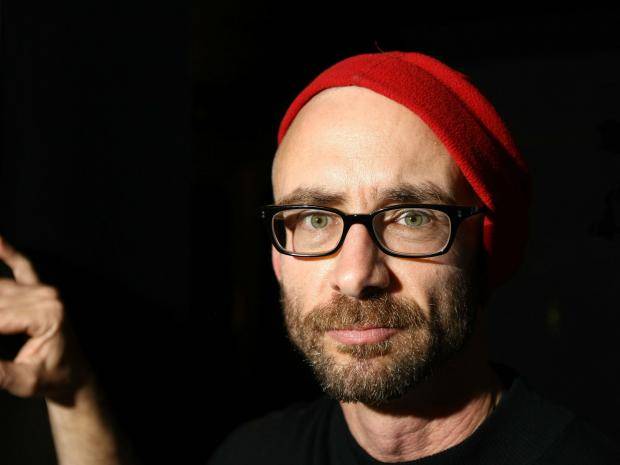 Chuck Palahniuk Chuck Palahniuk1962 - CHUCK PALAHNIUK, American writer, born; an American satirical novelist and freelance journalist of Ukrainian ancestry born in Pasco, Washington. The press release for his book, Rant, states he is now living in Vancouver, Washington. He is best known for the award-winning novel Fight Club, which was later made into a film directed by David Fincher. He has one of the largest centralized followings of any author on the Internet, based around his official website. By his account, he started writing while attending writer's workshops, hosted by Tom Spanbauer (The Man Who Fell in Love With The Moon), which he attended to meet new friends. Spanbauer largely inspired Palahniuk's minimalistic writing style. His first book, Insomnia: If You Lived Here, You'd Be Home Already, was never published due to his disappointment with the story (though a small part of it would be salvaged for use in Fight Club). When he attempted to publish his next novel, Invisible Monsters, publishers rejected it for being too disturbing. This led him to work on his most famous novel, Fight Club, which he wrote as an attempt to disturb the publisher even more for rejecting him. Palahniuk wrote this story in his spare time while working for Freightliner. After initially publishing it as a short story (which would become chapter 6 of the novel) in the 1995 compilation Pursuit of Happiness, Palahniuk expanded it into a full novel, which – contrary to his expectations – the publisher was willing to publish. In September 2003, Palahniuk was interviewed by Entertainment Weekly's Karen Valby. During the interview, Palahniuk in confidence mentioned information pertaining to his partner. While it had been previously believed by many that he was married to a woman (some members of the press had claimed he had a wife), Palahniuk had in fact been living with his boyfriend. Some time later, Palahniuk believed that Valby was going to print this information in her article, without his consent. In response, he put an angry audio recording of himself on his web site, not only revealing that he is gay, but also making negative comments about Valby and a member of her family. However, Palahniuk's fears turned out to be ungrounded, and Valby's article did not reveal anything about his personal life outside of the fact that he is unmarried. The recording was later removed from the website, making some fans believe that Palahniuk is embarrassed by his homosexuality. According to Dennis Widmyer, the site's webmaster, the recording was not removed because of the statements regarding his sexuality, but because of the statements about Valby. Palahniuk would later post a new recording to his site, asking his fans not to overreact to these events. He also apologized for his behavior, claiming that he wished he had not recorded the message. Noteworthy  1903 - New York police conduct first recorded raid on a gay bathhouse, the Ariston. 78 men were caught in the raid, and twenty-six were arrested. | ||||
|
|8|O|8|O|8|O|8|O|8|O|8|O|8|O|8| Gay Wisdom for Daily Living from White Crane Institute "With the increasing commodification of gay news, views, and culture by powerful corporate interests, having a strong independent voice in our community is all the more important. White Crane is one of the last brave standouts in this bland new world... a triumph over the looming mediocrity of the mainstream Gay world." - Mark Thompson Exploring Gay Wisdom & Culture since 1989! |8|O|8|O|8|O|8|O|8|O|8|O|8|O|8| | ||||

|
|||||

|
