|
Gay Wisdom for Daily Living brought to you by White Crane Institute ͏ ͏ ͏ ͏ ͏ ͏ ͏ ͏ ͏ ͏ ͏ ͏ ͏ ͏ ͏ ͏ ͏ ͏ ͏ ͏ ͏ ͏ ͏ ͏ ͏ ͏ ͏ ͏ ͏ ͏ ͏ ͏ ͏ ͏ ͏ ͏ ͏ ͏ ͏ ͏ ͏ ͏ ͏ ͏ ͏ ͏ ͏ ͏ ͏ ͏ ͏ ͏ ͏ ͏ ͏ ͏ ͏ ͏ ͏ ͏ ͏ ͏ ͏ ͏ ͏ ͏ ͏ ͏ ͏ ͏ ͏ ͏ ͏ ͏ ͏ ͏ ͏ ͏ ͏ ͏ ͏ ͏ ͏ ͏ ͏ ͏ ͏ ͏ ͏ ͏ ͏ ͏ ͏ ͏ ͏ ͏ ͏ ͏ ͏ ͏ ͏ ͏ ͏ ͏ ͏ ͏ ͏ ͏ ͏ ͏ ͏ ͏ ͏ ͏ ͏ ͏ ͏ ͏ ͏ ͏ ͏ ͏ ͏ ͏ ͏ ͏ ͏ ͏ ͏ ͏ ͏ ͏ ͏
|
|
||||
| This Day in Gay History | ||||
April 21Born 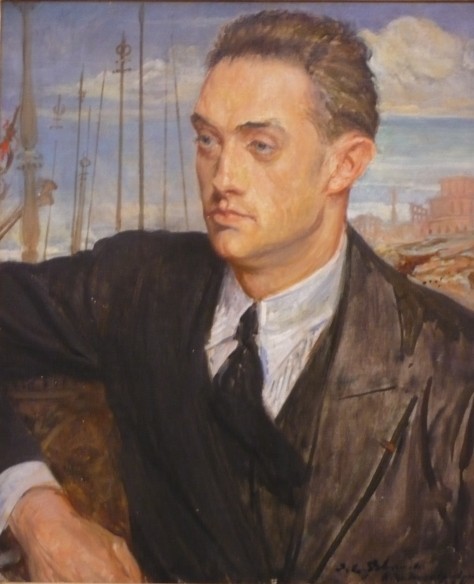 Henry de Montherlant Henry de Montherlant1896 - HENRY DE MONTHERLANT, French novelist and essayist born (d. 1972); Often compared to Hemingway, with whom he has much in common temperamentally, he is, in fact, the French Hemingway. In his novels, Montherlant explored the difficult areas of his ambiguous sexuality, exploiting his sexual affairs while muffling his even more intense affairs with men. What, if anything, might this tell us about Papa Hemingway? Montherlant concealed his pederastic tendencies from the public during his lifetime. In 1912, he had been expelled from the Sainte-Croix de Neuilly academy for a relationship with a fellow student. His novel Les garcons (1969) and his correspondence with Roger Peyrefitte, (author of Les Amitiés particulières (1943), also about sexual relationships between boys at a Roman Catholic boarding school), are the main testaments to this side of his character. In 1960, Montherlant was elected to the French Academy without having made an express request. Twelve years later, blind, he commits suicide. Hemingway redux, d'accord. 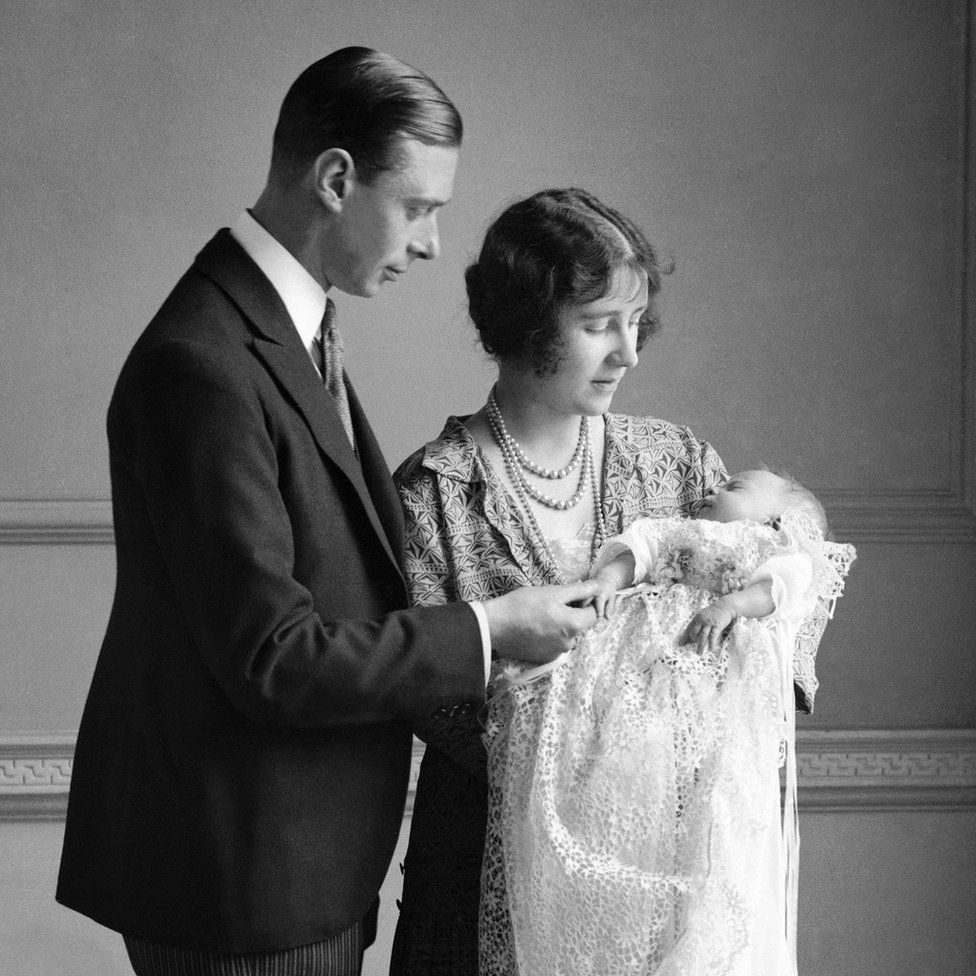 Elizabeth II with her parents, the King George VI and Queen Elizabeth Elizabeth II with her parents, the King George VI and Queen Elizabeth1926 - Queen Elizabeth II of the United Kingdom is born; a real queen. Died 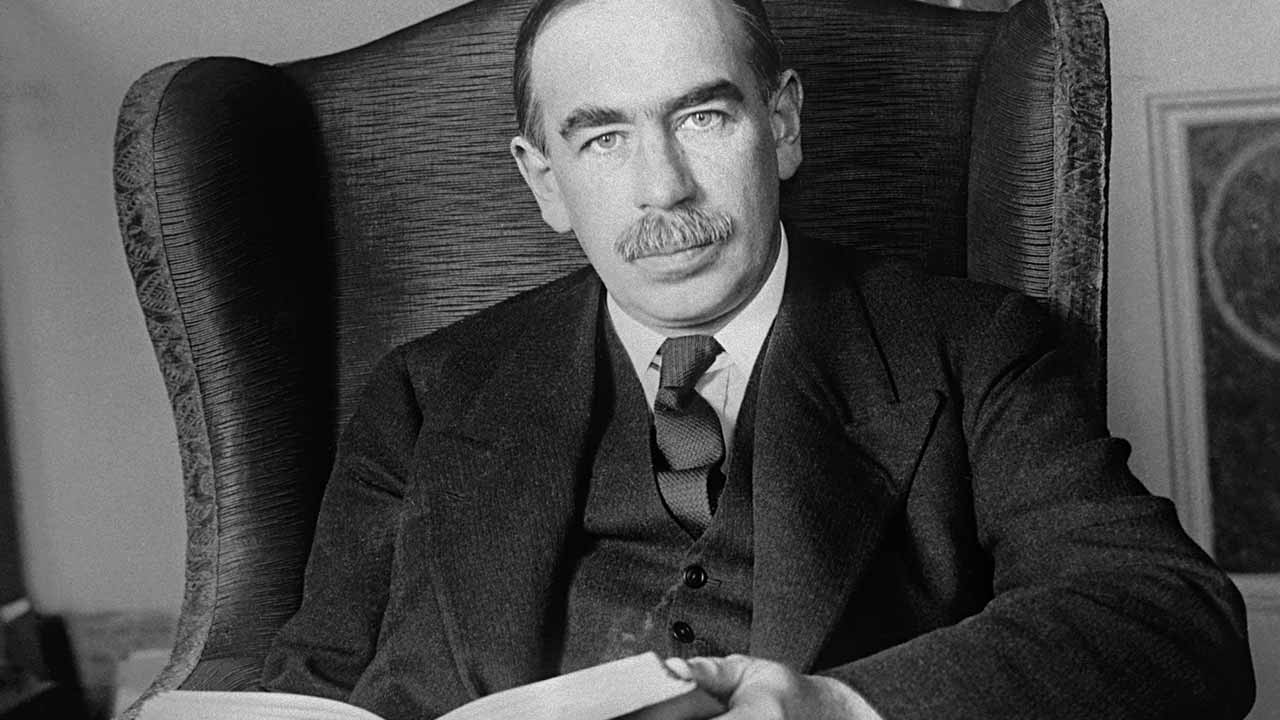 John Maynard Keynes John Maynard Keynes1946 - JOHN MAYNARD KEYNES died on this date. Keynes was an English economist whose ideas fundamentally changed the theory and practice of modern macroeconomics and the economic policies of governments. He built on and greatly refined earlier work on the causes of business cycles, and is widely considered to be one of the most influential economists of the 20th century and the founder of modern macroeconomics. His ideas are the basis for the school of thought known as Keynsian economics and its various offshoots. Keynes's early romantic and sexual relationships were exclusively with men. Keynes had been in relationships while at Eton and Cambridge; significant among these early partners were Dilly Knox and Daniel Macmillan. Keynes was open about his affairs, and from 1901 to 1915 kept separate diaries in which he tabulated his many sexual encounters. Keynes's relationship and later close friendship with Macmillan was to be fortunate, as Macmillan’s company first published his tract Economic Consequences of the Peace Attitudes in the Bloomsbury Group, in which Keynes was avidly involved, were relaxed about homosexuality. Keynes, together with writer Lytton Strachey, had reshaped the Victorian attitudes of the Cambridge Apostles: "since [their] time, homosexual relations among the members were for a time common", wrote Bertrand Russell. The artist Duncan Grant, whom he met in 1908, was one of Keynes's great loves. Keynes was also involved with Lytton Strachey, Though they were for the most part love rivals, not lovers. Keynes had won the affections of Arthur Hobhouse, and as with Grant, fell out with a jealous Strachey for it. Strachey had previously found himself put off by Keynes, not least because of his manner of "treat[ing] his love affairs statistically". Political opponents have used Keynes's sexuality to attack his academic work. One line of attack held that he was uninterested in the long term ramifications of his theories because he had no children. Keynes's friends in the Bloomsbury Group were initially surprised when, in his later years, he began dating and pursuing affairs with women, demonstrating himself to be bisexual. Ray Costelloe (who would later marry Oliver Strachey) was an early heterosexual interest of Keynes. In 1906, Keynes had written of this infatuation that, "I seem to have fallen in love with Ray a little bit, but as she isn't male I haven't [been] able to think of any suitable steps to take." 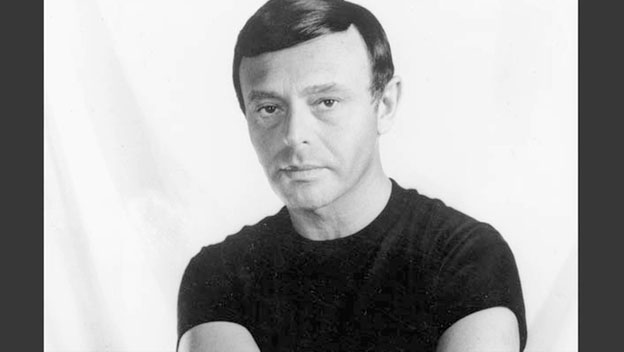 Rudy Gernreich Rudy Gernreich1985 - RUDI GERNREICH, Austrian fashion designer, died (b. 1922); a fashion designer and an early Gay activist. Born in Vienna, he fled Austria at age sixteen due to Nazism. He came to the U.S., settling in Los Angeles. For a time, he had a career as a dancer, performing with the Lester Horton Company around 1945. He moved into fashion design via fabric design, and then worked closely with model Peggy Moffitt and photographer William Claxton, pushing the boundaries of "the futuristic look" in clothing over three decades. An exhibition of his work at the Phoenix Art Museum in 2003 hailed him as "one of the most original, prophetic and controversial American designers of the 1950s, '60s and '70s." In the USA, Gernreich was an influential co-founder of the original Mattachine Society in Los Angeles, the USA's first Gay Liberation movement. Although Mattachine's co-founder Harry Hay claimed "never to have even heard" of the earlier Gay Liberation struggle in Germany (Harry could be selectively deaf), by the people around Adolf Brand, Magnus Hirschfeld and Leontine Sagan, he is known to have talked about it with Austrian and German emigres in America. He was close friends and one-time lovers with Gernreich. Later in life, Gernreich chose to devote himself to cooking and selling soup. His Final Will and Testament endowed a fund to provide legal funds for Gay men arrested by entrapment. He was portrayed, admirably and excitingly, by Ugly Betty star, Michael Urie, off Broadway, in the play The Temperamentals. He largely remains an unsung hero of LGBT Rights. 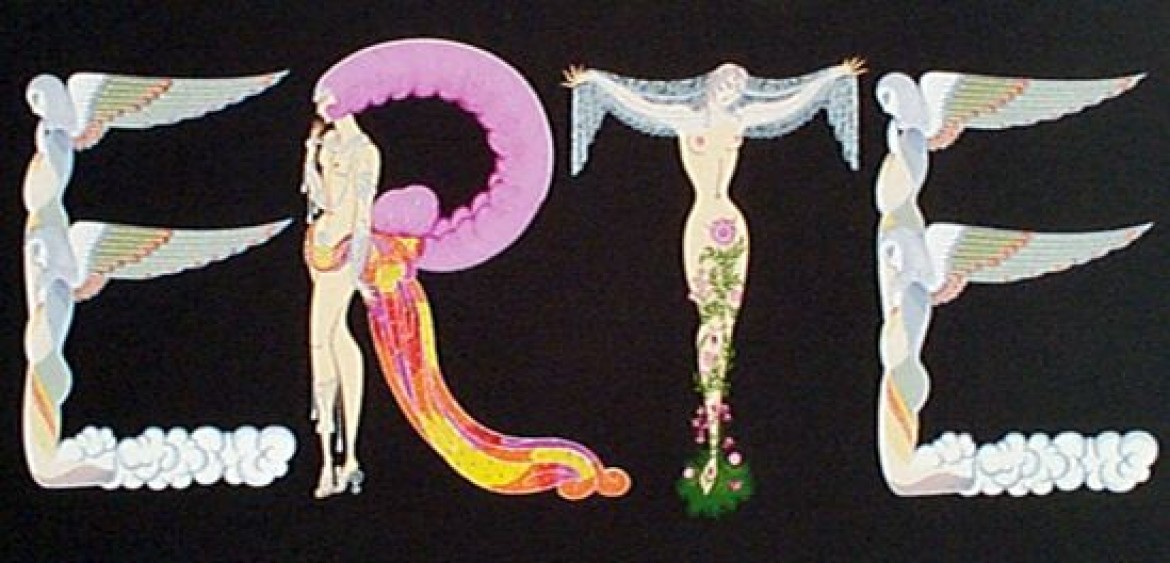 1990 - ERTÉ, French artist died (b. 1892); Erté is perhaps most famous for his elegant fashion designs which capture the Art Deco period in which he worked. His delicate figures and sophisticated, glamorous designs are instantly recognizable, and his ideas and art influence fashion into the 21st century. His costumes and sets were featured in the Ziegfeld Follies of 1923, many productions of the Folies Bergère, and George White’s Scandals. In 1925, Louis B. Mayer brought him to Hollywood to design sets and costumes for a film called Paris. There were many script problems so Erté was given other assignments to keep him busy. He designed for such films as Ben-Hur, The Mystic, Time, The Comedian, Dance Madness and La Bohème. Noteworthy 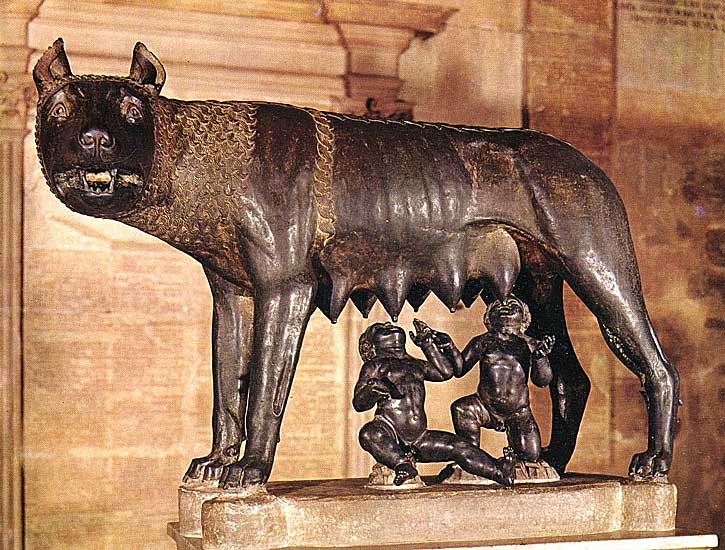 Romulus and Remus Romulus and Remus0753 - ROMULUS and REMUS found Rome (traditional). The twin sons of priestess Rhea Silvia, the twins were reputedly fathered by the god of war, Mars. According to the tradition recorded as history by Plutarch and Livy, Romulus served as the first King of Rome. After his death, Romulus was deified as the god Quirinius, the divine persona of the Roman people. He now is regarded as a mythological figure, and it is supposed that his name is a back-formation from the name Rome, which may ultimately have derived from a word for "river". No one seems to be interested in what happened to Remus. Can't find his story anywhere. 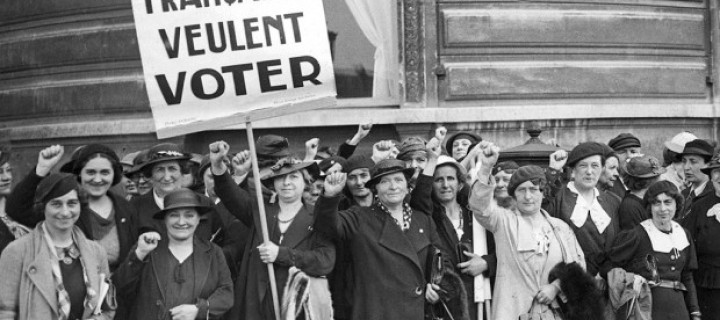 Droit-de-vote-des-femmes Francaise Droit-de-vote-des-femmes Francaise1944 - Women in France receive the right to vote. 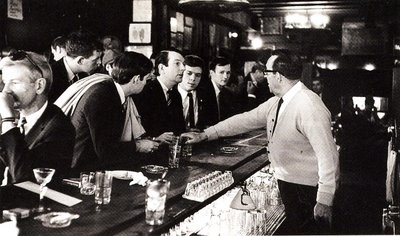 The "sip-in" at the bar Julius in NYC. 1966 The "sip-in" at the bar Julius in NYC. 19661966 - The first “SIP-IN” held at Julius’s bar in Greenwich Village. The MATTACHINE SOCIETY in hopes of overturning the State Liquor Authority's regulations against serving homosexuals in bars staged a direct action they called “a sip-in” inspired by the Black civil rights movement successes in lunch bars and transportation. While there was no law on the books against such a thing, the SLA often penalized bars that served homosexuals on the grounds that their gatherings were "disorderly." Bartenders ordered patrons to sit facing away from other customers to prevent cruising, denied them drinks, or just kicked them out as precautionary moves under the SLA's watch. At the same time, bars frequented by gays were often targeted by police in entrapment schemes. By 1965, influenced by Frank Kameny’s addresses in the early 1960s, Dick Leitch, the president of the New York Mattachine Society, advocated direct action, and the group staged the first public homosexual demonstrations and picket lines in the 1960s. Frank Kameny, founder of Mattachine Washington in 1961, had advocated militant action reminiscent of the black civil rights campaign, whilst also arguing for the morality of homosexuality. The State Liquor Authority of New York State did not allow homosexuals to be served in licensed bars in the state under penalty of revocation of the bar's license to operate. This denial of public accommodation had been confirmed by a court decision in the early 1940's. A legal study, commissioned by Mattachine New York on the city’s alcohol beverage law concluded that there was no law that prohibited homosexuals gathering in bars but that there was a law that prohibited disorderly behavior in bars, which the SLA had been interpreting as homosexual behavior. Leitsch, then, announced to the press that three members of Mattachine New York would turn up at a restaurant on the lower east side, announce their homosexuality and upon refusal of service make a complaint to the SLA. This came to be known as the ‘Sip In’ and only succeeded at the third attempt in the Julius Bar in Greenwich Village. The ‘Sip In’, though, did gain extensive media attention and the resultant legal action against the SLA eventually prevented them from revoking licenses on the basis of homosexual solicitation in 1967. In the years before 1969 the organization also was effective in getting New York City to change its policy of police entrapment of gay men, and to rescind its hiring practices designed to screen out gay people. There is a delightful article on this early demonstration in today’s New York Times here: http://www.nytimes.com/2016/04/21/nyregion/before-the-stonewall-riots-there-was-the-sip-in.html?_r=0 | ||||
|
|8|O|8|O|8|O|8|O|8|O|8|O|8|O|8| Gay Wisdom for Daily Living from White Crane Institute "With the increasing commodification of gay news, views, and culture by powerful corporate interests, having a strong independent voice in our community is all the more important. White Crane is one of the last brave standouts in this bland new world... a triumph over the looming mediocrity of the mainstream Gay world." - Mark Thompson Exploring Gay Wisdom & Culture since 1989! |8|O|8|O|8|O|8|O|8|O|8|O|8|O|8| | ||||

|
|||||

|
