|
Gay Wisdom for Daily Living brought to you by White Crane Institute ͏ ͏ ͏ ͏ ͏ ͏ ͏ ͏ ͏ ͏ ͏ ͏ ͏ ͏ ͏ ͏ ͏ ͏ ͏ ͏ ͏ ͏ ͏ ͏ ͏ ͏ ͏ ͏ ͏ ͏ ͏ ͏ ͏ ͏ ͏ ͏ ͏ ͏ ͏ ͏ ͏ ͏ ͏ ͏ ͏ ͏ ͏ ͏ ͏ ͏ ͏ ͏ ͏ ͏ ͏ ͏ ͏ ͏ ͏ ͏ ͏ ͏ ͏ ͏ ͏ ͏ ͏ ͏ ͏ ͏ ͏ ͏ ͏ ͏ ͏ ͏ ͏ ͏ ͏ ͏ ͏ ͏ ͏ ͏ ͏ ͏ ͏ ͏ ͏ ͏ ͏ ͏ ͏ ͏ ͏ ͏ ͏ ͏ ͏ ͏ ͏ ͏ ͏ ͏ ͏ ͏ ͏ ͏ ͏ ͏ ͏ ͏ ͏ ͏ ͏ ͏ ͏ ͏ ͏ ͏ ͏ ͏ ͏ ͏ ͏ ͏ ͏ ͏ ͏ ͏ ͏ ͏ ͏
|
|
||||
| This Day in Gay History | ||||
April 23Born 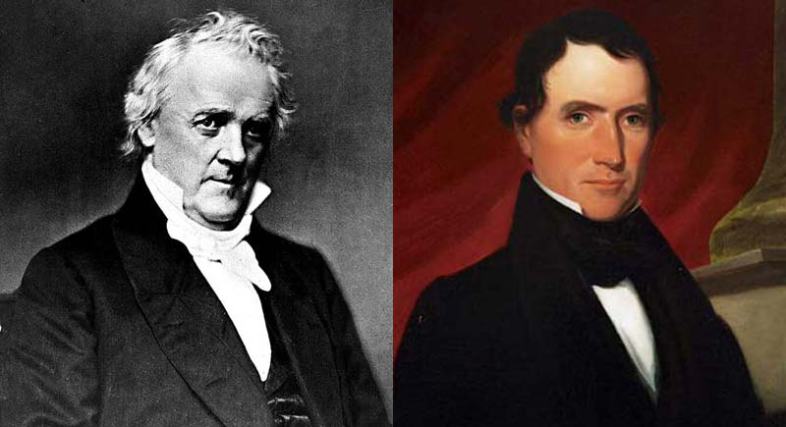 Miss Nancy and Aunt Fancy Miss Nancy and Aunt Fancy1791 - JAMES BUCHANAN, 15th President of the United States (d. 1868); The nation’s only bachelor chief executive, for fifteen years in Washington D.C., prior to his presidency, Buchanan lived with his “close friend,” Alabama Senator William Rufus King (see Gay Wisdom, April 6). King became Vice President under Franklin Pierce. He took ill and died shortly after Pierce's inauguration, and four years before Buchanan became President. Buchanan and King's close relation prompted the surly and genocidal Andrew Jackson to refer to King as "Miss Nancy" and "Aunt Fancy," while Aaron V. Brown spoke of the two as "Buchanan and his wife." Further, some of the contemporary press also speculated about Buchanan and King's relationship. Buchanan and King's nieces destroyed their uncles' correspondence, leaving some questions as to what relationship the two men had, but the length and intimacy of surviving letters illustrate "the affection of a special friendship", and Buchanan wrote of his "communion" with his housemate . The circumstances surrounding Buchanan and King's close emotional ties have led some to speculate that he was America's first homosexual president. Historically, until the Bush administration, Buchanan was generally considered the “worst President of all time.” He is now unequivocally #2. 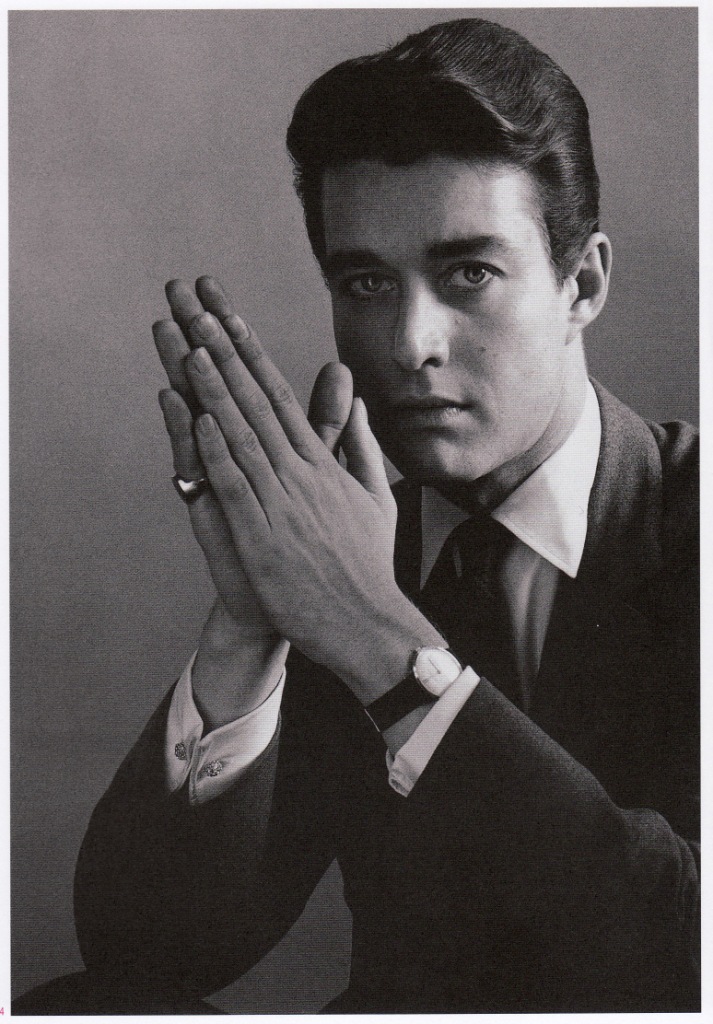 Halston Halston1932 - HALSTON, American fashion designer (d. 1990); an iconic clothing designer of the 1970s. His long dresses or copies of his style were popular fashion wear in mid-1970s discotéques. He began his career as a milliner (designing the pillbox hat Jacqueline Kennedy famously wore to her husband's 1961 Presidential inauguration) and when he moved to designing women's wear, Newsweek dubbed him "the premier fashion designer of all America." His designs were worn by Bianca Jagger, Liza Minnelli, Anjelica Huston, Lauren Bacall, Babe Paley and Elizabeth Taylor, setting a style that would be closely associated with the international jet set of the era. Halston famously quipped, "You're only as good as the people you dress." Despite his achievements, increasing drug use and failure to meet deadlines (he was reluctant to hire junior designers to design licensed products) eventually undermined his success. In October of 1984 he was fired from his own company and lost the right to design and sell clothes under his own name. In 1990, he died of lung cancer from complications of AIDS in San Francisco. According to Salon.com, Halston was "the first international fashion superstar—and possibly the best designer America has ever had." Died 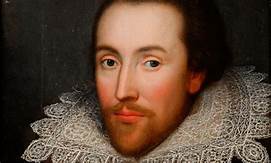 William Shakespeare William Shakespeare1616 - WILLIAM SHAKESPEARE, English playwright and actor, died (b. 1564); Arguably the most important playwright in the English or any other language, evidence suggests that Shakespeare wrote sonnets throughout his career for a private readership. Even before the two unauthorized sonnets appeared in The Passionate Pilgrim in 1599, Francis Meres had referred in 1598 to Shakespeare's "sugred Sonnets among his private friends". Few analysts believe that the published collection follows Shakespeare's intended sequence. He seems to have planned two contrasting series: one about uncontrollable lust for a married woman of dark complexion (the "dark lady"), and one about conflicted love for a fair young man (the "fair youth"). It remains unclear if these figures represent real individuals, or if the authorial "I" who addresses them represents Shakespeare himself, though Wordsworth believed that with the sonnets "Shakespeare unlocked his heart". The 1609 edition was dedicated to a "Mr. W.H.", credited as "the only begetter" of the poems. It is not known whether this was written by Shakespeare himself or by the publisher, Thomas Thorpe, whose initials appear at the foot of the dedication page; nor is it known who Mr. W.H. was, despite numerous theories, or whether Shakespeare even authorized the publication. Critics praise the Sonnets as a profound meditation on the nature of love, sexual passion, procreation, death, and time. Even though he married Anne Hathaway and had three children, circumstantial evidence (such as in his sonnets and plays) suggests he may have taken an erotic interest in men. For the Elizabethans, what is today termed homosexual or bisexual was more likely to be recognized as simply a sexual act, rather than a “sexual orientation.” Just as today however, it is possible there was a spectrum of individual responses: from those engaging in homosexual acts who considered it irrelevant to their persona and simply a variation of both lust and love, to those who believed it marked them out as different. Sodomy was a crime in the period, but Phillip Stubbs in Anatomie of Abuses (1583), Edward Guilpin in Skialetheia (1598), and Michael Drayton in The Moone-Calfe (1605), all noted the prevalence of "sodomites" at theatres, which does imply a recognized group. A homosexual subculture which identified itself as separate, and which was centered around the Molly house, certainly existed in London by the mid-seventeenth century, and may well have existed in Shakespeare's time. With regard to Shakespeare's sexuality, no direct evidence exists to support the view that he was bisexual; all theories along these lines, as with the theories of his heterosexual affairs, come from an analysis of Shakespeare's plays and sonnets. In his Last Will and Testament, William Shakespeare’s sole bequest to his wife of some thirty-three years was “my second best bed with the furniture.” These words, with their stark simplicity, take people by surprise, and invariably bring to mind the question, “To whom | ||||
|
|8|O|8|O|8|O|8|O|8|O|8|O|8|O|8| Gay Wisdom for Daily Living from White Crane Institute "With the increasing commodification of gay news, views, and culture by powerful corporate interests, having a strong independent voice in our community is all the more important. White Crane is one of the last brave standouts in this bland new world... a triumph over the looming mediocrity of the mainstream Gay world." - Mark Thompson Exploring Gay Wisdom & Culture since 1989! |8|O|8|O|8|O|8|O|8|O|8|O|8|O|8| | ||||

|
|||||

|
