|
Gay Wisdom for Daily Living brought to you by White Crane Institute ͏ ͏ ͏ ͏ ͏ ͏ ͏ ͏ ͏ ͏ ͏ ͏ ͏ ͏ ͏ ͏ ͏ ͏ ͏ ͏ ͏ ͏ ͏ ͏ ͏ ͏ ͏ ͏ ͏ ͏ ͏ ͏ ͏ ͏ ͏ ͏ ͏ ͏ ͏ ͏ ͏ ͏ ͏ ͏ ͏ ͏ ͏ ͏ ͏ ͏ ͏ ͏ ͏ ͏ ͏ ͏ ͏ ͏ ͏ ͏ ͏ ͏ ͏ ͏ ͏ ͏ ͏ ͏ ͏ ͏ ͏ ͏ ͏ ͏ ͏ ͏ ͏ ͏ ͏ ͏ ͏ ͏ ͏ ͏ ͏ ͏ ͏ ͏ ͏ ͏ ͏ ͏ ͏ ͏ ͏ ͏ ͏ ͏ ͏ ͏ ͏ ͏ ͏ ͏ ͏ ͏ ͏ ͏ ͏ ͏ ͏ ͏ ͏ ͏ ͏ ͏ ͏ ͏ ͏ ͏ ͏ ͏ ͏ ͏ ͏ ͏ ͏ ͏ ͏ ͏ ͏ ͏ ͏
|
|
||||
| This Day in Gay History | ||||
May 27Born 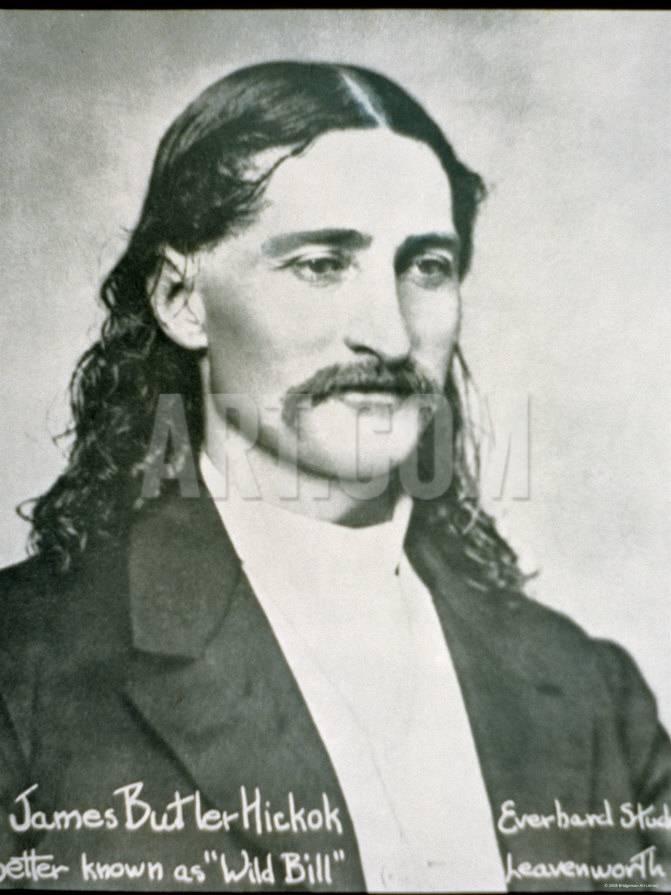 James Butler "Wild Bill" Hickok James Butler "Wild Bill" Hickok1837 - WILD BILL HICKOK is born in Troy Grove, Illinois. His real name was James Butler Hickok. Like many men in the wild west, Wild Bill really was wild with the men on the frontier and used his Lesbian buddy, Calamity Jane as a blind. Few people ever knew the pair's secret, and in the movies about their lives, not a mention was made by either Doris Day or Howard Keel. The American West of the nineteenth century was a world of freedom and adventure for men of every stripe—not least also those who admired and desired other men. Among these sojourners was William Drummond Stewart, a flamboyant Scottish nobleman who found in American culture of the 1830s and 1840s a cultural milieu of openness in which men could pursue same-sex relationships. William Benemann’s recent book, Men In Eden traces Stewart’s travels from his arrival in America in 1832 to his return to Murthly Castle in Perthshire, Scotland, with his French Canadian–Cree Indian companion, Antoine Clement, one of the most skilled hunters in the Rockies. Benemann chronicles Stewart’s friendships with such notables as Kit Carson, William Sublette, Marcus Whitman, and Jim Bridger. He describes the wild Renaissance-costume party held by Stewart and Clement upon their return to America—a journey that ended in scandal. Through Stewart’s letters and novels, Benemann shows that Stewart was one of many men drawn to the sexual freedom offered by the West. His book provides a tantalizing new perspective on the Rocky Mountain fur trade and the role of homosexuality in shaping the American West. For more: http://www.goodreads.com/book/show/13594189-men-in-eden 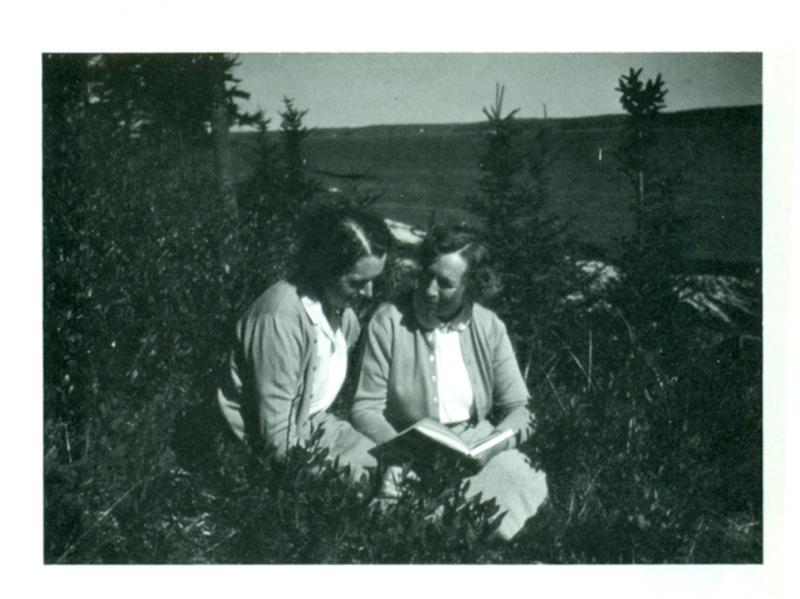 L to R: Rachel Carson and Dorothy Freeman L to R: Rachel Carson and Dorothy Freeman1907 - Marine biologist RACHEL CARSON was born on this date. She was born in Springdale, Pennsylvania and spent the majority of her life outside of Washington, DC with summers in Maine. She is best known as the author of Silent Spring, which is considered one of the foundational documents for the modern environmental movement. Silent Spring, published in 1962, awakened society to its responsibility to other forms of life. Carson had long been aware of the dangers of chemical pesticides and also the controversy within the agricultural community. She had long hoped someone else would publish an expose' on DDT but eventually realized that only she had the background as well as the economic freedom to do it. Silent Spring provoked a firestorm of controversy as well as attacks on Carson's professional integrity. The pesticide industry mounted a massive campaign to discredit Carson even though she did not urge the complete banning of pesticides but called for research to ensure pesticides were used safely and to find alternatives to dangerous chemicals such as DDT. The federal government, however, ordered a complete review of pesticide policy and Carson was asked to testify before a Congressional committee. As a direct result of that review, DDT was banned. With the publication of Silent Spring, Carson is credited with launching the contemporary environmental movement and awakening concern by Americans about the environment. She died from cancer in 1964 at the age of 57. The U.S. Fish and Wildlife Service named one of its refuges near Carson's summer home on the coast of Maine as "the Rachel Carson National Wildlife Refuge" in 1969 to honor the memory of this extraordinary woman. In the early 1950s Carson moved with her mother to Southport Island, Maine and subsequently began a extremely close relationship with a neighbor Dorothy Freeman. The relationship would last the rest of Carson's life. The two women had a number of common interests, nature chief among them, and began exchanging letters regularly while apart. They would continue to share every summer for the remainder of Carson's life, and meet whenever else their schedules permitted. Carson and Freeman knew that their letters could be interpreted as lesbian. Freeman shared parts of Carson's letters with her husband to help him understand the relationship, but much of their correspondence was carefully guarded. Shortly before Carson's death, she and Freeman destroyed hundreds of letters. The surviving correspondence was published in 1995 as Always, Rachel: The Letters of Rachel Carson and Dorothy Freeman, 1952–1964: An Intimate Portrait of a Remarkable Friendship, edited by Freeman's granddaughter.  Chris Colfer Chris Colfer1990 - Today is the birthday of American actor and singer CHRIS COLFER. He's best known for his portrayal of Kurt Hummel on Glee. At the age of eighteen, Colfer starred as Russel Fish in Russel Fish: The Sausage and Eggs Incident, a short film where an awkward teenager must pass a Presidential Physical Fitness test or fail gym class and lose his admission to Harvard University. Colfer's first TV role came in 2009 when he was cast as Kurt Hummel on Fox's Glee as a flamboyant singer who is bullied by the school football team. Kurt Hummel was created especially for Colfer and the show's creator, Ryan Murphy, had to scrap another planned character called "Rajish" so they could add Hummel. Colfer has explained that Hummel "puts on a very confident, 'I'm better than you' persona, but underneath it all he's the same anxious and scared teen everyone is/was at some point. In later episodes, he goes through an identity crisis, accepting and finding acceptance for who he is. [...] He's a tough guy in designer clothes." The character is also Gay, which is at the crux of many of his conflicts on the show. Colfer has a high vocal range, as displayed in the episode "Wheels", in which his character demonstrates the unusual ability (for a man) of singing a "high F." However, his character deliberately pretends to be unable to sing the note in order to spare his father the harassment he would receive for having a gay son. Colfer is out Gay and shared on Access Hollywood that his parents were accepting of him but he was frequently bullied at school. He originally auditioned for the role of Artie with the song "Mr. Cellophane" but Kevin McHale was selected for the role. However, the casting directors were so impressed by Colfer that they wrote the Kurt Hummel character into the show as a vehicle for him. Colfer commented on his casting, "It's good to have something positive, especially for kids in small towns, like myself, who need a little pick-me-up." Kurt Hummel has gone on to become an audience favorite. In April of 2013, TIME Magazine named Colfer one of the “100 MOST INFLUENTIAL PEOPLE IN THE WORLD” noting: “Chris...lives by extreme truth, speaking out against the epidemic of bullying that he, too, faced in high school. The honesty that he infuses into his “Glee” character, Kurt, leaves you reeling.” Noteworthy 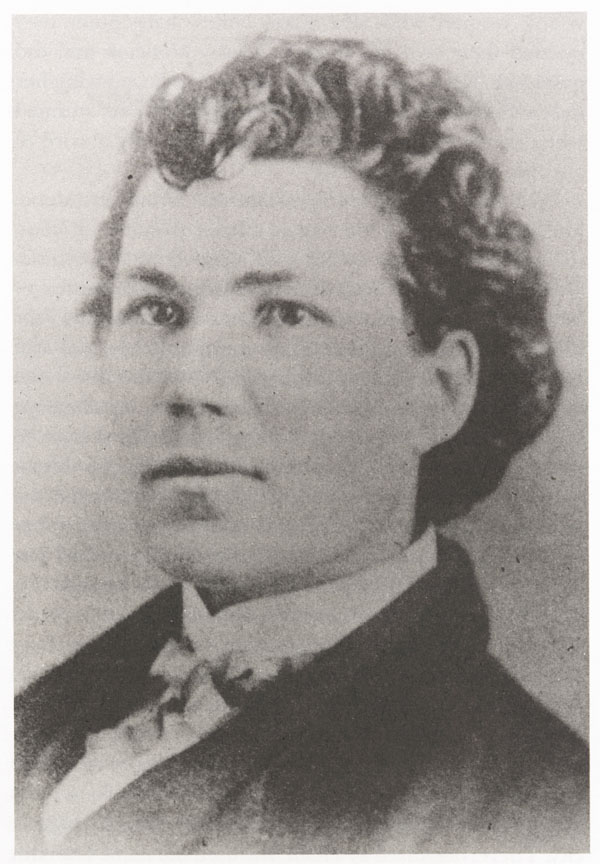 Emma Edmonds Seelye Emma Edmonds Seelye1883 - The Detroit Post and Tribune published an article about SARAH EMMA EDMONDS SEELYE who, while passing as a man and going by the alias Frank Thompson, fought in the American Civil War, sold books, and nearly married a girl in Nova Scotia. She was one of nearly 400 women who enlisted in the war. 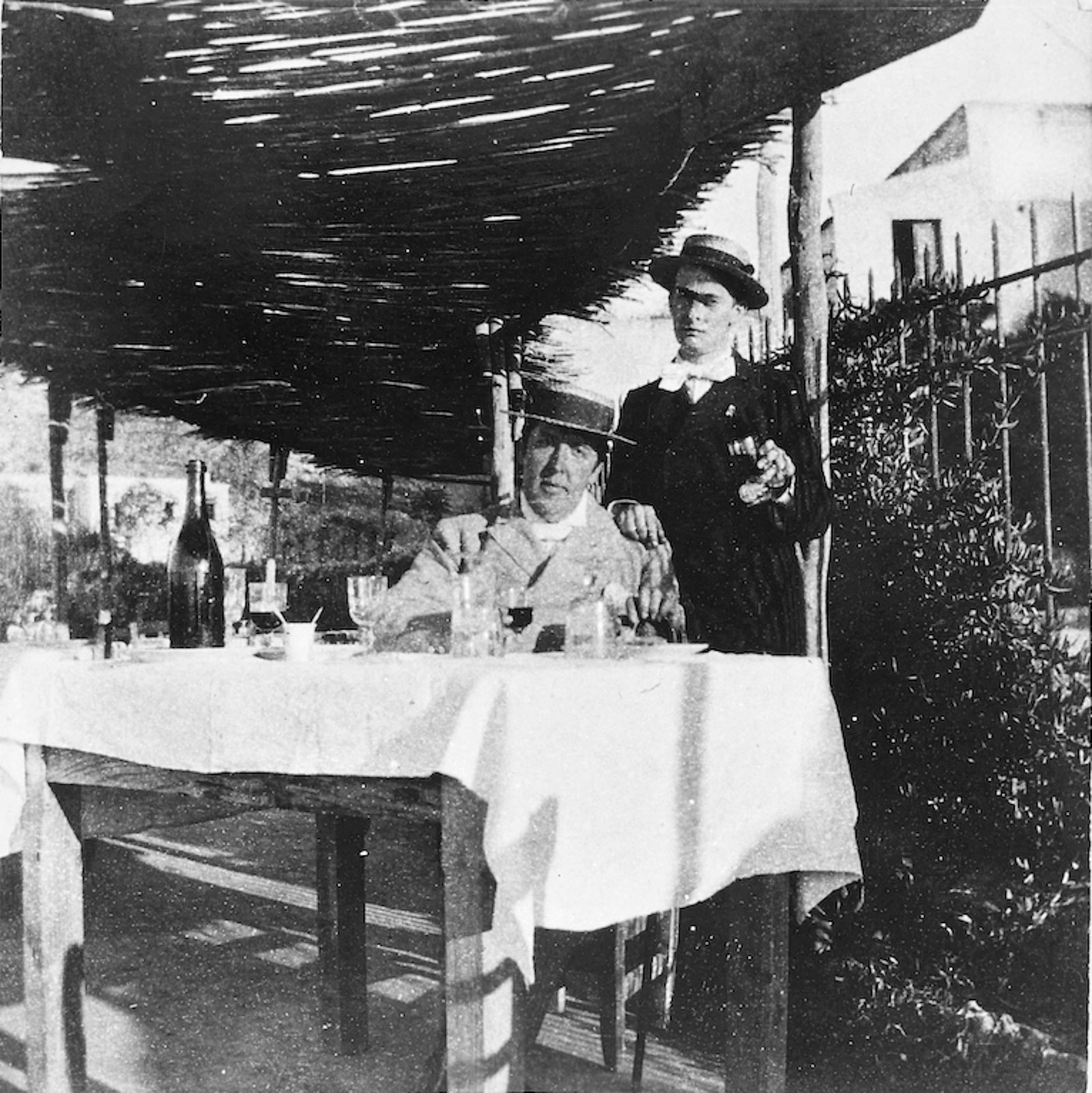 Wilde shortly after his release from Reading Gaol Wilde shortly after his release from Reading Gaol1895 - OSCAR WILDE was imprisoned for sodomy on this date. He would write his De Profundis during his stay in the Reading Gaol prison as a letter to his lover Lord Alfred Douglas. It would not be published in its entirety until 1962. 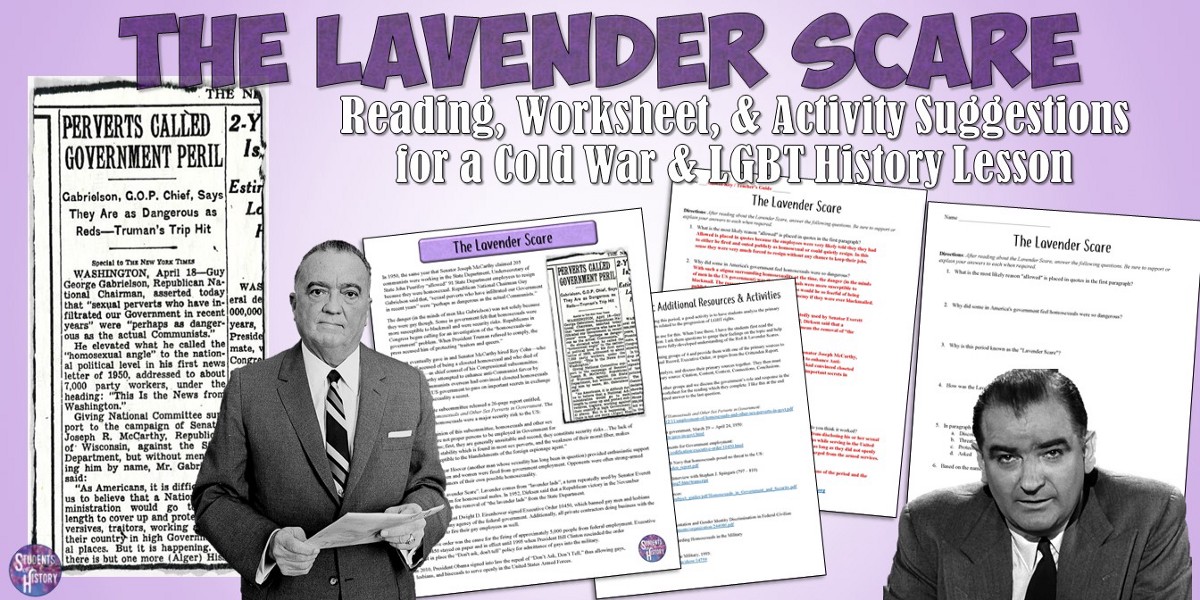 1953 - Eisenhower Executive Order 10450. Issued on April 27, 1953, the order became effective on this date. The order revoked President Truman's Executive Order 9835 of 1947, and dismantled its Loyalty Review Board program. Instead it charged the heads of federal agencies and the Office of Personnel Management, supported by the FBI, with investigating federal employees to determine whether they posed security risks. It expanded the definitions and conditions used to make such determinations. Previously, the criteria used to define a security risk were largely political, that is, affiliation with suspect organizations or a clear demonstration of disloyalty. Executive Order 10450 added more general estimations of character, stability, and reliability. Its language was broad: "Any criminal, infamous, dishonest, immoral, or notoriously disgraceful conduct, habitual use of intoxicants to excess, drug addiction, or sexual perversion." At the same time, the executive order's provisions contained advice on evaluating character problems, as in its provision that the medical valuation of a psychological problem should show "due regard to the transient or continuing effect of the illness. Without explicitly referring to homosexuality, the executive order responded to several years of charges that the presence of homosexual employees in the State Department posed blackmail risks. Attorney General Herbert Brownell Jr. explained that the new order was designed to encompass both loyalty and security risks and he differentiated between the two: "Employees could be a security risk and still not be disloyal or have any traitorous thoughts, but it may be that their personal habits are such that they might be subject to blackmail by people who seek to destroy the safety of our country." The executive order had the effect of banning gay men and lesbians from working for any agency of the federal government. It was not until 1973 that a federal judge ruled that a person's sexual orientation alone could not be the sole reason for termination from federal employment, and not until 1975 that the United States Civil Service Commission announced that they would consider applications by gays and lesbians on a case by case basis In 1975, the U.S. Civil Service Commission ended a ban on gays and lesbians in the federal civil service. In 1977, the State Department lifted a policy barring gays from employment in the Foreign Service. Around the same time, the IRS ended its policy of requiring "homosexual education and charity groups to publicly state that homosexuality is a 'sickness, disturbance, or diseased pathology'" before obtaining section 501 tax-exempt status. The order's language restricting national security access based on sexual provision was also repealed in 1995 when President Bill Clinton signed Executive Order 12968, which stated that "The United States Government does not discriminate on the basis of race, color, religion, sex, national origin, disability, or sexual orientation in granting access to classified information." The order's language concerning employment and sexual provision was also repealed when Clinton signed executive order Executive Order 13087 in 1996. 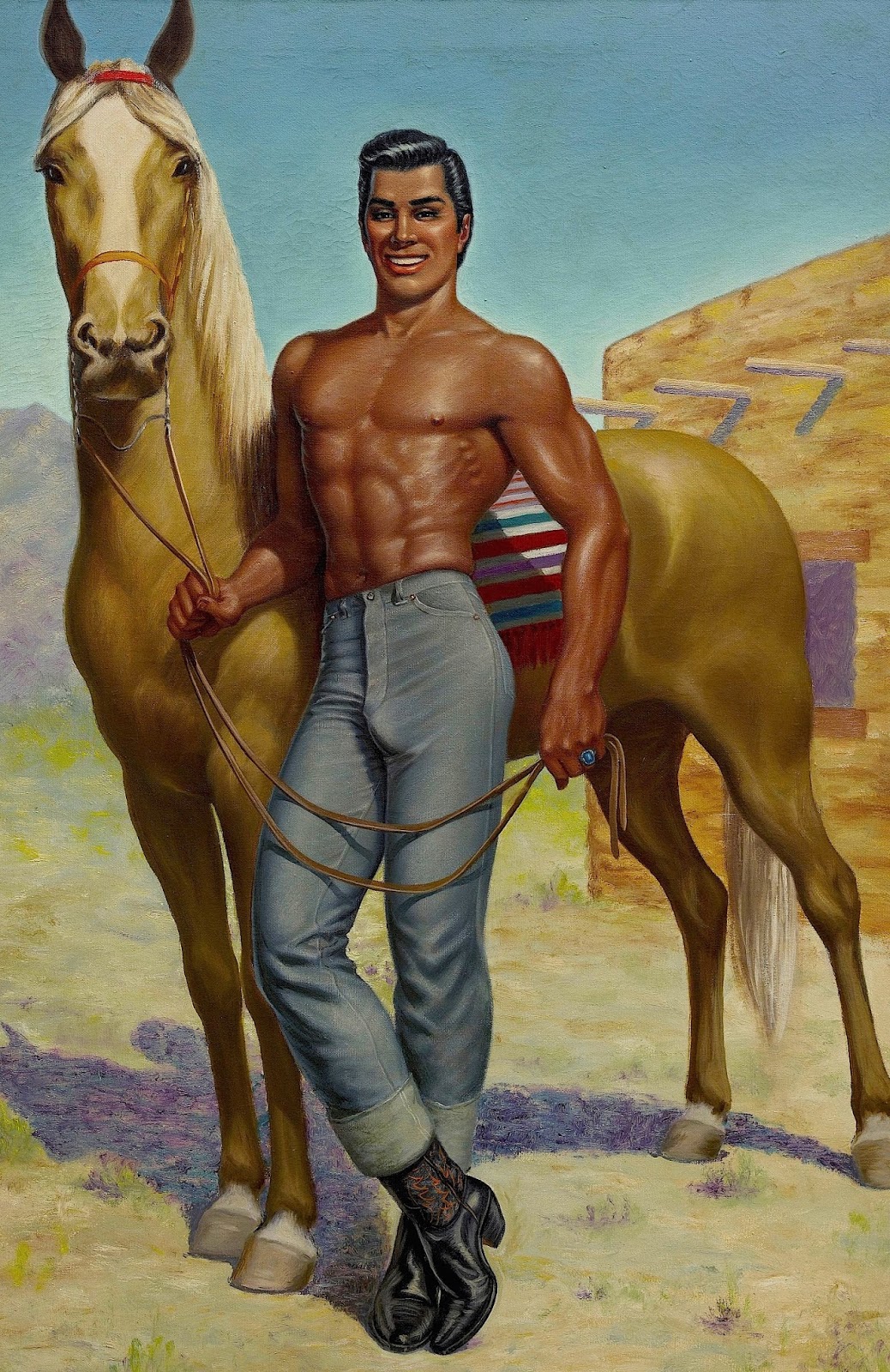 1977 - WYOMING repealed its sodomy law.  Rock Hudson 1984 Rock Hudson 19841984 - Actor ROCK HUDSON was diagnosed with Kaposi Sarcoma as a complication of his having AIDS.  1987 - Tammy Faye Bakker appeared on the new ABC program Nightline to deny that her husband Jim Bakker had a homosexual affair. Bless her heart. Today's Gay Wisdom 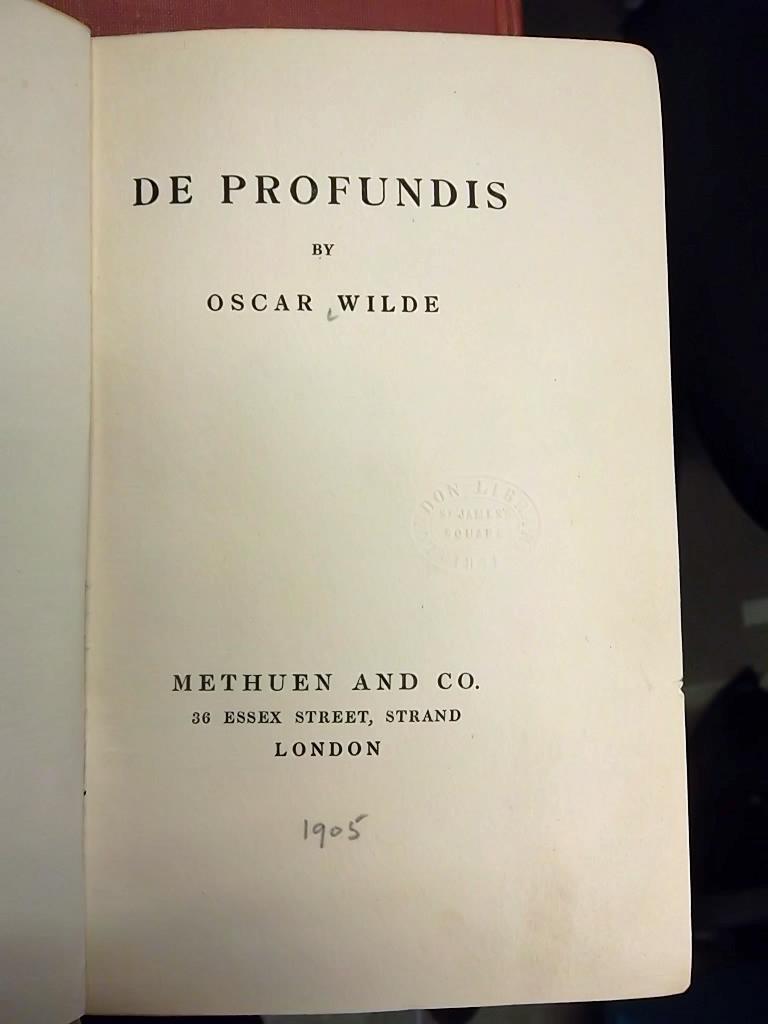 - TODAY'S GAY WISDOM From Oscar Wilde’s DE PROFUNDIS I don't regret for a single moment having lived for pleasure. I did it to the full, as one should do everything that one does. There was no pleasure I did not experience. I threw the pearl of my soul into a cup of wine. I went down the primrose path to the sound of flutes. I lived on honeycomb. But to have continued the same life would have been wrong because it would have been limiting. I had to pass on. The other half of the garden had its secrets for me also. Of course all this is foreshadowed and prefigured in my books. Some of it is in THE HAPPY PRINCE, some of it in THE YOUNG KING, notably in the passage where the bishop says to the kneeling boy, 'Is not He who made misery wiser than thou art'? a phrase which when I wrote it seemed to me little more than a phrase; a great deal of it is hidden away in the note of doom that like a purple thread runs through the texture of DORIAN GRAY; in THE CRITIC AS ARTIST it is set forth in many colours; in THE SOUL OF MAN it is written down, and in letters too easy to read; it is one of the refrains whose recurring MOTIFS make SALOME so like a piece of music and bind it together as a ballad; in the prose poem of the man who from the bronze of the image of the 'Pleasure that liveth for a moment' has to make the image of the 'Sorrow that abideth for ever' it is incarnate. It could not have been otherwise. At every single moment of one's life one is what one is going to be no less than what one has been. Art is a symbol, because man is a symbol. It is, if I can fully attain to it, the ultimate realisation of the artistic life. For the artistic life is simply self-development. Humility in the artist is his frank acceptance of all experiences, just as love in the artist is simply the sense of beauty that reveals to the world its body and its soul. In MARIUS THE EPICUREAN Pater seeks to reconcile the artistic life with the life of religion, in the deep, sweet, and austere sense of the word. But Marius is little more than a spectator: an ideal spectator indeed, and one to whom it is given 'to contemplate the spectacle of life with appropriate emotions,' which Wordsworth defines as the poet's true aim; yet a spectator merely, and perhaps a little too much occupied with the comeliness of the benches of the sanctuary to notice that it is the sanctuary of sorrow that he is gazing at. I see a far more intimate and immediate connection between the true life of Christ and the true life of the artist; and I take a keen pleasure in the reflection that long before sorrow had made my days her own and bound me to her wheel I had written in THE SOUL OF MAN that he who would lead a Christ-like life must be entirely and absolutely himself, and had taken as my types not merely the shepherd on the hillside and the prisoner in his cell, but also the painter to whom the world is a pageant and the poet for whom the world is a song. I remember saying once to Andre Gide, as we sat together in some Paris CAFE, that while meta-physics had but little real interest for me, and morality absolutely none, there was nothing that either Plato or Christ had said that could not be transferred immediately into the sphere of Art and there find its complete fulfillment. | ||||
|
|8|O|8|O|8|O|8|O|8|O|8|O|8|O|8| Gay Wisdom for Daily Living from White Crane Institute "With the increasing commodification of gay news, views, and culture by powerful corporate interests, having a strong independent voice in our community is all the more important. White Crane is one of the last brave standouts in this bland new world... a triumph over the looming mediocrity of the mainstream Gay world." - Mark Thompson Exploring Gay Wisdom & Culture since 1989! |8|O|8|O|8|O|8|O|8|O|8|O|8|O|8| | ||||

|
|||||

|
