|
Gay Wisdom for Daily Living brought to you by White Crane Institute ͏ ͏ ͏ ͏ ͏ ͏ ͏ ͏ ͏ ͏ ͏ ͏ ͏ ͏ ͏ ͏ ͏ ͏ ͏ ͏ ͏ ͏ ͏ ͏ ͏ ͏ ͏ ͏ ͏ ͏ ͏ ͏ ͏ ͏ ͏ ͏ ͏ ͏ ͏ ͏ ͏ ͏ ͏ ͏ ͏ ͏ ͏ ͏ ͏ ͏ ͏ ͏ ͏ ͏ ͏ ͏ ͏ ͏ ͏ ͏ ͏ ͏ ͏ ͏ ͏ ͏ ͏ ͏ ͏ ͏ ͏ ͏ ͏ ͏ ͏ ͏ ͏ ͏ ͏ ͏ ͏ ͏ ͏ ͏ ͏ ͏ ͏ ͏ ͏ ͏ ͏ ͏ ͏ ͏ ͏ ͏ ͏ ͏ ͏ ͏ ͏ ͏ ͏ ͏ ͏ ͏ ͏ ͏ ͏ ͏ ͏ ͏ ͏ ͏ ͏ ͏ ͏ ͏ ͏ ͏ ͏ ͏ ͏ ͏ ͏ ͏ ͏ ͏ ͏ ͏ ͏ ͏ ͏
|
|
||||
| This Day in Gay History | ||||
October 28Born 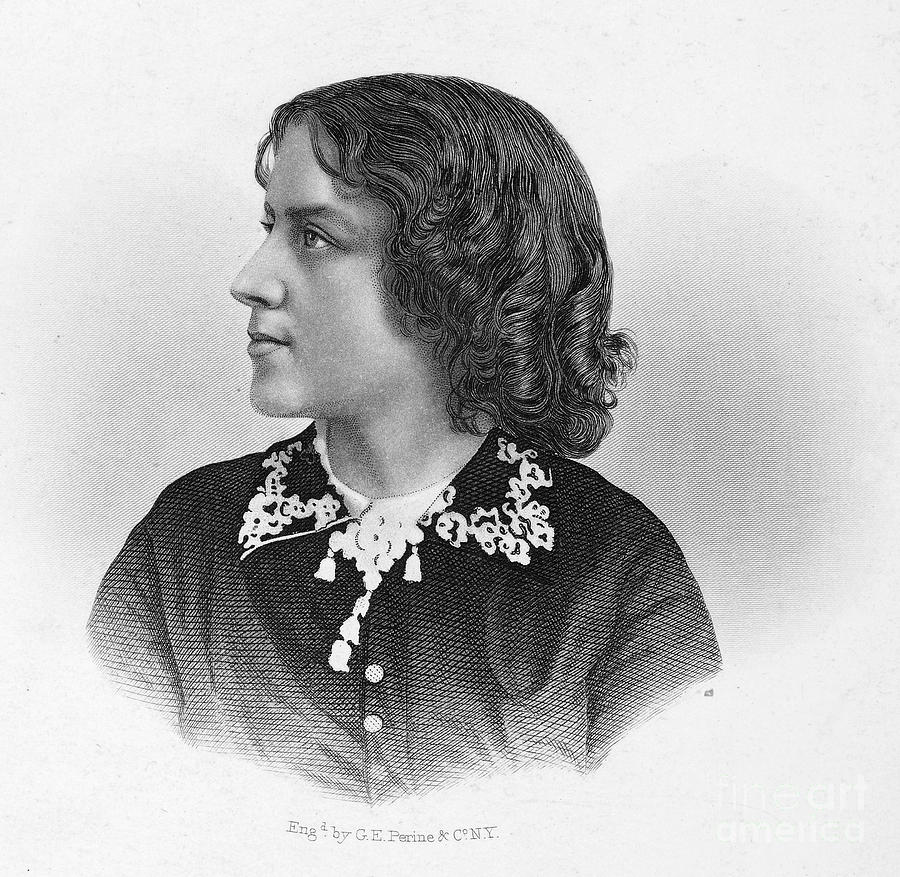 Anna Elizabeth Dickinson Anna Elizabeth Dickinson1842 - ANNA ELIZABETH DICKINSON (d: 1932) was an American orator and lecturer born on this date. An advocate for the abolition of slavery and women’s rights, Dickinson was the first woman to give a political address before the United States Congress. A gifted speaker at a very young age, she aided the 19th century Republican Party in the hard-fought 1863 elections and significantly influenced the distribution of political power in the Union just prior to the Civil War. Dickinson was the first white woman on record to summit Colorado's Gray's Peak, Lincoln Peak, and Elbert Peak, and she was the second to summit Pike's Peak. She was the third white woman on record to climb Colorado’s Longs Peak in 1873, and was certainly the first well-known woman to do so. She spoke publicly first in 1857 when she addressed a man who derided women at a Progressive Friends meeting. After that, she spoke regularly about temperance and abolition. In 1860, she spoke in Philadelphia at the Friends of Progress meeting at Clarkson Hall about The Rights and Wrongs of Women and then she addressed the Pennsylvania Anti-Slavery Society in the fall of that year. She gave her first major speech, a two-hour discussion of The Rights and Wrongs of Women, on February 27, 1861 in Philadelphia. Lucretia Mott, who delivered abolitionist speeches for decades in Quaker meetinghouses, provided leadership to sell 800 tickets for the Concert Hall event. Mott arranged for a lecture tour, sponsored by the Massachusetts Anti-slavery Society, for the 19-year-old, who quickly became a popular speaker. The series of speeches helped lead the Emancipation movement. Having heard her speak, abolitionist, William Lloyd Garrison arranged for her to speak in 1862 in the Palmer Fraternity Course of lectures at the Boston Music Hall. Named "The Girl Orator" by Garrison, she spoke about The National Crisis. She visited hospitals and camps during the war to speak to the soldiers. In 1862, she visited soldiers wounded in the war, and then gave a lecture about "Hospital Life" in New England. During the 1863 U.S. Senate elections, with the deepening of the Civil War, Dickinson campaigned for several pro-Union Republican candidates in New York, Pennsylvania, New Hampshire, and Connecticut to audiences that included people who did not support the war. She spoke eloquently and powerfully in support of the Radical Republican's anti-slavery platform and for the preservation of the Union. She spoke to coal miners in Pennsylvania soon after draft riots in the area and converted men who had not previously supported abolition. No less than Mark Twain himself praised her, “She talks fast, uses no notes what ever, never hesitates for a word, always gets the right word in the right place, and has the most perfect confidence in herself. Indeed, her sentences are remarkably smoothly-woven and felicitous. Her vim, her energy, her determined look, her tremendous earnestness, would compel the respect and the attention of an audience, even if she spoke in Chinese—would convince a third of them, too, even though she used arguments that would not stand analysis.” Dickinson was named the "Civil War's Joan of Arc” for her promotion of the Union. When she spoke at Cooper Institute in New York City more than 5,000 people attended the event. It was reported that she "could hold her audience spellbound for as much as two hours. She gave the impression of being under some magical control.” She earned a standing ovation in 1864 for an impassioned speech on the floor of the United States House of Representatives. In attendance were President Abraham Lincoln and civic and military leaders. Invited by Republican leaders, she was the first woman to speak to Congress. After the Civil War, she remained one of the nation's most celebrated speakers for nearly a decade. She made as much as $20,000 (equivalent to $397,514 in 2017) a year, making a speech every other day on average, and gave most of her earnings away to charity, friends, and relatives. She also maintained a townhouse in Philadelphia, with expensive personal possessions, for her mother and sister. She was a friend of Elizabeth Cady Stanton and Quaker lecturers Lucretia Mott and Susan B. Anthony. In her letters, Anthony sometimes addressed Dickinson as "Chickie Dickie". Benjamin F. Butler, a Civil War general and a politician, pursued her romantically and in futility. Nevertheless, he remained her friend, a legal advisor, and source of money over many years. Unpublished correspondence with a woman named Ida caused one late-20th century author to claim that she was a Lesbian  Edith Head Edith Head1897 - The one. The only. The eight-time Academy Award winning costume designer, EDITH HEAD was born on this date (d: 1981) "Edna Mode" (voiced by Brad Bird) in the Pixar Pictures animated film, The Incredibles is an eccentric fashion designer who designs the costumes for many members of the superhero community. To that end, not only does she take the aesthetics of the clothes into account, but also their practical uses such as protective qualities and accommodation to the powers of the wearer. She was a guest at Mr. Incredible and Elastigirl's wedding. Rick Dicker, who felt that Edna was "difficult" to work with, was the one who first referred Elastigirl to Edna. Edna was conceived as an amalgam between Jame Bond’s gadget supplier, Q, and Edith Head.  Evelyn Waugh Evelyn Waugh1903 - EVELYN WAUGH British poet and novelist, born (d: 1966); The original "boy named Sue", Waugh was an English writer, best known for such satirical and darkly humorous novels as Decline and Fall, Vile Bodies, Scoop, A Handful of Dust, and The Loved One, as well as for broader and more personal works, such as Brideshead Revisited and the Sword of Honor trilogy, that are influenced by his own experiences and his conservative and Catholic viewpoints. Many of Waugh's novels depict British aristocracy and high society, which he satirizes but to which, paradoxically, he was also strongly attracted. In addition, he wrote short stories, three biographies, and the first volume of an unfinished autobiography. His travel writings and his extensive diaries and correspondence have also been published. In 1944, American literary critic Edmund Wilson pronounced Waugh "the only first-rate comic genius that has appeared in English since Bernard Shaw," while Time magazine declared that he had "developed a wickedly hilarious yet fundamentally religious assault on a century that, in his opinion, had ripped up the nourishing taproot of tradition and let wither all the dear things of the world." Waugh's works were very successful with the reading public and he was widely admired by critics as a humorist and prose stylist. In his notes for an unpublished review of Brideshead Revisited, George Orwell declared that Waugh was "about as good a novelist as one can be while holding untenable opinions." The American conservative commentator William F. Buckley, Jr. found in Waugh "the greatest English novelist of the century," while his liberal counterpart Gore Vidal called him "our time's first satirist." After gallantly protecting T. S. Eliot from “the specious assumption that he was homosexual,” T.S. Matthews in Great Tom, suddenly became viciously ungallant: “It is peppery, glaring little men like Evelyn Waugh who are sexually suspect – as his diaries bear witness.” Aside from the psychologically interesting opposition of “great” Tom and “little” Evelyn, it’s perfectly clear that the former editor of Time magazine has no particularly liking for either homosexuality or Evelyn Waugh. The very word “suspect” is suspect. Many people disliked Waugh personally. He could be unkind, ungenerous and ornery. But he was one of the greatest prose stylists of the 20th century, if not the greatest, and the idea of using the word “little” on a giant such as he is at best, odd. Indeed, his diaries do clearly reveal him as a Gay man. But then so do his novels, particularly Brideshead Revisited, in which the friendship of Charles and Sebastian, despite the limitations of what he was allowed to write in the early 1940s, is magnificently drawn.  Francis Bacon - Self Portrait Francis Bacon - Self Portrait1909 - FRANCIS BACON, Anglo-Irish painter, born (d. 1992); Irish figurative painter. He was a collateral descendant of the Elizabethan philosopher Francis Bacon. His artwork is well known for its bold, austere, and often grotesque or nightmarish imagery. Bacon discovered that he attracted a certain type of rich man, an attraction he was quick to take advantage of, having developed a taste for good food and wine. One of the men was an ex-army friend of his father, another breeder of race-horses, named Harcourt-Smith. Bacon later claimed that his father had asked this friend to take him 'in-hand' and 'make a man of him'. Francis had a difficult relationship with his father, once admitting to being sexually attracted to him. Doubtless, Eddy Bacon was aware of his friend's reputation for virility, but not of his penchant for young men. In the early Spring of 1927 Bacon was taken by Harcourt-Smith to the opulent, decadent, "wide open" Berlin of the Weimar Republic, staying together at the Hotel Adlon. It is likely that Bacon saw Fritz Lang’s Metropolis at this time. Bacon spent two months in Berlin, though Harcourt-Smith left after just one — "He soon got tired of me, of course, and went off with a woman...I didn't really know what to do, so I hung on for a while, and then, since I'd managed to keep a bit of money, I decided to go to Paris." Bacon then spent the next year and a half in Paris. He met Yvonne Bocquentin, pianist and connoisseur, at the opening of an exhibition. Aware of his own need to learn French, Bacon lived for three months with Madame Bocquentin and her family at their house near Chantilly. At the Château de Chantilly (Musée Condé) he saw Nicholas Poussin’s Massacre of the Innocents, a painting to which he was often to refer in his own later work. From Chantilly, Bacon went to an exhibition that was largely to inspire him to take up painting. His visit to a 1927 exhibition of 106 drawings by Picasso at the Galerie Paul Rosenberg, Paris, aroused his artistic interest, and he often took the train into Paris five or more times a week to see shows and art exhibitions. Bacon saw Abel Gance’s epic silent film Napoléon at the Paris Opera when it premiered in April 1927. From the autumn of 1927, Bacon stayed at the Paris Hotel Delambre in Montparnasse. In 1929 he met Eric Hall at the Bath Club, Dover Street, London, where Bacon was working at the telephone exchange. Hall (who was general manager of Peter Jones) was to be both patron and lover to Bacon, in an often torturous relationship. Douglas Cooper, then curator (and part owner/co-director with Fred Mayor) of the Mayor Gallery, in Cork Street, arranged for one of Bacon's paintings, Women in the Sunlight (destroyed without trace), to be included a group show in April 1933. It was also thanks to Cooper that Bacon's Crucifixion (1933) was reproduced in Herbert Read’s book Art Now (opposite a 1929 Baigneuse by Picasso — plates 60/61). The publication was accompanied by an exhibition of the works, in October, at the Mayor Gallery, where Crucifixion (1933) was shown as Composition. 1933. Crucifixion (1933) (oil on canvas) was subsequently purchased by Sir Michael Sadler (who, other than friends or relations, was the first to buy a painting), and who also commissioned a second version, Crucifixion (1933) (chalk, gouache and pencil), and sent Bacon an x-ray photograph of his own skull, with a request that he paint a portrait from it. Bacon duly incorporated the x-ray directly into The Crucifixion (1933). In 1964, Bacon began a relationship with 39-year-old Eastender George Dyer, whom he met, he claimed, while the latter was burgling his apartment. A petty criminal with a history of juvenile detention and prison, Dyer was a somewhat tortured individual, insecure, alcoholic, appearance obsessed and never really fitting in within the bohemian set surrounding Francis. The relationship was stormy and in 1971, on the eve of Bacon's major retrospective at the Paris Grand Palais, Dyer committed suicide in the hotel room they were sharing, overdosing on barbiturates. The event was recorded in Bacon's 1973 masterpiece Triptych May-June 1973. In 1974, Bacon met John Edwards, a young, illiterate, handsome Eastender with whom he formed one of his most enduring friendships, eventually bequeathing his £11m fortune to Edwards after his death. Bacon died of a heart attack on April 28, 1992, in Madrid, Spain. Bacon bequeathed his entire estate (then valued at £11 million) to John Edwards after his death. Edwards, in turn, donated the contents of Francis Bacon's chaotic studio at 7 Reece Mews, South Kensington, to the Hugh Lane gallery in Dublin. Bacon's studio contents were moved and the studio carefully reconstructed in the gallery. Additionally draft materials, perhaps intended for destruction, were according to Canadian Barry Joule bequeathed to Joule who later forwarded most of the materials to create the Barry Joule Archive in Dublin with other parts of the collection given later to the Tate museum. Bacon was disdainful of his early work and destroyed the majority of it. He also destroyed an unknown number of works throughout his lifetime, and fragments of canvases were found in his studio after his death. About the studio, Bacon remarked: "for me, chaos suggests images." Bacon's Soho life was portrayed by John Maybury, with Derek Jacobi as Bacon and Daniel Craig as George Dyer (with some lovely frontal nudity on Craig’s part) and with Tilda Swinton as Muriel Belcher, in the film Love is The Devil (1998), based on Daniel Farson's 1993 biography The Gilded Gutter Life of Francis Bacon. Bacon is also cited in interviews with contemporary British artist Damien Hirst as being one of the latter's principal influences. | ||||
|
|8|O|8|O|8|O|8|O|8|O|8|O|8|O|8| Gay Wisdom for Daily Living from White Crane Institute "With the increasing commodification of gay news, views, and culture by powerful corporate interests, having a strong independent voice in our community is all the more important. White Crane is one of the last brave standouts in this bland new world... a triumph over the looming mediocrity of the mainstream Gay world." - Mark Thompson Exploring Gay Wisdom & Culture since 1989! |8|O|8|O|8|O|8|O|8|O|8|O|8|O|8| | ||||

|
|||||

|
