|
This Day in Gay History brought to you by White Crane ͏ ͏ ͏ ͏ ͏ ͏ ͏ ͏ ͏ ͏ ͏ ͏ ͏ ͏ ͏ ͏ ͏ ͏ ͏ ͏ ͏ ͏ ͏ ͏ ͏ ͏ ͏ ͏ ͏ ͏ ͏ ͏ ͏ ͏ ͏ ͏ ͏ ͏ ͏ ͏ ͏ ͏ ͏ ͏ ͏ ͏ ͏ ͏ ͏ ͏ ͏ ͏ ͏ ͏ ͏ ͏ ͏ ͏ ͏ ͏ ͏ ͏ ͏ ͏ ͏ ͏ ͏ ͏ ͏ ͏ ͏ ͏ ͏ ͏ ͏ ͏ ͏ ͏ ͏ ͏ ͏ ͏ ͏ ͏ ͏ ͏ ͏ ͏ ͏ ͏ ͏ ͏ ͏ ͏ ͏ ͏ ͏ ͏ ͏ ͏ ͏ ͏ ͏ ͏ ͏ ͏ ͏ ͏ ͏ ͏ ͏ ͏ ͏ ͏ ͏ ͏ ͏ ͏ ͏ ͏ ͏ ͏ ͏ ͏ ͏ ͏ ͏ ͏ ͏ ͏ ͏ ͏ ͏ ͏ ͏ ͏ ͏ ͏ ͏ ͏ ͏ ͏ ͏ ͏ ͏ ͏ ͏
|
|
||||
| This Day in Gay History | ||||
December 11Born  [l to r] Cocteau and Jean Marais on set [l to r] Cocteau and Jean Marais on set1913 - JEAN MARAIS, French actor was born (d.1998); Marais was never much of an actor, and it is doubtful he would have achieved international fame had he not become Jean Cocteau’s lover, but he was, by universal acclaim, one of the most handsome men ever to appear in films. In the 1940s when he made most of his movies for Cocteau, actors were still slicking down their hair with Kreml and Vitalis. But he changed all that. His cheveaux fous and athletic good looks created a new style of postwar leading man. When in 1946 he spent his time in Cocteau’s Beauty and the Beast, trapped within an ape-like costume, waiting for Beauty’s kiss to turn him once again into Jean Marais, Gay moviegoers around the world secretly wished that they were Josette Day who actually got to kiss the handsome actor’s fur face. What is perhaps most astonishing about the friendship between Cocteau and Marais is that the actor’s face in profile bore an astonishing resemblance to the boys Cocteau had been sketching for thirty years before meeting him.  Big Mama Thornton Big Mama Thornton1926 - BIG MAMA THORNTON, American singer born (d. 1984) An American Texas Blues, R&B singer and songwriter. She was the original singer to record the hit song "Hound Dog" in 1952. The song was #1 on the Billboard R&B charts for seven weeks. The B-side was "They Call Me Big Mama," and the single sold almost two million copies In the 1950s female singers such as Ruth Brown, Koko Taylor, Dinah Washington, and Big Mama Thornton revived the tradition of the remarkably gutsy, pioneering female performers. Thornton, a powerful performer who frequently dressed in masculine clothing, released "Hound Dog" in 1953, three years before Elvis Presley's rendition. In a similar occurrence, she wrote and recorded "Ball n' Chain," which became a hit for her. Janis Joplin, a rock and roll singer from Texas, later recorded "Ball and Chain," and it became a huge success in the late 1960s. 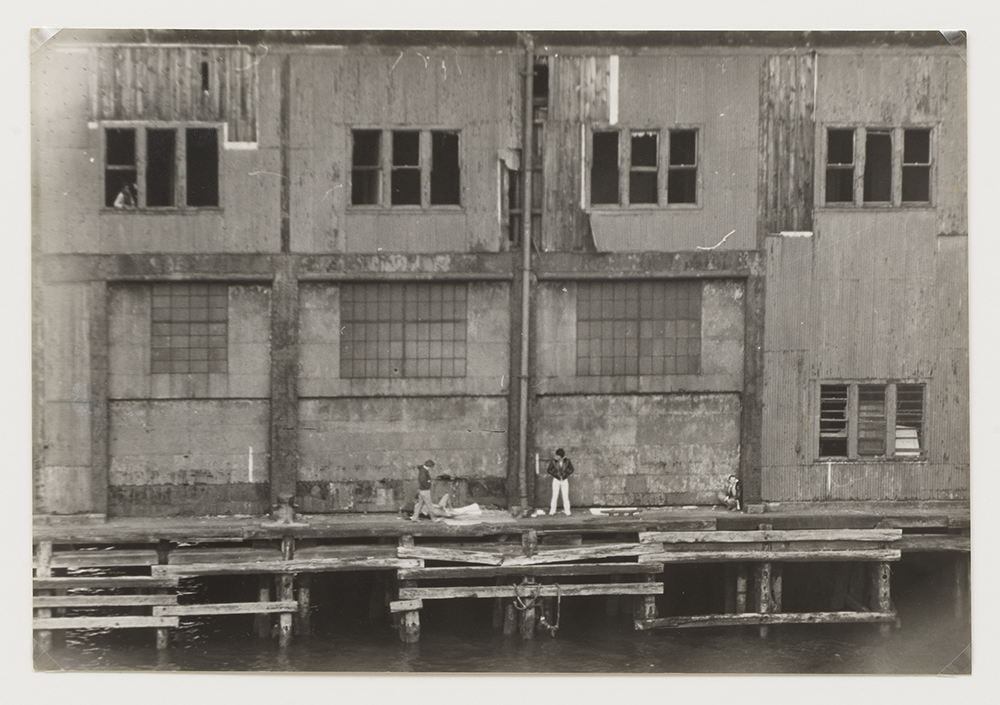 Alvin Baltrop Alvin Baltrop 1948 - ALVIN BALTROP was an American photographer born on this date (d: 2004); Baltrop's work focused on the dilapidated Hudson Rovier piers and gay men during the 1970s and 1980s prior to the AIDS crisis. Baltrop enlisted in the Navy as a medic during the Vietnam War and continued taking photos, mainly of his friends in sexually provocative poses. He built his own developing lab in the sick bay, using medic trays for developing trays. After his time in the Nacy, Baltrop worked odd jobs as a street vendor, a jewelry designer, a printer, and a cab driver. Because he wanted to spend more time taking photos at the Hudson River piers, he quit his job as a cab driver to become a self-employed mover. He would park his van at the piers for days at a time, living out of his van to take pictures. From 1975 through 1986, Baltrop took photographs of the West Side piers, where he was a well-known member of the community. Baltrop knew every person he photographed, and people often volunteered to be photographed. Younger boys and men at the piers often confided in him about their sexual orientation, their relationships with their families, their housing status, and their work. Baltrop’s photographs of life on Manhattan's West Side piers was an area directly connected with cruising, anonymous sex, and the occasional art intervention. Baltrop captured the gay cruising spots and hookup culture that existed in New York City before the AIDS epidemic. Baltrop's photographs not only captured human personalities, but also the aesthetics of the dilapidated piers. His life work is a snapshot of gay, African-American, and New York City history. Baltrop struggled to make his way in the art world, facing racism from the white gay art world. Gay curators often rejected his work, accused him of stealing it, or stole his work themselves. Late during the 1990s, NYC artist John Drury, who knew Alvin from their shared neighborhood — Drury living on Third Street with his wife, and Baltrop on Second Street, in lower Manhattan — befriended the artist and recognized the photographer's unique abilities, nominating him for a Louis Comfort Tiffany Foundation Award for the Arts. Alvin Baltrop had few exhibits in his lifetime; his work gained international fame only after his death. He is currently the subject of a retrospective exhibition of his work, "The Life and Times of Alvin Baltrop" at the Bronx Museum through February 9, 2020. The exhibition features over 200 photographs drawn from the Bronx Museum’s permanent collection and from private collections. In addition, the artist’s personal archive, housed at the Bronx Museum, will be shown to the public for the first time. Noteworthy  The Mattachine Society first meeting [l to r] Harry Hay (upper left), then Konrad Stevens, Dale Jennings, Rudi Gernreich, Stan Witt, Bob Hull, Chuck Rowland, and Paul Bernard The Mattachine Society first meeting [l to r] Harry Hay (upper left), then Konrad Stevens, Dale Jennings, Rudi Gernreich, Stan Witt, Bob Hull, Chuck Rowland, and Paul Bernard 1950 - First organized discussion group of Harry Hay’s secret society, which would become known as THE MATTACHINE SOCIETY. The Mattachine Society is usually regarded as America’s first Gay Rights advocacy group. They met in secret due to the atmosphere of the time, and organized in cells (Hay had been involved with the Communist Party in the U.S. -- along with actor Will Geer -- and he used their organizational model). In 1951 Dale Jennings was arrested on police entrapment charges. Police entrapment was a common form of harassment against homosexuals then. Suspects’ names were printed in the newspapers, which caused many to lose their jobs and become estranged from their families. By standing up to defend Jennings, the Mattachine Society not only rose to the defense of one of their members, but also took on the notorious Los Angeles Police Department for its pattern and practice of homosexual harassment. Jennings’ charges were dismissed due to the judge catching the arresting officers in a lie. This victory was not reported in the newspapers, but the Mattachine Society took it upon themselves to publicize it through flyers distributed throughout Los Angeles to areas where homosexuals met. The result was a swelling of attendance at Mattachine Society meetings. The origins of standing up to entrapment was one of the main underpinnings of the activism. When Rudi Gernreich died in 1985, he left the bulk of his estate to establish a defense fund for Gay men who were facing prosecution due to entrapment. | ||||
|
|8|O|8|O|8|O|8|O|8|O|8|O|8|O|8| Gay Wisdom for Daily Living from White Crane Institute "With the increasing commodification of gay news, views, and culture by powerful corporate interests, having a strong independent voice in our community is all the more important. White Crane is one of the last brave standouts in this bland new world... a triumph over the looming mediocrity of the mainstream Gay world." - Mark Thompson Exploring Gay Wisdom & Culture since 1989! |8|O|8|O|8|O|8|O|8|O|8|O|8|O|8| | ||||


|
|||||

|
