|
Gay Wisdom for Daily Living brought to you by White Crane Institute ͏ ͏ ͏ ͏ ͏ ͏ ͏ ͏ ͏ ͏ ͏ ͏ ͏ ͏ ͏ ͏ ͏ ͏ ͏ ͏ ͏ ͏ ͏ ͏ ͏ ͏ ͏ ͏ ͏ ͏ ͏ ͏ ͏ ͏ ͏ ͏ ͏ ͏ ͏ ͏ ͏ ͏ ͏ ͏ ͏ ͏ ͏ ͏ ͏ ͏ ͏ ͏ ͏ ͏ ͏ ͏ ͏ ͏ ͏ ͏ ͏ ͏ ͏ ͏ ͏ ͏ ͏ ͏ ͏ ͏ ͏ ͏ ͏ ͏ ͏ ͏ ͏ ͏ ͏ ͏ ͏ ͏ ͏ ͏ ͏ ͏ ͏ ͏ ͏ ͏ ͏ ͏ ͏ ͏ ͏ ͏ ͏ ͏ ͏ ͏ ͏ ͏ ͏ ͏ ͏ ͏ ͏ ͏ ͏ ͏ ͏ ͏ ͏ ͏ ͏ ͏ ͏ ͏ ͏ ͏ ͏ ͏ ͏ ͏ ͏ ͏ ͏ ͏ ͏ ͏ ͏ ͏ ͏
|
|
||||
| This Day in Gay History | ||||
September 10Born 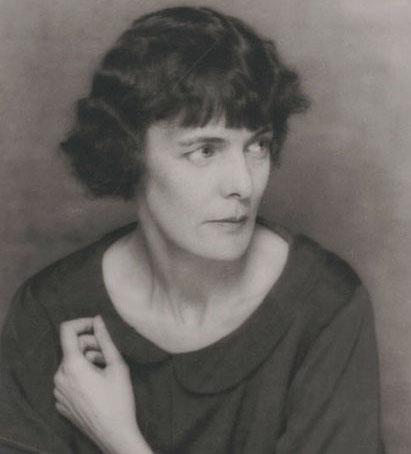 "H.D." "H.D."1886 - HILDA DOOLITTLE “H.D.” founder of imagist poetry born (d: 1961); Famously known by her initials only, H.D. was an American poet, novelist and memoirist. She is best known for her association with the key early 20th century avant-garde Imagist group of poets, although her later writing represents a move away from the Imagist model and towards a distinctly feminine version of modernist poetry and prose. Doolittle was one of the leading figures in the bohemian culture of London in the early decades of the century. Her work is noted for its use of classical models and its exploration of the conflict between lesbian and heterosexual attraction and love, with these struggles closely resembling her own life. In 1907, she became engaged to Ezra Pound. Her father disapproved of Pound, and by the time her father left for Europe in 1908, the engagement had been called off. Around this time, Doolittle entered into a relationship with a young art student named Frances Josepha Gregg. After spending part of 1910 living in New York City's Greenwich Village, she sailed to Europe with Gregg and Gregg's mother in 1911. Although she would eventually marry, and have children, her bisexuality surfaced throughout her life. She would regularly take female lovers in addition to her male companion at the time, and vice-versa. Her later poetry also explores traditional epic themes, such as violence and war, from a feminist perspective. H.D. was the first woman to be granted the American Academy of Arts and Letters medal. In 1960, H.D. was in the U.S. to collect the American Academy of Arts and Letters medal. Returning to Switzerland, she suffered a stroke in July of 1961 and died a couple of months later in the Klinik Hirslanden in Zürich. Her ashes were returned to Bethlehem, and were buried in the family plot in the Nisky Hill Cemetery on October 28. Her epitaph consists of the following lines from an early poem: So you may say, Greek flower; Greek ecstasy reclaims forever one who died following intricate song's lost measure.  Cyril Connolly Cyril Connolly1903 - CYRIL CONNOLLY, born (d: 1974) An English intellectual, editor and critic; Some Connolly quotes:
 Mary Oliver (right) with Molly Malone Cook (1925–2005) at their home in Provincetown, Mass. Mary Oliver (right) with Molly Malone Cook (1925–2005) at their home in Provincetown, Mass.1935 - MARY OLIVER, American poet and essayist, was born; Perhaps one of the best selling poets today as a teenager, she lived briefly in the home of Edna St. Vincent Millay, where she helped Millay's sister Norma organize the papers Millay left behind. She attended Ohio State University and Vassar College in the mid-1950s but did not receive degrees. She has taught in the writing programs at Sweet Briar College and Bennington College. Her work has been compared to Whitman and Thoreau for its naturalist elements. She's been the recipient of various awards and prizes including the Lannan Literary Award for poetry (1998), the National Book Award for Poetry (1992), the Pulitzer Prize for Poetry (1984), a Guggenheim Foundation Fellowship (1980), and the Shelley Memorial Award (1969/70) of the Poetry Society of America. Her late partner, artist Molly Malone Cook, served as Oliver's literary agent until her death in 2005. Oliver lives on Cape Cod in Provincetown. Died 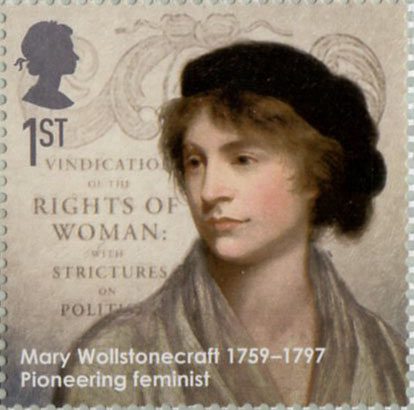 Mary Wollstonecraft Mary Wollstonecraft1797 - MARY WOLLSTONECRAFT, English author, died (b. 1759); British writer, philosopher and feminist. During her brief career, she wrote novels, treatises, a travel narrative, a history of the French Revolution, a conduct book, and a children's book. Wollstonecraft is best known for A Vindication of the Rights of Woman (1792), in which she argues that women are not naturally inferior to men, but appear to be only because they lack education. She suggests that both men and women should be treated as rational beings and imagines a social order founded on reason. Among the general public and specifically among feminists, Wollstonecraft's life has received much more attention than her writing because of her unconventional, and often tumultuous, personal relationships. After two complicated and heart-rending affairs with Henry Fuseli and Gilbert Imlay, Wollstonecraft married the philosopher William Godwin, one of the forefathers of the anarchist movement; they had one daughter, Mary Shelley, the author of Frankenstein. Wollstonecraft died at the age of thirty-eight due to complications from childbirth, leaving behind several unfinished manuscripts. Today Wollstonecraft is considered to be one of the foundational feminist philosophers. Her early advocacy of women's equality and her critiques of conventional femininity presaged the organized feminist movement. Feminist scholars and activists have often cited both her philosophical ideas and her personal life as important influences on their work. | ||||
|
|8|O|8|O|8|O|8|O|8|O|8|O|8|O|8| Gay Wisdom for Daily Living from White Crane Institute "With the increasing commodification of gay news, views, and culture by powerful corporate interests, having a strong independent voice in our community is all the more important. White Crane is one of the last brave standouts in this bland new world... a triumph over the looming mediocrity of the mainstream Gay world." - Mark Thompson Exploring Gay Wisdom & Culture since 1989! |8|O|8|O|8|O|8|O|8|O|8|O|8|O|8| | ||||

|
|||||

|
