|
This Day in Gay History brought to you by White Crane ͏ ͏ ͏ ͏ ͏ ͏ ͏ ͏ ͏ ͏ ͏ ͏ ͏ ͏ ͏ ͏ ͏ ͏ ͏ ͏ ͏ ͏ ͏ ͏ ͏ ͏ ͏ ͏ ͏ ͏ ͏ ͏ ͏ ͏ ͏ ͏ ͏ ͏ ͏ ͏ ͏ ͏ ͏ ͏ ͏ ͏ ͏ ͏ ͏ ͏ ͏ ͏ ͏ ͏ ͏ ͏ ͏ ͏ ͏ ͏ ͏ ͏ ͏ ͏ ͏ ͏ ͏ ͏ ͏ ͏ ͏ ͏ ͏ ͏ ͏ ͏ ͏ ͏ ͏ ͏ ͏ ͏ ͏ ͏ ͏ ͏ ͏ ͏ ͏ ͏ ͏ ͏ ͏ ͏ ͏ ͏ ͏ ͏ ͏ ͏ ͏ ͏ ͏ ͏ ͏ ͏ ͏ ͏ ͏ ͏ ͏ ͏ ͏ ͏ ͏ ͏ ͏ ͏ ͏ ͏ ͏ ͏ ͏ ͏ ͏ ͏ ͏ ͏ ͏ ͏ ͏ ͏ ͏ ͏ ͏ ͏ ͏ ͏ ͏ ͏ ͏ ͏ ͏ ͏ ͏ ͏ ͏
|
|
||||
| This Day in Gay History | ||||
April 12Born 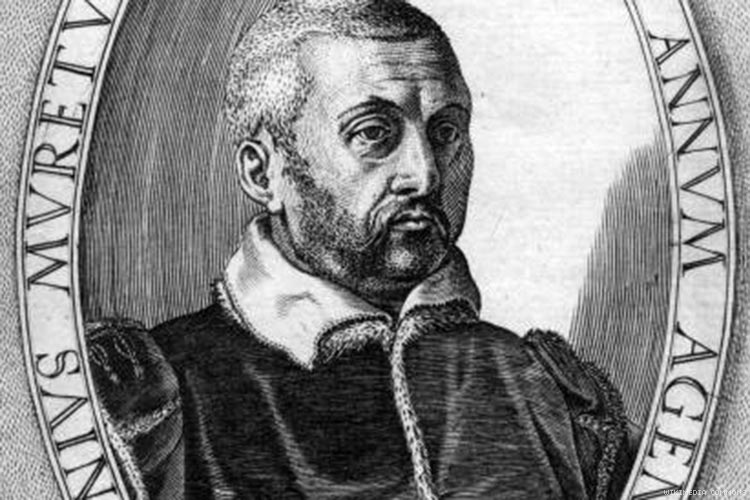 Marc-Antoine Muret Marc-Antoine Muret1526 - MARC-ANTOINE MURET, French humanist and philosopher, born (d: 1586); Known as Muretus, he was a French humanist who was among the revivers of a Ciceronian Latin style and is among the usual candidates for the best Latin prose stylist of the Renaissance. It wasn’t exactly easy to be a humanist in the 16th century. The slightest misstep and you’d end up seeing your entrails popping right before your very eyes as you burned at the stake. In France, in particular, the Church had a couple of effective ways to dispatch those whose views were too liberal. Charge them with sodomy or Protestantism, much the same abnormality to the official medieval mind. Muret was regularly charged with both offenses. Only one of them was true. His success made him many enemies, and he was thrown into prison on a charge of homosexuality, but released by the intervention of powerful friends. The same accusation was brought against him at Toulouse. Muret had taken up with Memmius Fremot only to face, once again, charges of sodomy. The two men fled the city separately and were convicted in absentia, but Muret continued to communicate with Fremot of their overwhelming love that grew daily. The records of the town show that he was burned in effigy as a Huguenot and as sodomite (1554). Muret would flee to Venice and later Rome before finding a teaching position in an environment that offered more privacy, After a wandering and insecure life of some years in Italy, he received and accepted the invitation of the Cardinal Ippolito II d’Este to settle in Rome in 1559. In 1561 Muret revisited France as a member of the cardinal's suite at the conference between Roman Catholics and Protestants held at Poissy.  Playwright William M. Hoffman Playwright William M. Hoffman1939 - WILLIAM M. HOFFMAN, a playwright, was born in New York City on this date (d: 2017). Hoffman's earliest works either were mounted in small, experimental off-off-Broadway theaters in New York City. He achieved critical acclaim and public recognition in 1985 when the Broadway production of his play, As Is, one of the first plays to focus on AIDS, opened in New York City at the Lyceum Theater, where it ran for 285 performances. Hoffman won a Drama Desk Award for Outstanding Play (1985) and an Obie (1984-85 for Playwriting) and nominations for a tony Award for Best Play (1985). The following year, he adapted the work for a television production directed by Michael Lindsay-Hogg. In 1991, Hoffman was commissioned by The Metropolitan Opera to write the libretto for The Ghosts of Versailles first produced in celebration of the company's centennial. A 1993-televised production starred Teresa Stratas, Renee Fleming and Graham Clark for which Hoffman earned a Primetime Emmy Award nomination. As an editor at Hill and Wang, Hoffman promoted the careers of Lanford Wilson, Tom Eyen, and Joe Orton, among others, by including their plays in either his New American Plays series or his anthology, Gay Plays: A First Collection. Hoffman was an Associate Professor of Theater at Lehman College at The City University of New York. Hoffman died of a heart attack in April 2017 just seventeen days after his birth date.  Tom Wilson Weinberg Tom Wilson Weinberg1945 - TOM WILSON WEINBERG, American composer and musician, was born; A songwriter and singer who has written words and music for the Off-Broadway shows Ten Percent Revue and Get Used To It!, two solo albums, Gay Name Game and All-American Boy, and the Stonewall 25 CD, Don’t Mess With Mary. His songs have appeared on several recordings by other artists, including the soundtrack of Beavis and Butthead Do America, Feeding the Flame, an AIDS benefit compilation, Ron Romanofsky’s Hopeful Romantic and Twin Cities Gay Men’s Chorus CD,SING OUT. Gay Name Game (1979) and All-American Boy (1982) were among the first gay-themed albums. Both were released by Aboveground Records under the name Tom Wilson. In 1982 he assumed the family name Weinberg. Ten Percent Revue opened in Boston in 1985 and played four summers in Provincetown, produced by Laura Green, who took the show to New York in 1988. On tour the show earned two Los Angeles Drama-Logue Awards, three Golden Gull Awards (Provincetown), and the Bessie Smith Award (Boston). Noteworthy  Pysanky eggs Pysanky eggs2020 - EASTER According to the Venerable Bede, Easter derives its name from Eostre, and Anglo-Saxon goddess of spring. A month corresponding to April had been named "Eostremonat," or Eostre's month, leading to "Easter" becoming applied to the Christian holiday that usually took place within it. Prior to that, the holiday had been called Pasch (Passover), which remains its name in most non-English languages. (Based on the similarity of their names, some connect Eostre with Ishtar, the Babylonian and Assyrian goddess of love and fertility, but there is no solid evidence for this.) It seems probable that around the second century A.D., Christian missionaries seeking to convert the tribes of northern Europe noticed that the Christian holiday commemorating the resurrection of Jesus roughly coincided with the Teutonic springtime celebrations, which emphasized the triumph of life over death. As it did with Christmas, Christian Easter gradually absorbed the traditional symbols of those celebrations. Easter Eggs In Medieval Europe, eggs were forbidden during Lent. Eggs laid during that time were often boiled or otherwise preserved. Eggs were thus a mainstay of Easter meals, and a prized Easter gift for children and servants. In addition, eggs have been viewed as symbols of new life and fertility through the ages. It is believed that for this reason many ancient cultures, including the Ancient Egytians, Persians, and Romans, used eggs during their spring festivals. For the Eastern Orthodox (for which Easter is on April 19th this year) Easter is the most significant and sacred season of the church's calendar. The annual holiday consists of a series of celebrations or movable feasts commemorating the death and resurrection of Jesus. Many traditions and practices have formed around Easter eggs. The coloring of eggs is a established art, and eggs are often dyed, painted, and otherwise decorated. Eggs were also used in various holiday games: parents would hide eggs for children to find, and children would roll eggs down hills. These practices live on in Easter egg hunts and egg rolls. The most famous egg roll takes place on the White House lawn every year. Different Traditions Orthodox Christians in the Middle East and in Greece paint eggs bright red to symbolize the blood of Christ. Hollow eggs (created by piercing the shell with a needle and blowing out the contents) were decorated with pictures of Christ, the Virgin Mary, and other religious figures in Armenia. Ukrainians do elaborate, lost wax dying of eggs, producing exquisitely intricate patterns. Germans gave green eggs as gifts on Holy Thursday, and hung hollow eggs on trees. Austrians placed tiny plants around the egg and then boiled them. When the plants were removed, white patterns were created. Artistic Creations The most elaborate Easter egg traditions appear to have emerged in Eastern Europe. In Poland and Ukraine, eggs were often painted silver and gold. Pysanky (to design or write) eggs were created by carefully applying wax in patterns to an egg. The egg was then dyed, wax would be reapplied in spots to preserve that color, and the egg was boiled again in other shades. The result was a multi-color striped or patterned egg. New York artist, Paul Wirhun (aka The Eggman) does modern and traditional examples of this art, here: http://paulwirhun.com/eggs/ The Easter Bunny Hares and rabbits have long been symbols of fertility. The inclusion of the hare into Easter customs appears to have originated in Germany, where tales were told of an "Easter hare" who laid eggs for children to find. German immigrants to America -- particularly Pennsylvania -- brought the tradition with them and spread it to a wider public. They also baked cakes for Easter in the shape of hares, and may have pioneered the practice of making chocolate bunnies and eggs. Rabbits and hares are common motifs in the visual arts, with variable mythological and artistic meanings in different cultures. The rabbit as well as the hare have been associated with moon deities and may signify rebirth or resurrection. They may also be symbols of or sensuality, and they appear in depictions of hunting and spring scenes in the Labors of the Months. Easter Cards Easter cards arrived in Victorian England, when a stationer added a greeting to a drawing of a rabbit. According to American Greetings, Easter is now the fourth most popular holiday for sending cards, behind Christmas, Valentine's Day and Mother's Day. Easter Parades After their baptisms, early Christians wore white robes all through Easter week to indicate their new lives. Those had already been baptized wore new clothes instead to symbolize their sharing a new life with Christ. In Medieval Europe, churchgoers would take a walk after Easter Mass, led by a crucifix or the Easter candle. Today these walks endure as Easter Parades. People show off their spring finery, including lovely bonnets decorated for spring. | ||||
|
|8|O|8|O|8|O|8|O|8|O|8|O|8|O|8| Gay Wisdom for Daily Living from White Crane Institute "With the increasing commodification of gay news, views, and culture by powerful corporate interests, having a strong independent voice in our community is all the more important. White Crane is one of the last brave standouts in this bland new world... a triumph over the looming mediocrity of the mainstream Gay world." - Mark Thompson Exploring Gay Wisdom & Culture since 1989! |8|O|8|O|8|O|8|O|8|O|8|O|8|O|8| | ||||


|
|||||

|
