|
Gay Wisdom for Daily Living brought to you by White Crane Institute ͏ ͏ ͏ ͏ ͏ ͏ ͏ ͏ ͏ ͏ ͏ ͏ ͏ ͏ ͏ ͏ ͏ ͏ ͏ ͏ ͏ ͏ ͏ ͏ ͏ ͏ ͏ ͏ ͏ ͏ ͏ ͏ ͏ ͏ ͏ ͏ ͏ ͏ ͏ ͏ ͏ ͏ ͏ ͏ ͏ ͏ ͏ ͏ ͏ ͏ ͏ ͏ ͏ ͏ ͏ ͏ ͏ ͏ ͏ ͏ ͏ ͏ ͏ ͏ ͏ ͏ ͏ ͏ ͏ ͏ ͏ ͏ ͏ ͏ ͏ ͏ ͏ ͏ ͏ ͏ ͏ ͏ ͏ ͏ ͏ ͏ ͏ ͏ ͏ ͏ ͏ ͏ ͏ ͏ ͏ ͏ ͏ ͏ ͏ ͏ ͏ ͏ ͏ ͏ ͏ ͏ ͏ ͏ ͏ ͏ ͏ ͏ ͏ ͏ ͏ ͏ ͏ ͏ ͏ ͏ ͏ ͏ ͏ ͏ ͏ ͏ ͏ ͏ ͏ ͏ ͏ ͏ ͏
|
|
||||
| This Day in Gay History | ||||
September 18Born  The Emperor Trajan The Emperor Trajan0053 - TRAJAN, Roman Emperor born (d. 117) Dio Cassius, sometimes known as Cassius Dio, reports that Trajan drank heavily and loved boys. "I know, of course, that he was devoted to boys and to wine, but if he had ever committed or endured any base or wicked deed as the result of this, he would have incurred censure; as it was, however, he drank all the wine he wanted, yet remained sober, and in his relations with boys he harmed no one." This sensibility was one that influenced even his governing, leading him to favor the king of Edessa out of appreciation for his handsome son: "On this occasion, however, Abgarus, induced partly by the persuasions of his son Arbandes, who was handsome and in the pride of youth and therefore in favor with Trajan, and partly by his fear of the latter's presence, he met him on the road, made his apologies and obtained pardon, for he had a powerful intercessor in the boy." 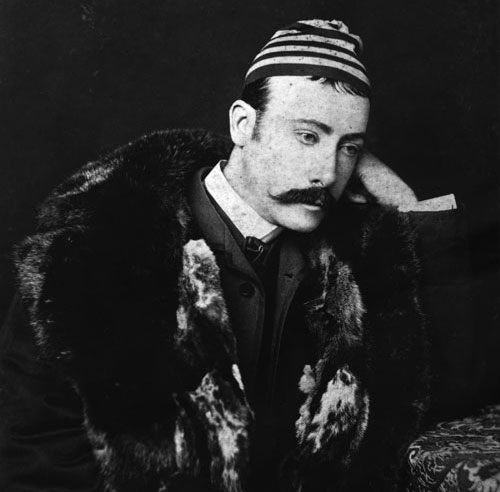 Francis Grierson Francis Grierson1848 - FRANCIS GRIERSON, English-born American writer and singer, born (d: 1927) born in Birkenhead, England. His family migrated soon afterward to the United States and by 1849, had settled in Sangamon County, Illinois where he witnessed the Lincoln-Douglas debates. In 1869, Shepard, convinced of his "intuitive" musical talent, left for Europe to seek fame and fortune. Shepard's mother did note in a letter, however, that her son took music lessons in his early childhood, so not all his talent was derived from spiritual revelation. Shepard had superb self-confidence in his charm and talent, and he launched himself on his world travels without funds, letters of introduction, or prior reputation. Yet somehow (hmmmmm…) he found his way into the salons of Paris, where his musical improvisations and singing of operatic selections charmed his audiences and resulted in a string of invitations. In 1871, Shepard went to St. Petersburg, where he played for the Czar. When Shepard returned to the United States, lived in Chicago in 1880, and reputedly gave seances in the home of a prominent medium. He claimed to be in touch with ancient Egyptian spirits, and put on a remarkable musical performance which included singing "in two voices," made possible by his great vocal range. Sometime in 1885, Shepard met Lawrence W. Tonner, a man some fifteen years younger than himself, who became Shepard's devoted secretary and lover for over forty years. When Shepard was down on his luck in later years, Tonner supported him by giving French lessons or by working in a tailoring shop. When Shepard returned to San Diego ten years later, it was no longer a "placid region," but a bustling city. He made San Diego his home for two eventful years, during which he built the remarkable Villa Montezuma and underwent a significant artistic and spiritual transformation. The Villa provided an impressive background, indeed, for the lavish receptions that Shepard accorded visiting celebrities. Joining the group of poets, artists and musicians who formed the nucleus of The Golden Era magazine, was an important part of the artistic and spiritual transformation that Shepard underwent during his short residence in San Diego. Shepard embarked on the literary career that became the main outlet for his creativity for the remainder of his life. Symbolic of the change in his life was Shepard's adoption of a literary name: no longer Jesse Shepard, he became "Francis Grierson." In the fall of 1888, Shepard and Tonner went to France to arrange for the publication of a collection of his essays, titled Pensées et Essais. They returned to San Diego in August 1889, and made arrangements for his departure. In December, Shepard announced he was leaving San Diego permanently and consented to give a public farewell concert. Shepard also completed the sale of the Villa Montezuma and all its furnishings. Shepard's final years served as poignant testimony to his chronic financial difficulties. Now an elderly man, Shepard depended upon his friend, Tonner, for economic support and encouragement. A small band of expats also lent support sometimes holding Sunday afternoon salons at which Shepard presided. He was forced to sell all but a few of the treasured possessions he still owned, and shortly before his death, pawned a beloved gold watch given him by Edward VII. His pride and dignity remained intact, however, for Shepard did not allow his impoverished circumstances to affect either his outward appearance or inner spirit. Leetha Hofeller, a Los Angeles author who knew Shepard and Tonner well during the 1920s, described Shepard, then in his seventies, as "tall, straight remarkably profound and at the same time delightfully simple." He had seemed in usual health... and he had been smiling and laughing with the company even a few moments before he passed away at age 79. 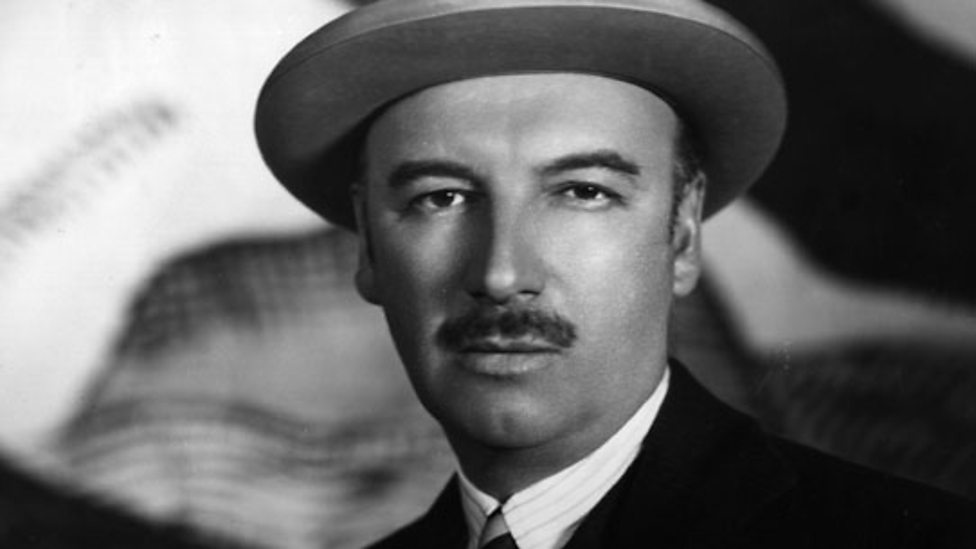 Gerald Hugh Tyrwhitt-Wislon Gerald Hugh Tyrwhitt-Wislon1883 - GERALD HUGH TYRWHITT-WILSON, 14th Baron Berners born (d: 1950), also known as Gerald Tyrwhitt, a British composer of classical music, novelist, painter, & aesthete. Berners was notorious for his “eccentricity,” e.g. dyeing pigeons at his house in Faringdon in vibrant colors and at one point having a giraffe as a pet and tea companion. Berners' musical works included Trois morceaux, Fantasie espagnole (1919), Fugue in C minor (1924), and several ballets, including The Triumph of Neptune (1926) (based on a story by Sacheverell Sitwell) and Luna Park (1930). In later years he composed several songs and film scores, notably for the 1946 film of Nicholas Nickleby. His friends included the composers Constant Lambert and William Walton and he worked with Frederick Ashton; Walton dedicated Belshazzar's Feast to Berners. He bequeathed his estate to his companion Robert ('Boy') Heber Percy, who lived at Faringdon until his own death in 1987. Berners obtained some notoriety for his roman-à-clef The Girls of Radcliff Hall, (punning on the name of the famous lesbian writer), in which he depicts himself and his circle of friends, such as Cecil Beaton and Oliver Messel, as members of a girls school. This frivolous satire, which was published and distributed privately, had a modish success in the 1930s. The original edition is rare; rumor has it that Beaton was responsible for gathering most of the already scarce copies of the book and destroying them. However, the book was reprinted in 2000.  Garbo Garbo1905 - GRETA GARBO born (d: 1990) Regarded as one of the greatest and most inscrutable movie stars ever produced by Metro-Goldwyn-Mayer and the Hollywood studio system, Garbo received a 1955 Honorary Oscar "for her unforgettable screen performances" and was ranked as the fifth greatest female star of all time by the American Film Institute. Garbo's biographer Barry Paris notes that she was "technically bisexual, predominantly lesbian, and increasingly asexual as the years went by." It has been indicated that Garbo struggled greatly with her sexuality, only becoming involved with other women in affairs that she could control. Some also suggest that Garbo remained single in the United States because of an unrequited love for her drama school sweetheart, the Swedish actress Mimi Pollak. Garbo's personal letters recently released to the public indicate that she remained in love with Pollak for the rest of her life. When Pollak announced she was pregnant, Garbo wrote: "We cannot help our nature, as God has created it. But I have always thought you and I belonged together." Famously connected to Mercedes de Acosta, one of the more Sapphic companions of the day, de Acosta wrote of their affair in her book Here Lies the Heart. Upon her death in 1990, Garbo left her entire, substantial estate to her niece, Gray Reisfeld, and nothing to the elderly female companion with whom she lived for many years, Claire. Only a cad would suggest that you dig up a copy of the now long forgotten Here Lies the Heart by Mercedes de Acosta and read the silly section on Garbo. Dig up a copy of the now long forgotten Here Lies the Heart by Mercedes de Acosta and read the silly section on Garbo. Died  Secretary General Dag Hammarskjold Secretary General Dag Hammarskjold1961 - DAG HAMMARSKJÖLD, U.N. Secretary-General, dies in a plane crash while attempting to negotiate peace in the war-torn Katanga region of the Democratic Republic of the Congo on this date. Hammarskjöld, despite holding a position of public prominence as Secretary-General of the United Nations from 1953 until his death in 1961, managed to withhold even the most minor details of his personal life from the world. Even his posthumously published journal, Markings, shies away from any mention of his private life. Possibly asexual, probably homosexual, Hammarskjöld was unable to accept his sexuality and lived an unhappy, frustrated life of sexual abstinence, suffering slurs from political figures and the international media. But though he couldn’t resolve his own internal conflicts, he was masterful at settling external conflicts as he worked to solve disputes in Palestine, Vietnam, Egypt, and the Congo, demonstrating one of the classic, same-sex archetypes of the mediator. Just last year a group of international jurists was commissioned to reinvestigate the 1961 death of U.N. Secretary-General Dag Hammarskjold, one of the Cold War's most enduring mysteries. A statement released just last Wednesday by a committee of former officials and academics said the team would reexamine the case with an eye toward trying to getting an answer to the question of what happened to Hammarskjold, whose death cut short the career of a man many consider the U.N.'s most effective leader. British lawmaker and former trade unionist David Lea, the committee's chair, said in a statement that "the whole truth, in significant respects, has yet to be told." Hammarskjold's plane went down over the thick forests of Northern Rhodesia, now known as Zambia, on the night of Sept. 17, 1961. Hammarskjold was one of 15 people to die as a result of the crash. Noteworthy  1857 Edition of the new York Times 1857 Edition of the new York Times1851 - The first edition of THE NEW YORK TIMES was published on this date. At last count it has won 122 Pulitzer Prizes, more than any other news organization. | ||||
|
|8|O|8|O|8|O|8|O|8|O|8|O|8|O|8| Gay Wisdom for Daily Living from White Crane Institute "With the increasing commodification of gay news, views, and culture by powerful corporate interests, having a strong independent voice in our community is all the more important. White Crane is one of the last brave standouts in this bland new world... a triumph over the looming mediocrity of the mainstream Gay world." - Mark Thompson Exploring Gay Wisdom & Culture since 1989! |8|O|8|O|8|O|8|O|8|O|8|O|8|O|8| | ||||

|
|||||

|
