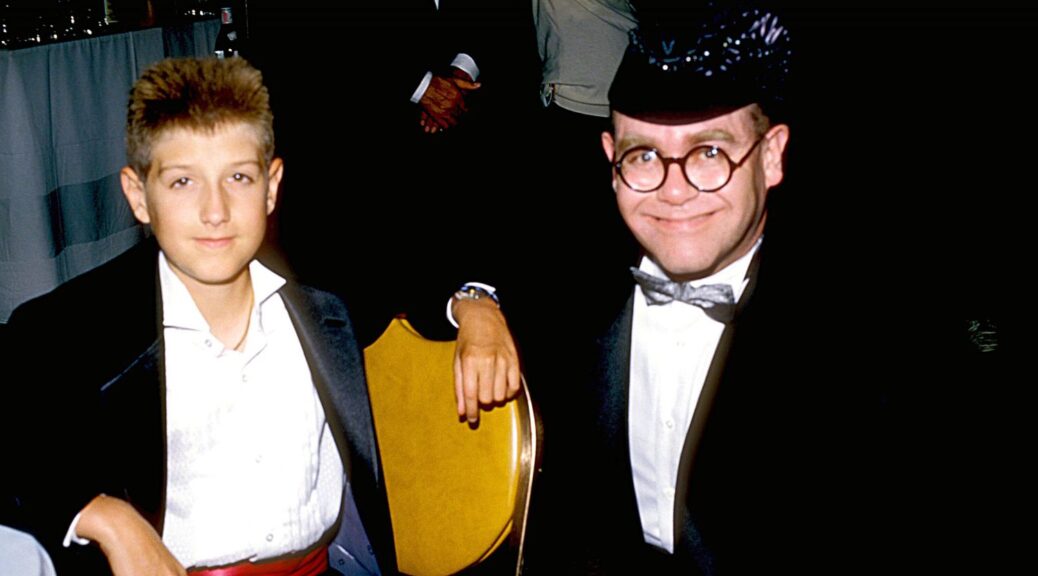
RYAN WHITE died on this date (b: 12/6/1971) was an American teenager from Kokomo, Indiana, who became a national poster child for HIV/AIDS in the United States after his school barred him from attending classes following a diagnosis of AIDS.
As a hemophiliac, White became infected with HIV from a contaminated factor VIII blood treatment and, when diagnosed in December 1984, was given six months to live. Doctors said he posed no risk to other students, as AIDS is not an airborne disease and spreads solely through bodily fluids, but AIDS was poorly understood by the general public at the time. When White tried to return to school, irate parents and teachers in Howard County rallied against his attendance due to unwarranted concerns of the disease spreading to other students and staff. A lengthy administrative appeal process ensued, and news of the conflict turned White into a popular celebrity and advocate for AIDS research and public education. Surprising his doctors, White lived five years longer than predicted. He died on April 8, 1990, one month before his high school graduation.
During the 1980s, AIDS was largely stigmatized as an illness impacting the gay community. In the U.S., that perception shifted with the media focus placed on White and other prominent heterosexual HIV-infected people such as Magic Johnson, Arthur Ashe and the Ray brothers. The U.S. Congress passed a major piece of AIDS legislation, the Ryan White CARE Act, shortly after White’s death, which was signed into law by President George H. W. Bush in August 1990 and reauthorized twice. Through the “Ryan White programs” which it funds, the Act has become the largest provider of services for people living with HIV/AIDS in the United States.
The publicity of White’s story catapulted him into the national spotlight, amidst a growing wave of AIDS coverage in the news media. Between 1985 and 1987, the number of news stories about AIDS in the American media doubled. While isolated in middle school, White appeared frequently on national television and in newspapers to discuss his tribulations with the disease. Eventually, he became known as the poster child for the AIDS crisis, appearing in fundraising and educational campaigns for the syndrome. White participated in numerous public benefits for children with AIDS. Many celebrities appeared with him, starting during his trial and continuing for the rest of his life, to help publicly destigmatize socializing with people with AIDS. Singers John Mellencamp, Elton John and Michael Jackson, actor Matt Frewer, diver Greg Louganis, President Ronald Reagan and First Lady Nancy Reagan, Surgeon General Dr. C. Everett Koop, Indiana University basketball coach Bob Knight and basketball player Kareem Abdul-Jabbar all befriended White. He also was a friend to many children with AIDS or other potentially debilitating conditions.
For the rest of his life, White appeared frequently on Phil Donahue’s talk show. His celebrity crush, Alyssa Milano of the then-popular TV show Who’s the Boss?, met White and gave him a friendship bracelet and a kiss. Elton John loaned Jeanne White $16,500 to put toward a down payment on the Cicero home, and, rather than accept repayment, placed the repaid money into a college fund for White’s sister. In high school, White drove a red 1988 Ford Mustang LX 5.0, a gift from Michael Jackson. Despite the fame and donations, White stated that he disliked the public spotlight, loathed remarks that seemingly blamed his parents or his upbringing for his illness, and emphasized that he would be willing at any moment to trade his fame for freedom from the disease.
Over 1,500 people attended White’s funeral on April 11, a standing-room only event held at the Second Presbyterian Church in Indianapolis. White’s pallbearers included Elton John, football star Howie Long and Phil Donahue. Elton John performed “Skyline Pigeon” at the funeral. The funeral was also attended by singer Michael Jackson, and then-First Lady Barbara Bush. On the day of the funeral, Ronald Reagan wrote a tribute to White that appeared in The Washington Post. Reagan’s statement about AIDS and White’s funeral were seen as indicators of how greatly White had helped change perceptions of AIDS.
White is buried in Cicero, close to the former home of his mother. In the year following his death, his grave was vandalized on four occasions. As time passed, White’s grave became a shrine for his admirers.
The Ryan White CARE Act was reauthorized in 1996, 2000, 2006, and 2009. Since the Affordable Care Act of 2010 prohibited discrimination on the basis of health status and expanded access to insurance coverage, some experts debated the need for programs like the Ryan White Act. The Ryan White CARE Act expired in 2013, but individual programs continue to receive congressional funding.