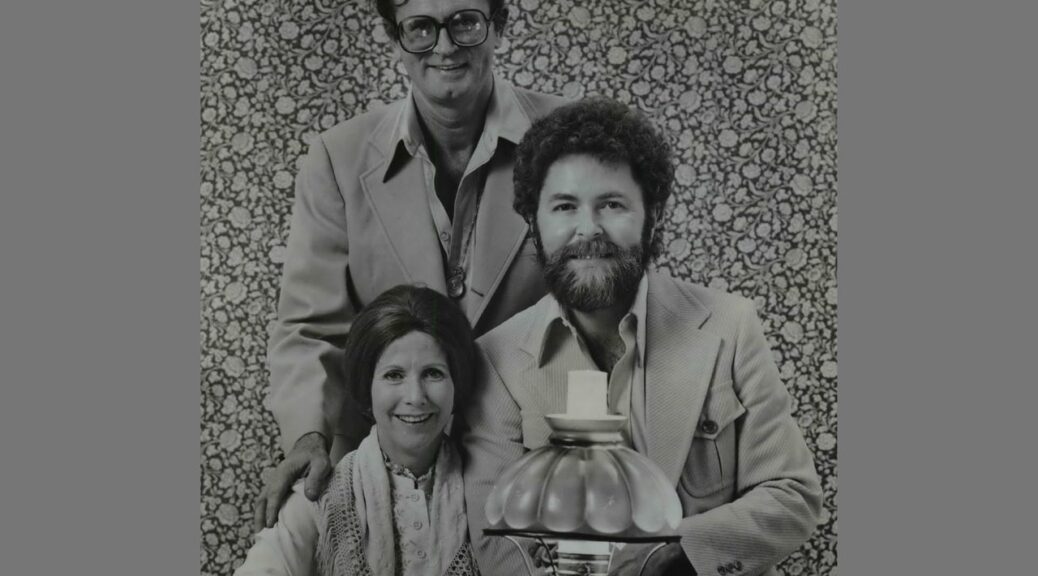
WILLIAM LUCE, who died on this date, (b: 1931) was an American writer, primarily for the stage and television. He wrote several plays , and specialized in one-person plays, most well-known for The Belle of Amherst, starring Julie Harris.
In the one-person-show format, Mr. Luce found a genre that suited his personality.
“When I listen to music, I prefer a solo instrument,” he told an interviewer in 2010. “And when it comes to performers, I love to write for the solo voice. In my personal life, I don’t like to be with crowds. I prefer one or two friends.”
He also wrote “Brontë” (1979), also called “Currer Bell, Esquire,” which starred Ms. Harris as Charlotte Brontë, the poet and author of “Jane Eyre.” Mr. Luce wrote it for WGBH Radio in Boston (earning the station a Peabody Award) before he adapted it for Irish television and as a stage play. In 1984, he wrote “Zelda,” with Olga Bellin as the novelist Zelda Fitzgerald, the wife of F. Scott Fitzgerald.
He occasionally departed from the solo-show genre. For television he wrote The Last Days of Patton, with George C. Scott reprising his Academy Award-winning role as General George S. Patton; The Woman He Loved, about the romance between King Edward VIII and Wallis Simpson; and Lucy and Desi: Before the Laughter, about the careers and marriage of Lucille Ball and Desi Arnaz.
While performing with the Charles singers on the ABC variety show “The Hollywood Palace,” Mr. Luce met a crew member whose friend, the comic actor and director Charles Nelson Reilly, had discussed collaborating with Ms. Harris on a television production about Dickinson. In Mr. Luce, Mr. Reilly found a fellow Dickinson devotee, and asked him to write a script. That first attempt, a play with 14 characters, proved unsuccessful.
But the idea gained new life when Mr. Reilly was at Sardi’s, the theater district restaurant and hangout in Manhattan, where he overheard the producers of Clarence Darrow, a one-man Broadway show with Henry Fonda as the renowned lawyer, talk about needing a new project. Mr. Reilly suggested Dickinson — and Mr. Luce resumed writing, this time for a stage production. The producers, Mike Merrick and Don Gregory, thought the first draft was too lyrical and literary. Mr. Luce was discouraged. But then, he said, he had a dream about the opening scene.
As he told an interviewer, he envisioned Ms. Harris walking onstage, holding flowers in her arms, and saying, in words that he would write: “Forgive me if I’m frightened. I never see strangers and hardly know what I say. My sister Lavinia — she’s younger than I — says I tend to wander back and forth in time. So you must bear with me.”
Mr. Luce revised the play, and when it opened in Boston, directed by Mr. Reilly, the critic Kevin Kelly of The Boston Globe described it as “singularly beautiful.” He added that Mr. Luce had “made an Emily so warm, human, loving and lovable that her ultimate vulnerability will break your heart.” This writer had the privilege of touring through the south and southwest with Mr. Reilly with a production of The Belle of Amherst.