

November 18

CATHERINE TOZER COOMBES, born (d:1914) One day in 1897, a little old man, penniless and disheveled, walked into an English police station and begged for admission to a country poorhouse. “I am a woman,” the man said, thus opening the strange case of Kate Tozer. To escape a brutal husband, she said, she had dressed in male attire and lived as “Charlie Wilson,” a house painter, for almost half a century, fearing all those years that her husband might find her if she were not so disguised. The novelist Charles Reade, fascinated by the story, investigated it on his own and discovered that it was only true in part.
What had really occurred was this: Kate Tozer had indeed married Tom Coombes, but he had not mistreated her. Having inherited ten pounds from an aunt, she appeared dressed as a man before her husband one day and announced “I am no longer Kate. My name is Fred.” They continued to live together as Tom and Fred, both working as house painters. Then one day, “Fred” fell in love with Nelly Smith and they eloped, together with Tom. When the police, spurred on by Nelly’s parents, broke down the Coombes’ door, they found Tom smoking his pipe and reading a newspaper, while “Fred” and Nelly went at it on the sofa. It’s only after “Fred” got out of jail that she became “Charlie Wilson” and eventually settled down and found herself a nice bride named Anne Ridgeway, about whom, alas, he tells us nothing. One would like to hear her story.

T.J. OSBORNE is half of the hit country music duo The Brothers Osborne consisting of T.J. Osborne (lead vocals) and John Osborne (lead guitar, background vocals), both natives of Deale, Maryland. The duo is signed to EMI Nashville and has released one self-titled extended play album and three studio albums: Pawn Shop, Port Saint Joe and Skeletons. Seven of their singles have charted on Hot Country Songs and Country Airplay, the highest peak belonging to Stay A Little Longer, which charted at No. 4 on the former and No. 2 on the latter. The duo's albums were both produced by Jay Joyce, and consist largely of songs that both brothers wrote with a number of collaborators. Artists with whom they have worked include David Nail, Dierks Bentley, Lee Ann Womack, and Lucie Silvas, the last of whom is John's wife. The musical style of the duo takes influence from Southern rock, outlaw country, and neotraditional country.
They have received seven Grammy nominations, won four CMA Awards and have had seven of their songs become Top 40 hits including Stay A Little Longer, which features gay interracial couples in the video.
In February 2021, TJ Osborne came out as gay, making him the first openly gay artist signed to a major country music label. He received support from other artists including Kacey Musgraves, Ty Herndon, Chely Wright, Maren Morris, Jason Isbell, Brandy Clark, Dierks Bentley and his record label UMG Nashville.
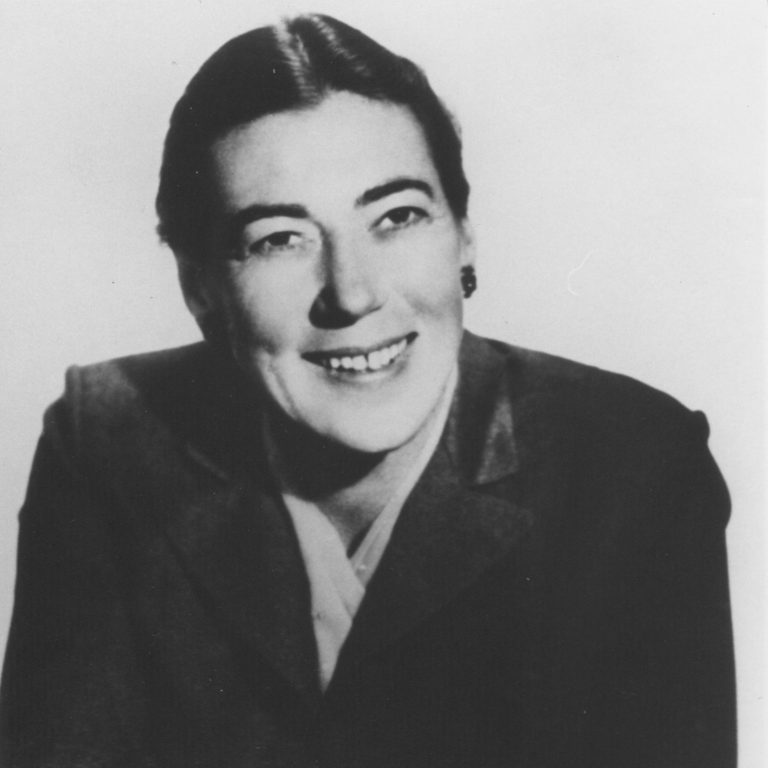
EVELYN HOOKER (née Gentry), who died on this date (b: 1907) was an American psychologist most notable for her 1956 paper "The Adjustment of the Male Overt Homosexual" in which she administered several psychological tests to groups of self-identified male homosexuals and heterosexuals and asked experts to identify the homosexuals and rate their mental health. The experiment, which other researchers subsequently repeated, argues that homosexuality is not a mental disorder, as there was no detectable difference between homosexual and heterosexual men in terms of mental adjustment.
Her work argued that a false correlation between homosexuality and mental illness had formed the basis of classifying homosexuality as a mental disorder by studying only a sample group that contained homosexual men with a history of treatment for mental illness. This is of critical importance in refuting cultural heterosexism because it argues that homosexuality is not developmentally inferior to heterosexuality. Her demonstration that it is not an illness led the way to the eventual removal of homosexuality from the American Psychiatric Association's Diagnostic and Statistical Manual of Mental Disorders (DSM).
Hooker's mother, Jessie Bethel, who had a third grade education, told her to pursue an education because that was the only thing that could not be taken away from her. The Gentry family was not wealthy in the least, and Hooker was further stigmatized by her nearly 6-foot stature. Still an advocate of education, Jessie Bethel enrolled her daughter at Sterling High School, which was large and unusually progressive for the time. There, Hooker was in an honors program and was able to take a course in psychology. Hooker wanted to go to a teachers college, but her instructors saw her potential and encouraged her to go to the University of Colorado. By the time she was ready to graduate, she had obtained a scholarship to the University of Colorado Boulder (UCB).
In her early career, she was not especially interested in the psychology of homosexual people. After teaching for only one year at the Maryland College for Women, she contracted tuberculosis and spent the next year in a sanatorium in Arizona. After her recovery she began teaching at Whittier College in Southern California. Then in 1937 Gentry received a fellowship to the Berlin Institute of Psychotherapy, at which point she left Whittier. Hooker lived with a Jewish family while she studied in Europe. While there, she got a first-hand look at the rise of Adolf Hitler and witnessed such events as the Kristallnacht. She learned later that the Jewish family she lived with was killed in concentration camps. Before returning home, Hooker went on a group tour to Russia, arriving just after a major purge. The events that Hooker would see in Europe ultimately sparked her desire to help overcome social injustice.
During the 1940s, she first became interested in what would turn out to be her life's work. Hooker was teaching an introductory psychology class in 1944 when a student approached her after class. He identified himself as Sam From; he confided in her that he was gay and so were most of his friends. She realized Sam was one of the brightest students in the class and quickly became friends with him. They would spend time between and after classes to talk and get to know each other. Sam introduced Hooker to his circle of homosexual friends. They would go to clubs, bars, and parties where Hooker was able to fraternize with more homosexuals. Sam's closest friends included Christopher Isherwood and Stephen Spender, a writer and a poet. He challenged her to scientifically study "people like him".
Sam proposed a question to Hooker: Why not conduct research on homosexuals to determine whether homosexuality was some sort of disease or disorder and not relevant to a person's psychological makeup? Sam urged her to conduct research on homosexuals, saying it was "her scientific duty to study people like us".
Hooker was intrigued by the question and further persuaded by her experience with social rejection as a child, witnessing the effects of racial and political persecution in her travels, and discrimination in her professional life.
Over the next two decades she became established professionally. In 1948 she moved to a guest cottage at the Salter [more likely Saltair] Avenue home of Edward Hooker, professor of English at UCLA and poetry scholar. They married in London in 1951, and she took his surname. In the mid-fifties Christopher Isherwood became their neighbor. She was against the relationship of Isherwood with the much younger Don Bachardy; they were not welcome at her house. Sam From died in a car accident in 1956, just before Hooker's ground-breaking research was published. Hooker's husband died in January 1957 of cardiac arrest.
The 1960s saw her work find a wider audience, and her conclusions were taken up by the gay rights movement. In 1961 Hooker was invited to lecture in Europe and in 1967, the director of the National Institute of Mental Health (NIMH) asked her to produce a report on what the institution should do about homosexual men. Richard Nixon's election in 1969 delayed the publication of the report, which was published by a magazine, without authorization, in 1970. The report recommended the decriminalization of homosexuality and the provision of similar rights to both homosexual and heterosexual people. The burgeoning gay rights movement seized on this.
She retired from her research at UCLA in 1970 at the age of 63 and started a private practice in Santa Monica. Most of her clients were gay men and lesbians. In her later life she would be awarded with the Distinguished Contribution in the Public Interest Award. The University of Chicago opened the Evelyn Hooker Center for Gay and Lesbian Studies in her honor. She was also the subject of the 1992 Academy Award–nominated film Changing Our Minds: The Story of Dr. Evelyn Hooker. Season 1, episode 4 of the podcast Making Gay History is about Hooker.
Hooker died at her home in Santa Monica, California, in 1996, at the age of 89.

STANDARD TIME established on this date. Until 1883 United States railroads each chose their own time standards. The Pennsylvania Railroad used the "Allegheny Time" system that was an astronomical time keeping service developed by Samuel Langley at the Western University of Pennsylvania's Allegheny Observatory in Pittsburgh. Instituted in 1869, the Allegheny Observatory's service is believed to have been the first regular and systematic system of time distribution to railroads and cities as well as the origin of the modern standard time system.
By 1870, the Allegheny Time service extended over 2,500 miles with 300 telegraph offices receiving time signals. However, almost all railroads out of New York ran on New York time, and railroads west from Chicago mostly used Chicago time, but between Chicago and Pittsburgh/Buffalo the norm was Columbus time, even on railroads that didn't run through Columbus. The Santa Fe used Jefferson City (Missouri) time all the way to its west end at Deming, New Mexico, as did the east-west lines across Texas; Central Pacific and Southern Pacific used San Francisco time all the way to El Paso. The Northern Pacific had seven time zones between St Paul and the 1883 west end of the railroad at Wallula Jct, but Union Pacific had two between Omaha and Ogden.
In 1870 Charles F. Dowd had proposed four time zones based on the meridian through Washington D.C. for North American railroads. In 1872, he recommended the Greenwich meridian. Sandford Fleming, a Canadian, proposed worldwide Standard Time at a meeting of the Royal Canadian Institute on February 8, 1879. Cleveland Abbe advocated standard time to better coordinate international weather observations and resultant weather forecasts, which had been coordinated using local solar time. He recommended four time zones across the contiguous United States, based on Greenwich Mean Time, in 1879. The General Time Convention (renamed the American Railway Association in 1891), an organization of American railroads aimed at coordinating schedules and operating standards, became increasingly concerned that if the United States government adopted a standard time scheme it would work to the disadvantage of its member railroads. William F. Allen, the secretary of the General Time Convention, argued that North American railroads should adopt a five zone standard, similar to the one in use today, to avoid government action. On October 11, 1883, the heads of the major railroads met in Chicago at the former Grand Pacific Hotel and agreed to adopt Allen's proposed system.
The members agreed that on Sunday, November 18, 1883, all United States and Canadian railroads would readjust their clocks and watches to reflect the new five zone system on a telegraph signal sent from the Allegheny Observatory in Pittsburgh at exactly noon on the 90th meridian. Although most railroads adopted the new system as scheduled, some did so early on October 7 and others late on December 2. The Intercolonial Railway serving the Canadian maritime provinces of New Brunswick and Nova Scotia just east of Maine decided not to adopt Intercolonial Time based on the 60th meridian west of Greenwich, instead adopting Eastern Time, so only four time zones were actually adopted by U.S./Canadian railroads in 1883. Major American observatories, including the Allegheny Observatory, the United States Naval Observatory, the Harvard College Observatory, and the Yale University Observatory, agreed to provided telegraphic time signals at noon Eastern Time.
Standard time was not enacted into law until the 1918 Standard Time Act established standard time in time zones in U.S. law as well as daylight saving time (DST). The daylight savings time law was repealed in 1919 over a presidential veto, but reestablished nationally during World War II.

On this date Mexico City police raided an affluent drag ball, arresting 42 cross-dressed men. But one was released, supposedly a close relative to President Porfirio Díaz. The resulting scandal, known as the DANCE OF THE 41 MARICONES, received massive press coverage. The press was keen to report the incident, in spite of the government's efforts to hush it up, since the participants belonged to the upper echelons of society. The list of the detainees was never published.
On Sunday night, at a house on the fourth block of Calle la Paz, the police burst into a dance attended by 41 unaccompanied men wearing women's clothes. Among those individuals were some of the dandies seen every day on Calle Plateros. They were wearing elegant ladies' dresses, wigs, false breasts, earrings, embroidered slippers, and their faces were painted with highlighted eyes and rosy cheeks. When the news reached the street, all forms of comments were made and the behavior of those individuals was subjected to censure. We refrain from giving our readers further details because they are exceedingly disgusting. —Contemporary press report.
A rumor, neither confirmed nor denied, soon emerged, claiming that there were in reality 42 participants, with the forty-second being Ignacio de la Torre, Porfirio Díaz's son-in-law, who was allowed to escape. Although the raid was illegal and completely arbitrary, the 41 were convicted and conscripted into the army and sent to Yucatán where the Caste War was still being fought:
The derelicts, petty thieves, and cross-dressers sent to Yucatán are not in the battalions of the Army fighting against the Maya Indians, but have been assigned to public works in the towns retaken from the common enemy of civilization. —El Popular, 25 November 1901
In 1901 there was a similar raid on a group of Lesbians in Santa María, but that incident received far less attention.
As a result of the scandal, the numbers 41 and 42 were adopted by Mexican popular parlance to refer to homosexuality, with 42 reserved for passive homosexuals. The incident and the numbers were spread through press reports, but also through engravings, satires, plays, literature, and paintings; in recent years, they have even appeared on television, in the historical telenovela El vuelo del águila, first broadcast by Televisa in 1994. In 1906 Eduardo A. Castrejón published a book titled Los cuarenta y uno. Novela crítico-social. José Guadalupe Posada's engravings alluding to the affair are famous, and were frequently published alongside satirical verses.
Such was the impact of the affair that the number 41 became taboo, as described by the essayist Francisco L. Urquizo:
“In Mexico, the number 41 has no validity and is offensive... The influence of this tradition is so strong that even officialdom ignores the number 41. No division, regiment, or battalion of the army is given the number 41. From 40 they progress directly to 42. No payroll has a number 41. Municipal records show no houses with the number 41; if this cannot be avoided, 40 bis is used. No hotel or hospital has a room 41. Nobody celebrates their 41st birthday, going straight from 40 to 42. No vehicle is assigned a number plate with 41, and no police officer will accept a badge with that number.” —Francisco L. Urquizo
Subscribe to Gay Wisdom
Would you like to have Today in Gay History (aka Gay Wisdom) sent to you daily?