WC71 – Review of Be Done On Earth

Rvu_howardcook1

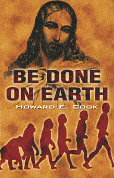
Be Done On Earth

By Howard E. Cook
PublishAmerica, pb,
185 pages, $19.95

Reviewed by Toby Johnson

A stranger appears in your life. He’s attractive, but even more, he’s charismatic, sexually alluring, but aloof. Everybody who meets him falls in love with him. And he’s mysterious, suddenly disappearing and then popping back up again in the most unexpected places and times, but always with coincidental (almost magical) significance. And he’s got a message for you—and for the world. And he wants you to spread it. He gives you a manuscript, and then he disappears again, leaving you with a mission.

This is certainly a familiar theme in mythological writing. From Richard Bach’s Messiah or Myles Connolly’s very Catholic Mr. Blue to the gospel stories themselves about Jesus, one of the ways “revealed” or spiritual insight is traditionally presented is as “the book within the book.” There’s a story about meeting the charismatic message giver, and within that story is the story or teaching he gives.

This happens in real life. It’s not just a theme in literature or mythology. It’s an actual experience people have. In my own life, my nicknamesake and first collaborator Toby Marotta entered my life in an almost magical way, invited me to help him edit his masterpiece Harvard doctoral dissertation into a publishable book, and then, leaving me with a copy to rewrite (and a message about the meaning of the gay rights movement), he disappeared with his exotic Parsi lover to search for crystals in India.

I just made it sound more magical and mysterious than it really was: Marotta’s partner was a geology professor from India who imported minerals as a sideline business to teaching. This was just a business trip and I was left with just a copyediting job. But it was the start of my own writing career — and of my own understanding of gay consciousness.

So when Howard Cook relates the tale of his meeting the elusive, charismatic Bradford Lightfoot Dare in the strangest of places over a period of many years, I was ready to believe the story on several levels from the mythic to the mundane. Cook’s story of Brad Dare is quite intriguing. He first shows up in a Trappist monastery, then as a nude model for life-drawing classes in Washington, DC. He’s a dance partner to debutantes and a most eligible bachelor in the nation’s capital. Next he’s a Jesuit seminarian studying Teilhard de Chardin, and a little later, he appears unexpectedly as a housemate in a hippie household in Greenwich Village in the apartment previously occupied by the New York Queen of the Gypies — with writer Norman Mailer indirectly making the reintroduction. Then he becomes a gay porn star in San Francisco and a character in the development of West Coast New Age thought along with Ken Kesey and Alan Watts.

Especially because the tale begins in the 1950s, I couldn’t help being reminded of Fred Demara, “The Great Imposter,” (played by Tony Curtis in the movie) who beguiled the American public in those days with his story of living many identities, including Trappist monk. But Bradford Dare comes across in Cook’s telling not as a daring adventurer (though look at his name!) thumbing his nose at convention and legalities, but as a dedicated and driven seeker of transcendent truths, though no less rebel.

Dare shows up again in Cook’s life many years later, after Cook has successfully marketed a couple of books. He’s been studying and thinking and making notes all these years, and now asks Howard Cook’s assistance in articulating and promulgating the wisdom and enlightened insight he’s gained.

And that’s the book within the book: Bradford Lightfoot Dare’s proposal for how to modernize Christianity and recreate the Church. Partly tongue-in-cheek and partly with multi-layered symbolism, Dare calls his message the first encyclical of Pope John the Beloved.

Blending modern-day physics and cosmology, a little Teilhard and a little Matthew Fox, comparative religion, some Joseph Campbell, intelligent New Age thought, progressed Christianity, American political idealism, evolutionary theory, postmodernism, (and here and there what seem like loose associations), Pope John the Beloved calls for a new Church of the Second Coming—also referred to (iconoclastically) as the Church of Kingdom Come – COKC (try pronouncing the acronym).

It’s a sex-positive religion based in an evolutionary model of human nature with an openly gay priesthood (with a somewhat progressed understanding of the role of homosexual consciousness in evolution). Some of the tenets of COKC are intentionally controversial (like the proposal that genetic science will soon allow humans to reproduce in the lab, avoiding all the dangers of unregulated breeding, and taking advantage of the opportunity to improve human nature at the molecular level). But the suggestions for an updated religious model come across as heartfelt and genuine.

I’ve tended to focus on the frame of the story rather than the content. Brad Dare would probably prefer I was writing about his ideas rather than Cook’s presentation. But I will leave readers to study Dare’s “encyclical” on their own: it’s a little overwhelming to summarize in a few paragraphs in a book review. I think men in the gay spirituality movement will recognize many of the themes (like the question “Was Jesus gay?”). But some of the ideas are fresh and come from unexpected directions (like the “final anthropic principle” in quantum cosmology). And, at any rate, it’s not so much the conclusions that will draw readers into the book as the process. Whether you agree with the conclusions or not, the debate is interesting and the argumentation thought-provoking.

For me, as reviewer, the most thought-provoking was the question whether Brad Dare is an alter-ego and literary device of Howard Cook’s multi-faceted mind or a “real” person. In a way, it doesn’t make any difference.

I must say I was disappointed at the end of the book that the framing story is not recapitulated. I wanted to know what happened to Brad Dare. All we get at the end is that he is working on a follow-up about the Church of the Gay Salvation.

Be Done on Earth is a neat example of an ancient literary and mythical dynamic by which wisdom is personified in a charismatic person who inspires those caught in his magic spell to discover their own insights and to surpass him. I was pleased to suspend disbelief and enjoyed the book — just as 30 years ago at the start of my writing career I was willing to suspend disbelief and let my friend and fellow Toby be an inspiration and watershed in my own life.

I wonder if there’s something “inherently gay” in finding inspiration in a charismatic person instead of an authoritarian institution or revealed text. I think that might be one of the subjects in Pope John the Beloved’s second encyclical.

This is just an excerpt from this issue of White Crane.   We are a reader-supported journal and need you to subscribe to keep this conversation going.  So to read more from this wonderful issue SUBSCRIBE to White Crane. Thanks!

WC71 – Review of Rising Up

Rvu_perezrisingup Rising Up:
Reflections on Gay Culture, Politics, and Spirit

By Joe Perez
Lulu Publication, pb, 248 pp,  $15.75
Also available from Lulu.com as an e-book for $6.25.

Reviewed by Toby Johnson

Joe Perez moderates the Gay Spirituality and Culture blog on the Internet. With blogging having become a major force in American media and politics, Perez’s blog constitutes a major gay presence in the new electronic/virtual media world. The blog hosts columns by a variety of writers (occasionally including this reviewer) as well as linking to Perez’s own extensive writing at joe-perez.com.

Perez’s book, Rising Up, demonstrates another facet of his creativity within this virtual world. For the book is a hybrid of traditional writing/publishing and the new Internet-inspired style of blogging. It is a compilation of columns and postings Perez has written for the blogosphere, and then edited and rearranged for book publication. This is a new kind of writing and a new phenomenon in the book world.

There are several levels, therefore, at which to review this book: first, simply the phenomenon of a blog-based book, second, the “personalistic” style of writing occasioned by blogging, and third, the content.

The first level is easy: this is probably the wave of the future. The nature of posting on the Internet is that it’s fleeting and ephemeral. Electronic media demonstrates one of those Buddhist insights into existence: everything is transitory, existing like a bubble or a dream. Brilliant writers post brilliant, incisive commentaries on the web. But these exist only as electronic signals flashing round the world at light speed and getting lost in the torrent of such signals, then disappearing into the past. It’s a natural impulse of serious writers, thinkers, and commentators to want to preserve their best writing and to organize their insights to make them more accessible. And it’s an appropriate writer’s discipline to edit and rewrite one’s material. So the blog turned literature is a logical outgrowth of this computer phenomenon. Joe Perez really is riding the crest of the wave.

The second level of critique is much more complex. Blogging is almost necessarily reactive and interlinked. Blogging is a kind diary-keeping, without the confidentiality. Bloggers write in response to other blogs and postings on the web. In the electronic blog, the hyperlink is easy to create and easy for the reader to follow. In print, it doesn’t work that way. So, for instance, where traditional academic text would have a footnote, Perez’s blog text has a bracketed reference to a URL like [http://www.washingtonpost.com/wp-dyn/content/article/2005/05/16/AR200505-1601232]. Of course, that’s actually very easy to follow on the computer—easier than to a footnoted book you’d have to got to a library to find — but it is awfully inelegant in print. What’s more, the reactive style means the reader is only hearing one side of a debate. To Perez’s credit, he generally introduces and explains the text he is commenting on. This, indeed, is what a reader would expect from a serious and academically trained writer. Joe Perez is a Harvard graduate and done masters level work at the University of Chicago.

Blogging also tends to be sequential and timely. News comes out in bits and pieces and commentators are always dealing with it in the fleeting present. Thus their commentaries can lack perspective. Again to Perez’s credit, he has organized the book by themes and not by dates. His insights then come across as thoughtful and logically interconnected, not just reactive. But this is the major problem with this style of writing. Above I referred to this as personalistic. By that I mean that the reactive quality of blogging results in lots of first person pronouns and consequent subjectivity. Joe’s personality is very present.

The third level of critique is of content. Rising Up covers a lot of territory; as the subtitle indicates, the book is about culture, politics, and spirit, ranging from “Responding to religious traditionalists,” “Fighting HIV/AIDS,” “Looking at popular culture,” to “Elevating business and society,” “Connecting sex and soul,” and “Exploring spiritual alternatives.” (These are six exemplary chapter titles out of twelve.)

Joe Perez is a student of modern psycho-spirit culture theoretician Ken Wilbur. Wilbur’s ideas and models of experience and spiritual growth pervade Perez’s writing. Wilbur uses a lot of acronyms for his wide-ranging concepts (AQAL, for instance, for “All Quadrants, All Levels” meaning “comprehensive” and “flexible.”) Perez follows suit and uses the acronym STEAM for the processes of psychological and spiritual growth. Students of Wilbur’s will find Perez’s discussions very appropriate application to gay consciousness; non-Wilbur fans may find them confusing. The concept of “rising up” through the stages of personal growth unites all the various discussions including the nature of gay consciousness itself.

The book, like Internet surfing, doesn’t have to read from front to back. It’s filled with interesting and provocative comments, most of which stand alone. I thought the section on HIV/AIDS perhaps the most heartfelt. Joe Perez deserves to be read.

This is just an excerpt from this issue of White Crane.   We are a reader-supported journal and need you to subscribe to keep this conversation going.  So to read more from this wonderful issue SUBSCRIBE to White Crane. Thanks!
WC71 – Review of John Cameron Mitchell’s Shortbus

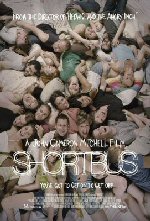
Rvu_shortbus1Shortbus
A Film by John Cameron Mitchell

Reviewed by Jay Michaelson

Shortbus is the best gay movie I’ve ever seen, and it’s not really even a gay movie. John Cameron Mitchell’s follow-up to Hedwig and the Angry Inch is the second film I saw in as many days unlike any I’d seen before — Borat being the other. It is, on its surface, an exploration of the sexual and emotional lives of a cluster of beautiful, young New Yorkers — a description which probably fits any number of banal films, gay or straight, we’ve seen over the last few decades. What separates Shortbus from those lesser efforts is, above all, its honesty — and this is what makes it interesting to think about from a gay perspective as well.

The honesty of the film extends throughout all levels of being: body, heart, mind, and spirit. On a purely physical level, it is a naked, and nakedly honest, film.  People have sex in the movie — actual sex, with penetration, cum shots, and all the other physical intimacies omitted in mainstream cinema and fetishized in pornography.  There’s explicit gay sex, explicit lesbian sex, and explicit straight sex; explicit solo sex, explicit couples sex, and explicit group sex; intergenerational sex and interracial sex. And yet none of the sex is filmed for the erotic arousal of the audience. It’s hot, to be sure, but it’s never pornography. I remember once being told that pornography is about the moment of orgasm, but “art” is about the moments before and after. Shortbus is about both, and in so refusing to abide by the porn/art dichotomy, it is, in a quiet way, revolutionary. Yes, it’s possible to be sexually explicit and emotionally and intellectually engaged at the same time. The characters both fuck and talk — imagine that.

The film is also revolutionarily honest on an emotional level; Finally, a film in which experimental sexual practices are neither celebrated nor condemned, but explored. What happens when a gay couple, unsure of their continued love for each other, takes a cute boy home for a threesome? What’s it like to explore S/M from an emotionally engaged perspective, with a Dominatrix who tells you the truth? And how do love and lust relate, when the usual taboos around sex are no longer in operation? At times, Shortbus is like a Jane Austen novel, except one in which all the characters are sleeping with each other. I was always bothered by Austen, because once you take away the repressive social structure, so much of the dramatic tension is lost. Here, for once, my non-repressive social structure — the queer (not gay), quasi-libertine, sexually positive world of Brooklyn and lower Manhattan — is the stage upon which the emotional journeys of the characters unfold.  And, surprise, we are not all the same underneath. Thank God.

And intellectually: here is probably the most sophisticated film about sex since Steven Soderbergh’s sex, lies, and videotape, and before that, Carnal Knowledge. There are no simple answers. There are no simple rules.  And the characters are intelligent in a way that, I’m sorry to say, traditionalists never are — they are personally intelligent, sexually intelligent, and, I think, spiritually intelligent as well. Traditionalists, gay or straight, either never question social mores, or decide to abide by them for reasons which usually have little to do with personal fulfillment. In Shortbus, the dozen or so primary characters are always questioning, always questing, and are involved in journeys of personal growth. 

Take Sofia (Sook-Yin Lee), the closest thing the ensemble film has to lead character. A female sex therapist who’s never had an orgasm, she explores the darker psychodynamics of her marriage, beneath the pseudo-therapeutic language of non-violent communication and sex-positive rhetoric. She meets with the dominatrix in a sensory-deprivation tank, trading psychological insight for sexual healing, and begins to frequent the “Shortbus” sex party for which the film is named. And she’s the traditional one.

To be a life-affirming gay man — and by that I mean one who neither “wrestles with the demon” of perfectly healthy sexuality nor retreats from messy realities into the fantasies of drug- and steroid- fueled Greco-Roman hedonism — is to make a certain choice: a choice for love, for pleasure, and against inherited constraint. Waking up out of straight fantasy into the truths of poly-sexual existence is a bit like smoking pot for the first time. After all the fear and judgment, you see that what the Squares have forbidden, labeled as “Harmful” or “Evil” or worse, is actually…fun. Life-affirming. Interesting. Complicated. And if you stay awake, you never go back. You never return to the world in which authority is right, and the old, dead, white, straight men who are supposedly so wise really know what the hell they’re talking about.

Maybe this is why queer people, throughout history, have been fools, actors, and masters of disguise. We see right through the hypocrisy, because here, at one of the most fundamental levels of human experience — there’s a lie that’s been told for thousands of years. Hell, half of America still believes it today, having their same quiet, missionary-position sex year after year after year.

Shortbus is our reality. Its world is one in which all is permitted, but not all of it is good for you. Polymorphous sexuality is presented, neither for titillation nor condemnation, but as what it deserves to be: a fascinating expression of human complexity. Absent are the usual poles of black and white: the insidiously cheerful public face of the Circuit, on the one hand, or a single character horrified by the depravity of it all on the other. Nor does the absence of a simple dualism mean that this is a nihilistic world like Cabaret.  Though there is an motif of decadence in the shadow of tyranny that marks both Cabaret’s time and our own. Rather, it is one in which intelligent, emotionally centered adults recognize the power of open sexuality to heal, hurt, and explore the energies the world presents to us, free of charge.

Obviously, you don’t show erect penises in the mainstream multiplexes of America, especially if they’re being fellated by hot young things who just dropped out of a A&F catalog (the film’s one, obvious dishonesty…but also a guilty pleasure) which means that most people who would ordinarily be scandalized by this “smut” (or enlightened by it) won’t get to see it in the first place.  In a way, that is, of course, a shame, because the matter-of-factness with which the film treats liberated sexuality is, itself, perhaps its single most revolutionary aspect. Yes, these are people who really go to sex parties, and they are trannies, dykes, queens, even straights. So what. Now that the frisson is over, the complicated, fascinating, and messy business of emotional connection begins. 

Thank God such a mature film has been made, and that John Cameron Mitchell (who, if I were to be as honest as his characters, I have to admit I’ve always had a little crush on… I’ve been too shy to tell him when I meet him at parties) had the money, as well as the creativity, to make it. And kudos to Mitchell for refusing to compromise his, and his ensemble’s, vision with commercial or political realities. This is powerful, revolutionary art, conceived of as part of an equally powerful process of sexual and interpersonal discovery on the part of the cast. It’s the most real film I’ve seen in years, and it let me sigh in relief — thank God, someone tells it like it is — at least for the sane few who’ve thrown off the chains of shame that most people mistake for religion.

So, all of you denizens of Body Electric, Burning Man, and the other islands of sexual sanity in our nauseating sea of mutually-reinforcing vulgarity and repression: go see it right away. Buy the DVD. Support the artist, and discuss the art. Because this is your world, my world, and a world that, one day, might yet come into being.

This is just an excerpt from this issue of White Crane.   We are a reader-supported journal and need you to subscribe to keep this conversation going.  So to read more from this wonderful issue SUBSCRIBE to White Crane. Thanks!