Category Archives: Gay History

Bea Arthur – We Loved You.

I was sad to read that Bea Arthur passed this weekend. Over the years I've heard rumors that she was a Lesbian, and it isn't hard to believe. But I don't know it for a fact. It would fit, though, with my remembrance of this strong, smart, brave woman. I had personal history with her.

In 1976 I moved to Los Angeles from San Francisco, where I had just been "the naked guy" in Clint Eastwood's The Enforcer. I had no lines, but because I was required to be naked in the scene, I was given my Screen Actors Guild card, the holy grail for a budding actor. Much to my chagrin, you won't find me in the credits, but I'm the naked guy on the bed in the scene when the bad guy, whose being chased by Dirty Harry, falls through the skylight and crashes into the midst of a porn movie being shot. My mother was so proud. All I see when I watch it now is that I once had a beautiful head of hair.

But I digress…I moved to Los Angeles (as crew with A Chorus Line, another story), and, as is my wont, got involved with SAG union activities. I was serving on the SAG Morals & Ethics Committee in 1977 when Anita Bryant announced that she was bringing her pitiful, small-minded ignorance, intolerance and fear to California in the form of support for State Senator John Briggs' Proposition 6, the Prop 8 of the day, that would have forbid Gay people…or any of their supporters…from holding teaching jobs in California. Nice, huh?

I decided that the Screen Actors Guild needed to be the first industry union to come out against Prop 6, and that the only way to accomplish that was to get some big star power to appear before the Morals & Ethics Committee and demand it.

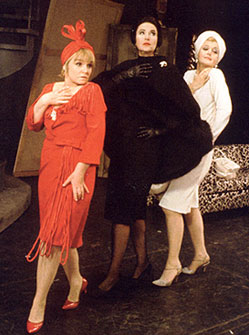
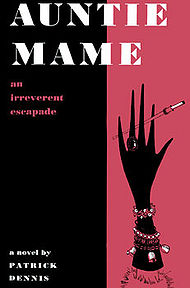
Beatrice-Arthur Enter Bea Arthur. Ms. Arthur had just made a splash in Norman Bea Arthur - Mame  Lear's Maude, and would receive the first of two career Emmy's (the other for Golden Girls) that year for her groundbreaking work as the title character. On television, there just wasn't a bigger star. And if the only role she'd ever played was Vera Charles opposite Angela Lansbury in Mame, she would forever be a star in my firmament, (and opposite Lucille Ball in the film even if Lucille Ball was miserably miscast).

But I digress, again…It was just about this time of the year that I sat down and wrote a letter to Ms. Arthur, outlining my idea. I mailed the letter and didn't think anything more about it. It was a shot in the dark.

Weeks later, May 16th was my birthday, and I was getting ready to go out on the town with friends. Literally, just as we were heading out the front door, the phone rang (cell phones were still a Dick Tracy fantasy…I could still decide whether or not I was going to stop and answer). I picked up, said hello, and heard the unmistakable, gravelly contralto of Bea Arthur,

"Is Bo Young there?"

"Speaking," I said, my heart pounding out of my chest, my wide eyes popping out of their sockets as I pantomimed to my friends at the door, who were wondering what was going on.

"Well hello," she growled on, "I just wanted to let you know that I received your letter and I wanted you to know I'll do whatever you want me to do."

To which I responded, with breathless gratitude, "Oh god bless you Ms. Arthur!"

To which she responded, "What's this 'god bless you' shit?…I didn't sneeze."

The surprise was finding out, later, just how shy a woman this powerhouse actor was. When I met with her she insisted that I write something for her to say when she came before the committee because she was sure she would become tongue-tied and not be effective. Maude. Not effective. Right. She did everything I asked, just as promised, to perfection. Reading my lines to the committee, which immediately came through with the required vote, which then went on to the larger Steering Committee of the Screen Actors Guild, which was the first industry union to oppose the Briggs Initiative. As a result I was brought into the campaign as "assistant state press secretary" to Sally Fisk.

Later, I had cause to call Ms. Arthur again, to see if she would appear at a fundraiser we were holding for No On Six. Unbeknownst to me, she had undergone a face lift just weeks before, and as a result her face was still puffy and black and blue.

She still had bandages on her face, albeit small ones…and she appeared at our fundraiser.

She said it was more important than what she looked like.

That's the kind of person Bea Arthur was.


We Mourn Again: Eve Kosofsky Sedgwick 1950 – 2009

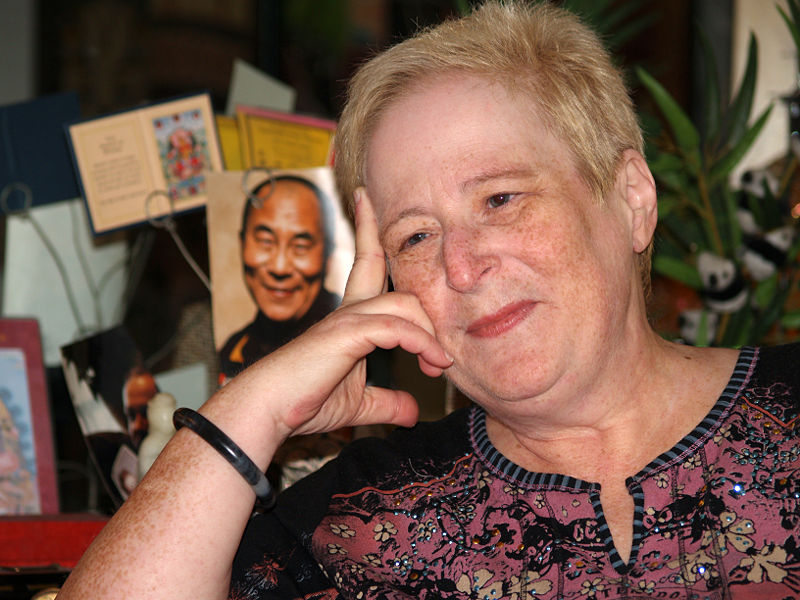
Eve_Kosofsky_Sedgwick Is that a lovely face or what?…

Eve Kosofsky Sedgwick was an American theorist in the fields of gender studies, queer theory (queer studies) and critical theory, which mainly means she was concerned with how many queer angels were dancing on the heads of academic pins. Influenced by Michel Foucault, Judith Butler, feminism, psychoanalysis and deconstruction, her work reflected an abiding interest in a wide range of issues and topics including something called queer "performativity"…whatever the hell that is…and performance; experimental critical writing; the works of Marcel Proust; artists' books; Buddhism and pedagogy. Academic polemic gobble-de-gook aside…she was a friend to the LGBTQ community.

Surprising to some, she was married for 40 years to her husband, Hal Sedgwick, a CUNY professor of visual perception (optometry), but apparently only saw him on weekends. She would also prefer it to be reported in that manner, i.e. she was married to a man, as opposed to assigning her the "straight" or "hetero/homo" categorizations (a too conveniently neat division rejected by Sedgwick.)

Sedgwick wasn’t a household name, unless you count the brouhaha over her 1989 essay Jane Austen and the Masturbating Girl, which featured in many of the ritualistic first-kill-all-the-professors stories from our long culture war.

Sedgwick’s books, including Between Men and Epistemology of the Closet,” were on the shelves of most of the graduate students and comp-lit survivors, Gay and non-Gay, queer and non-queer, back in the 1990s. She virtually invented the field, or at least brought it to new heights. My personal favorite was an essay entitled How To Bring Your Kids Up Gay: The War on Effeminate Boys. If that was all she ever wrote she'd be worthy of laurels, from the aeries of the academe and the mundane streets alike.

Sedgwick’s radical challenge to heteronormative ways of reading and living may seem quaint (if that’s the word) in a time when people are celebrating same-sex weddings in Iowa and the White House Easter egg hunt conspicuously includes Gay and Lesbian families. Perhaps the misty future evoked in Pace University professor of English and women's studies, Karla Jay’s review of “Tendencies” — one where Sedgwick would be photographed shaving fellow queer-studies scholar Terry Castle on the cover of Time magazine, à la Cindy Crawford and K. D. Lang — isn’t quite here.

But alas, Eve Kosofsky Sedgwick, one of the foundational non-Gay allies, won't be around to see that future. She died April 12 of breast cancer. She was 58.

Our sincere condolences to her family and friends. In an age of anti-intellectualism and religious mythopoesis run amok, we need all the rational, intelligent voices we can find.

Yank the Tax Exemption for the NY Archdiocese!

 Marriage Equality Would someone please explain to me… why the new, pinhead, Archbishop of the New York Roman Catholic Archdiocese gets to comment on specific legislation being considered in the NY State legislature? Specifically the bill introduced by the Governor for Marriage Equality.

If I am not mistaken aren't 501(c)(3) nonprofit, tax-exempt organizations specifically forbidden to lobby or act on behalf of specific legislation or candidates? Here's the relevant passage:

"An organization will be regarded as attempting to influence legislation if it contacts, or urges the public to contact, members or employees of a legislative body for the purpose of proposing, supporting, or opposing legislation, or if the organization advocates the adoption or rejection of legislation."

So if Archbishop Dolan…or any other church…follows through on this threat, shouldn't the IRS yank the New York Roman Catholic Archdiocese's tax exemption?

There are too many ways to count the ignorance (and make no mistake about it…they are ignoring reality in favor of dogma) of the Catholic Church and it's pointy-headed old men, but here are four things the Archbishop doesn't know about Marriage Equality:

1. There are few biblical verses that address homosexuality at all, and most of those are not directed at homosexuality per se. Opponents of same-sex marriage routinely cite seven verses in the Christian Bible as condemning homosexuality and calling it a sin. But when taken in context, these lessons speak not against homosexuality itself, but rather against rape, child molestation, bestiality, and other practices that hurt others and compromise a person’s relationship with God.

2. Jesus never said one word against homosexuality. In all of his teachings, Jesus uplifted actions and attitudes of justice, love, humility, mercy, and compassion. He condemned violence, oppression, cold-heartedness, and social injustice. Never once did Jesus refer to what we call homosexuality as a sin.

3. The Bible never mentions or condemns the concept we call same-sex marriage. Although opponents of same-sex marriage claim that lesbian, gay, bisexual, or transgender unions violate biblical principles, no verses in the Bible explicitly address gay marriage or committed same-sex relationships.

4. Those who claim a “biblical definition of marriage” as a model for today ignore various marital arrangements in the Bible that would be illegal or condemned today. The Bible is filled with stories of polygamy and husbands taking concubines. In accordance with the culture and laws of the past, women were often treated like property that could be traded or sold into marriage. Today we understand that these examples of marriage reflect the cultural practices of the time rather than a spiritual model for today.

A Straight Ally on Amazonfail

Richard Nash, founder of the respected indie Soft Skull Press (now an imprint of Counterpoint), had a fascinating entry on his blog about the recent Amazon.com LGBT book-ranking controversy (if you've been in the sauna the last few days you can get up to date here, here and here).  Nash writes as a straight ally and tells the truth about the importance of vigilance when it comes to corporations like Amazon.  It's well worth a read.  A taste:

"In effect: guilty until proven innocent is the standard to which we must hold ourselves. Because that’s how the other half lives, without any choice in the matter."

You can read the rest of it here: A straight white male publisher on glitches and ham-fisted errors

The Rainbow Key Awards

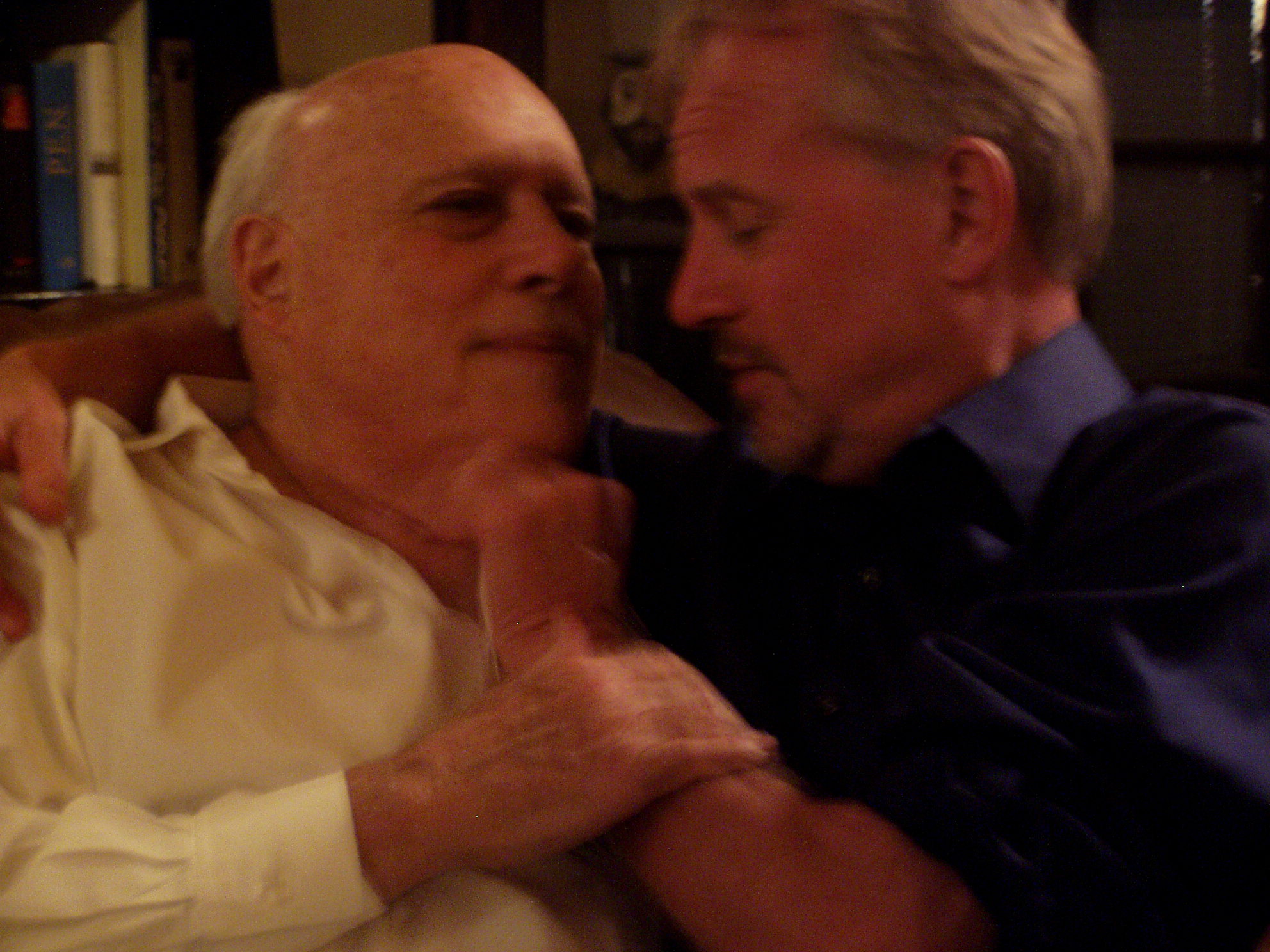
Mark and Malcolm at home 3  

The Rainbow Key Award was created to recognize individuals and organizations whose efforts have significantly benefited the Lesbian and Gay community, and since 1993, has been bestowed upon more than 70 artists, educators, activists, civic leaders, and community organizations. The Award is presented by the City Council on the recommendation of the Lesbian and Gay Advisory Board. Nominations may be made by anyone, and nominees may labor in any area of endeavor; eligibility is not restricted by geography or sexual orientation.

The 2009 Rainbow Key Award for significantly benefiting the Lesbian and Gay community will be presented to White Crane friends and advisors Canon Malcolm Boyd and Mark Thompson by the City of West Hollywood at a civic event on June 17. The Lesbian and Gay Advisory Board of West Hollywood cites the couple for "showing by example that Gay, intergenerational partnerships can be stable, loving and long-lasting." This year marks the couple's twenty-fifth anniversary.

It couldn't happen to two nicer people.

Jack Wrangler is Dead

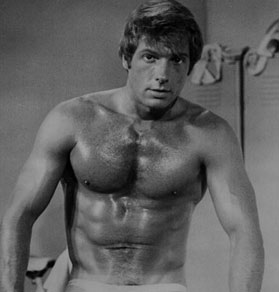
Jackwrangler What to write about Jack Wrangler? In my memory, he was the first Gay porn star to hit the mainstream. How was that possible back in the early 80s? Somehow he reached my consciousness.

First there was the name. Jack Wrangler. Could it have been any more macho? The name was sex itself.  Reading his obituary this morning, I'm struck at how his birth name had a bit of insistence to it. Jack Stillman.

But as is often the case with the image and the filmname, there was more to the story. Wrangler married a woman and had a very happy marriage with her. His wife, now widow, was Margaret Whiting, a music star in the 40s and 50s who was twenty years older than him. Her father Richard Whiting was the songwriter of a long list of songs including "Till We Meet Again", "Ain't We Got Fun?", "Hooray for Hollywood", "Beyond the Blue Horizon", "On the Good Ship Lollipop", "Too Marvelous for Words" (music only; words by Johnny Mercer). When Bo read me the list over the phone, I found myself humming along or singing the lyrics.

But back to Wrangler. What was interesting about his choices in his life after the porn career, was that he continued to describe himself as Gay. What to make of this? I don't know. He clearly made his choices and enjoyed his life. We mark his passing as an image that provided a sense of beauty and sex at the beginning of Gay consciousness for many of us.


WC79 Steve Susoyev Interviews George Birimisa

A White Crane Conversation 

The Caffe Cino

Steve Susoyev Speaks with the Pioneering
Gay Playwright George Birimisa
about his Journey to Love. 

George Birimisa turned 84 in February of this year. A Caffe Cino pioneer, he is recognized as one of the first American playwrights to write plays featuring Gay characters who were full-bodied people, not merely victims or villains. Still writing, and working as a writing teacher, editor and activist, George took time out from work on his memoir, Wildflowers, to talk with Steve Susoyev.

STEVE SUSOYEV: I had the honor of being present in 2006 when you won the Harry Hay award in San Francisco, for your work in Gay theater and as an “inspiration across the generations.” Among your students you’re known as a role model of Gay pride, but I understand your history is a bit more complex than that.

GEORGE BIRIMISA: When I got involved in theater in the late nineteen-forties, I went around trying to act like Marlon Brando as Stanley Kowalski, in a leather jacket, always with a cigarette hanging out of my mouth. I was living a contradiction, out of the closet to only a few people. Some of my plays are full of homophobia. In the early sixties I wrote my first Gay play, Degrees, but it was very mild and didn’t reflect me or my life at all. Inching my way out of the closet. But then, in Georgie Porgie, in 1968, I put it all out there, so the world would know I was Gay.

SUSOYEV: Georgie Porgie was a breakthrough for Gay theater. Tennessee Williams wrote, “Bravo! A beautiful, courageous play. I loved it!”

BIRIMISA: Under the surface I was still ashamed and very guilty. I felt filthy, as if I should be exterminated. I didn’t know about Harry Hay, Phyllis Lyon, Del Martin. I think New York was very homophobic then, or maybe it was just me, looking at the world through the murk of my own self-hatred. And I had plenty of it.

SUSOYEV: You were in New York during the Stonewall riot, weren’t you?

BIRIMISA: I get a lot of mileage out of my image as a radical, a revolutionary. So it’s painful to admit this today, but I looked down on those brave queens at Stonewall. They were sissies and they embarrassed me. I think one of the pernicious things about homophobia is how it isolates us from the people we need most for support, and who most need our support.

I had been arrested and brutalized by cops. But when the queens were brutalized, I just wanted to distance myself from them. That was 1969. I was getting a reputation in the avant-garde Gay theater. But still in that leather jacket with the constant cigarette, still viewing the world through my self-hatred. I don’t know if I’m completely over it yet.

SUSOYEV: You’re describing a very complex process that we try to simplify. “Coming out” seems to have taken place in stages for you.

BIRIMISA: Baby steps.

SUSOYEV: Did you make an effort not to be Gay?

BIRIMISA: Oh, God, in 1951 I got married to a woman named Nancy, thinking that she would make me straight.

SUSOYEV: And how did that turn out?

BIRIMISA: Well, we had three-ways with straight guys, so in some ways our relationship deepened my homophobia — tough straight guys were my drug of choice. I remember many times, walking down the street with Nancy and feeling powerful and straight — at least hoping to fool people into thinking I was not a queer. Once a Gay man walked by and cruised me and Nancy said, “See, he figured out you were Gay.” “He did not,” I said angrily. “Anyway, most Gays are attracted to straight men. They don’t want another fuckin’ fag!”

But there were some hidden blessings. Nancy was the first “intellectual” I had ever known. My father had been a communist whose nickname was “Rough Rider.” When I was six, he gave a speech in the park in downtown Watsonville, California, where I was born. The fire department turned their hoses on him and threw him in jail. He gave his bunk to an old man, slept on the concrete, caught pneumonia and died. I had a love-hate relationship with him. He was nearly illiterate, and like so many things in my life, I was ashamed of him. But I have his fierce spirit inside me and I have been a rebel ever since. My mother ran off with a music teacher and I ended up in an orphanage at age seven. I was deeply ashamed of my poverty, and joined the Navy at 17 so I could have decent clothes to wear.

Nancy got me to read Das Kapital by Karl Marx and Anti-Dühring by Engels. Suddenly I had a language to explain how I felt in the world.

SUSOYEV: So your wife woke you up to politics?

BIRIMISA: Absolutely. She opened my eyes. I began to understand, slowly, that Gay people were oppressed just like blacks in the South and Jews during the Third Reich. And like poor people all over the world. And I wrote that anger at the unjust world into my plays.

SUSOYEV: So the political understanding moved you closer to self-acceptance?

BIRIMISA: Oh, God, it was a long, twisting road. It didn’t take me long to learn that the commies hated Gay people as much as the right-wingers hated us. For almost a year in New York I attended a group that was dedicated to turning guys like me into straight, God-fearing men. So painful to dredge this up today. When I quit the group I was disgusted. I told myself, “You're condemned to being a fucking fag for the rest of your life.”

SUSOYEV: You don’t look like a condemned man today. To anyone looking at you now, it’s obvious that at some moment light began to shine into your life. When was that?

This is an excerpt.   Subscribe today and keep the conversation going!  Consider giving a gift subscription to your friends who could use some wisdom!  This is anIf there's an article listed above that was not excerpted online, copies of this issue are available for purchase.  Contact us at editors@gaywisdom.org

WC79 – Harry Hay on the Need for Sanctuary

HarryThe Heartline
that Connects

Harry Hay on the Need for Sanctuary

When the first Faerie gathering had been held in Arizona in 1979, Harry, John and some of the other organizers had hoped that a group dedicated to the establishment of Faerie sanctuaries would result. Even though that did not happen, the Colorado Faerie gathering in 1981 offered an opportunity to put forth that idea once again. A large workshop on the subject was held in which Harry explained the urgent need for these sanctuaries.

Harry: when we are talking about sanctuaries, we are really talking about planting ourselves in places where within the sanctuary we are inviolable. We’re talking about places where…this we need…this we know we need if we are going to grow. This we know we need if we are going to get rid of the scar tissue which stands between most of us and our feelings. Because these are the damages we have suffered in this life. And if we’re going to find out who we really are. If we’re going to find out how much we can contribute we’re going to have to get rid of that stuff. And we’re going to have to find out who we are…and we’re going to have to relate. And we’re going to have to do that in places that are secure and safe.

Thus the sanctuary in the country. Thus the sanctuary in the city walls. These are what they must be: they must be places to which you can go and feel safe. Where you feel safe, where you are loved, where you are trusted and where you can relax and simply be yourself. This has to happen.

Voice: Like this?

John: Yes…like this.

Harry: It’s important for us to be doing work together. One of the things we learned from the last gathering, last year…We hadn’t been…we personally, hadn’t been home for 24 hours when our telephone was ringing off the hook. People were calling “We have to get back together again!” But the problem was, in getting back together again, all we were doing was remembering what we had brought back with us from Arizona.

Now, you can only remember for so long and then the memory gets dimmer and dimmer and dimmer. And then pretty soon, you’re strangers to each other. You either grow together or you grow away from each other. There is no living on the razor’s edge. So either you undertake projects together, and in so doing you come to know one another even better, and then the intimacy, and the easy relaxation you all had together go on being a part of your experience. And you go on applying them and growing. And this is what must happen. And this is what must happen in Faerie families. You do grow together. You do come to really love each other and trust each other and you move from level to level to level and new dimensions.

The subject-Subject world is a whole brand new world, and there’s no leadership in it yet, and you are going to be its body of experience, if we’re going to have any at all. And so there are wonderful experiences ahead and fine experiments to be tried, but they have to be done in safe places. And we have to feel that we are within groups in which we are totally safe and loved and trusted. We can’t pretend this. If we pretend this, it won’t work. It has to be true. It has to be real.

Voice: This idea is very inspiring, and this gathering for me has been a first experience where I realized the possibility of a truly different way to live, and to share with each other. I would like to hear from Harry, and other people, more about the specifics, which I realize will evolve. But there probably has been more thinking than has been expressed so far, about empowerment of each other, in this community, and accessibility and what modes in subject-Subject community we will be able to establish that will be different than the subject-object ones. I know there have been precedents throughout most of our history, people have lived without owning land and they have lived in a much better way of empowering each other and relating to the Earth. But I would like to hear more of your thoughts about the structure. Because even anarchism is a very important structure. We need structure.

John Burnside: I think there’s something around “structure” that would be interesting to say here. As I see…and dream…the feelings that we recognize in ourselves is a great gift that we have, relating to one another, subject-Subject, in Faerie ways, could become, back home, the means for establishing Faerie families. See whether or not you live together or live separately…but if you have this sense of being, of connected, of connecting with one another, in the sense of the best meaning of the word “family” means here. We have done that in Los Angeles and there are four in our family…because we could not find a larger house in that city. We are connected, you see, by that Faerie feeling which extends to each and every one of us a maximum of freedom of movement, of choice. I have not once felt oppressed by the collective. I’ve felt very free within it. And the Faerie feeling makes the collective possible. I don’t want to use the word “commune” yet…let us say “living together” possible. What it required of me was that I lay aside something that no longer has the meaning or value it once had to me, and that was the wonderful Gay dream of your own place, in the city, your castle, full of beautiful things, [laughter from the circle]…oh I’m not laughing…it’s possible to laugh at it, but that’s a beautiful conception, and many of us must carry that out for ourselves before we can actually think of a collective life. Because collective life may not allow this to the same extent. However there is an element of Faerie individuality, which in our collective is very important and is maintained…each of us has his own room, which is his space, in which is his altar and little things that he has, and the beautiful things and the important things. Things that have magic for him. And in which he can be completely to himself. And we give very deep Faerie respect to these spaces.  And I don’t see why in a collective, such as we’re thinking of in the country, that each one of us could not have his own Faerie space.

Voice: It’s really hard for me to get over that American, you know, whatever I grew up with, of having a private space. And for me that doesn’t necessarily include a kitchen, but it does include a living room a bedroom and a studio. [laughter from the circle.] And it’s real important to have a workspace…a studio. I’m a weaver so I have to have a workspace. But when I do my art, I have to be alone. So that’s why I include a studio.

Harry: The people who will be coming to these sanctuaries, as we see it, are the people who have been through these experiences that you are talking about now. And are willing “to slip the ego”…willing to slip…voluntarily giving up a number of things, in order to move to a new dimension, a new way of seeing. A way that will require a new way of living. If we’re going to explore new ways of being together, if we’re going to explore new ways of relating to each other, if we’re going to discover the new world of subject-Subject, this has to be a commitment and this has to be a way of moving and seeing. And in the process of doing this, we want to be, we want ourselves to be self supporting. And, for instance, in our own sanctuary now, we have what we would call a life of voluntary simplicity. And we have given up quite a number of things which in our lives before have been quite important. But what we are doing now is far more important to us than what those things were, and the commitment was very easy to make. And these are the things we have to do; this is how we’re going to have to move. And the Call that we are sending is not a call for everyone. We send out the call. Those who hear will answer. Those who do not here: the message is not for you. We are simply saying this is a way of moving and a way of seeing. It is a way of reaching out to new dimensions and a way for the Faerie people to be tomorrow and tomorrow and tomorrow. When I am gone that community land trust that I have put all of myself into, is there for you to go on in perpetuity. It isn’t just a way of living together comfortably as Faeries, this is not the point at all! Not at all. I am calling for a new way to move. I am calling, among other things, to say to you: fascism is coming. And we are going to be the pink triangles again. And unless we are prepared…I’m quite serious about this. And I’m simply saying that we have to begin thinking in those terms, and for those of us who are ready to make the move and make the change and make the leap…let’s leap together!

Covelo: I don’t know…I feel like I have a lot to say, but I don’t exactly know what. Because from my experiences I have a lot to teach. But maybe what I want to say is that the process of this circle, the process of living on the land, with love and respect for the land, with voluntary simplicity really solves a lot of problems. Like we had a lot of really macho people. They would walk around in leather with guns and kill deer and stuff like that. And they all left. None of them could handle the process of the circle. The circle was stronger than any of that. And another thing that I want to say is, I understand the need for Faerie sanctuary. I don’t want to question that. That’s what we’re talking about. But I feel a little bit disturbed by the “mean and them”…I’m a human being…more than anything else, I’m a human being. And I have found that some of the people in the leather chaps are really, sincerely my friends more than some of the other people. And I just wanted to bring that up. And I give all of my blessings to this project. I don’t know…I just wanted to say that it was the most vital and creative and exciting experience of my life. And that it works. And I give you all my blessings…and let’s do it!

Harry: One of the things that I don’t think we think about quite so often as we might…and we Gay people certainly should be thinking about it all the time, is that the world that’s coming will be a plural society. The Korean people who are coming here…the Thais in southern California, the Asians who are coming into Florida, have no intention of joining our “melting pot.” They’re going to be Haitians living here. They’re going to be Koreans living here. California is going to be a place of multiple minorities and in a very short time – multiple minorities who will far outnumber the original “natives” who were part of the melting pot, in the 1920s. That particular image of America is going…in fact it is already gone. And we must take our place. We Faeries must take our place as an equal minority among many minorities. And this is what we’re heading for. But we cannot become a minority until we know who we are!

The Korean people and the Haitian people know very well who they are. But we don’t know who we are. Because we have been so busy…as an act of survival…we have been so busy pretending we’re exactly the same as everyone else [laughter from the circle]. And now I am saying to anyone who will hear, that now we must begin to maximize our differences between us and them. And there are multitudes. There are even far more differences between us and them than even we know about. What we must begin to do is …what I mean is…we have not allowed ourselves to see all the differences there are.

If we would meet together in groups…if we begin a Faerie sanctuary by meeting every week, and maximizing the differences between ourselves and them, telling how we have been invaded and intruded upon every day, telling about how our face has been walked on every place we’ve gone, little by little we sensitize ourselves, to finally realizing that we are vandalized far more than we know we are. And, the point is this, that as we maximize these differences between ourselves and them, we will find at the bottom of the Grand Canyon between there, the heart-line that connects us. The one we’ve always known was there, but didn’t know what it was. As we begin to find out who we are, we’ll find out who they are. Now…they don’t know who they are…they’re “it.” [laughter from the circle.] They assume that’s all there is! [laughter] You know better. So that we will be doing everyone an enormous service. I say we are maximizing the enormous differences between us and them as an act of love. A love for ourselves and love for the society in which we belong. Because I am not suggesting in any way that we separate out and forget it entirely. We need them; they need us. We love them and they love us…if they knew who we were! But they don’t.

And this is our job now. We must begin to define ourselves to them as we wish to be defined. And refusing any longer to living up to their definition of us, which is what we’ve been living with all along. We must define ourselves as we wish to be defined. We must begin to show ourselves as we wish to be seen. And we must speak as we wish to be heard. And when we make our contributions back to the parent society, we will do it on our terms. But we cannot do this until we are a confident and self-assured people that speaks a language which communicates to all of us. This we must do.

Voice: Talking about differences, I came from a very un-different family…white, middle class, small town. Everyone was “normal.” And then, I found out I was Gay. Then I found out I was a pagan. And then I found myself in a wheelchair. And now I’m a Faerie. [laughter from the circle.] What’s next?! I’m not sure where I’m headed, but I’m pretty “fringy”…pretty far out. And I don’t think it’s anything like you set yourself apart. You can be called an elitist, I suppose, but I see it as an artistry in my own life, having done all these things. And I think we all have something that we can be proud of because it takes a lot of effort and a lot of shit to go through to get here.

Harry: I don’t want to sound like a kill-joy…and I don’t want to sound negative…and I don’t want to sound prejudiced or “iron-bound” but I’ve had the experience of talking to many people at this gathering who talk about the holocaust as being something in their past. You forget that it was my life. I have lived a long time. I have seen many things happen. And I do know this: that when a time of reaction comes, and I have seen times of reaction. And I have fought anti-Semitism in the streets of Los Angeles. And I have chained myself to lampposts and been beaten down, with my chains broken by the police and my arms broken, too. And I want to say this: that do we at any time join ourselves with the straights, no matter how tolerant they may be, no matter loving they may be now…when the time for reaction comes and all of a sudden it becomes necessary maybe to “haul in” and maybe don’t show yourselves quite so much and maybe don’t be quite so blatant, because we don’t know what they neighbors are going to do, and all of a sudden there’s a reactionary politician in the area and we’ve got to be concerned about our tax credits and so on…We are in trouble. We have to have a Gay sanctuary. With straights next door. Friendly people over the street is fine. But a place that is inviolable and OURS. So that when the shit comes down we have a place to come home to and we don’t have to hide within our own particular households and within our own particular lands, if we don’t choose.

Voice: I get excited every time you talk about that and I also get a little twinge of fear. It seems to me one of the key ingredients of what you’re saying is visibility. Being out there. And if and when the fascists come, our visibility…we make such delightful scapegoats, you know? We’re different. And we’re not macho. What is going to make our sanctuary inviolable?

Harry: Two words: Faerie invention. What I am really saying is this: whether we are macho or whether we are not, when fascism comes we are the scapegoats, make no mistake. The thing that we have to be concerned with is how we react, and how we relate, and we’re going to relate far better if we are all together thinking. We will finds ways and means to survive. Our visibility and our growth and the new dimensions of consciousness which we raise, will carry forth. And maybe the ones in this room will not survive. But Faerie brothers elsewhere will see what we have done. We will not die. You Jewish people know this. We will not die. This is what we’re involved with. This is the commitment I am asking a number of you to make: to carry that dimension forward. To carry that consciousness forward. Not for those in this room, but the ones who may meet here fifteen years from now. These are the ones I am talking about. And I probably won’t be here at that time.

These are the things I’m concerned with.
And so consequently, we will come together and we will find our ways.
And we will invent.
We always have.
And we do it very well.


Subscribe today and keep the conversation going!  Consider giving a gift subscription to your friends who could use some wisdom!  If there's an article listed above that was not excerpted online, copies of this issue are available for purchase.  Contact us at editors@gaywisdom.org

Julian Bond on Gay Rights

This is a little long, but well worth the investment of time:

It does not matter the rationale: religious, cultural, pseudo scientific —
no people of goodwill should oppose marriage equality, but oppose it they do.  As we saw here in California last Fall.  So we all have work to do in terms of education and enlightenment and at the NAACP, we pledge to do our part.

Now two years ago we celebrated the 40th anniversary of a case aptly called  "Loving versus Virginia," which struck down anti-miscegenation laws and many, many years later allowed my wife and me to marry in the state that declares "Virginia is for Lovers."

Then, as now, proponents of marriage as is, wanted to amend the United States constitution.  Introducing a constitutional amendment in 1911 to ban interracial marriage, Rev. Seaborn Roddenberry of my former home state of Georgia, argued:

"Intermarriage between whites and blacks is repulsive and adverse to every sentiment of pure American spirit. It is abhorrent and repugnant. It is subversive to social peace.  It is destructive of moral supremacy."

Sound familiar?

Then, as now, proponents of marriage as is, invoke God's plan.
The trial judge who sentenced the Lovings said that when God created the races he placed them in separate continents.  The fact that he separated the races showed that he did not intend for the races to mix.

Well God made plans for interracial marriage and he, or she, will no doubt do the same for same-sex marriage."   – Julian Bond

Some Community News

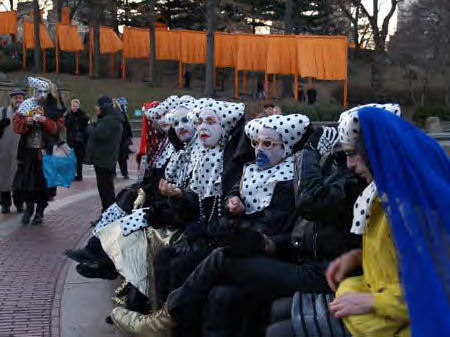
  The Gates and The Sisters The Sisters of Perpetual Indulgence have been a colorful and important part of the LGBT community on both coasts for three decades. Now the divine theater of these highly effective and colorful provocateurs will be officially enshrined in a special exhibit at the San Francisco Public Library.

Entitled "Under a Full Moon: 30 Years of the Sisters of Perpetual Indulgence," the show traces the sacred and profane activities of these men in nun's habits. The display features photographs, internal records like their holy vows and "Pink Saturday Handbook," and artifacts like the habit of founding member Sister Missionary Position (now known as Sister Soami).

The Sisters began in 1979 with three men borrowed habits from retired nuns and ventured out into the Castro District on a moonlit eve. Since then, the group has grown to include 600 sisters in eight countries. They have raised money to fight AIDS with bingo games and other theme events, served as security guards at the Castro District's Halloween fete, combatted hate crimes and promoted safe sex. In 2007, they drew the ire of right-wing talk show hosts when two members in full drag received the Eucharist from Archbishop George Niederauer.

https://youtube.com/watch?v=MrDbgjLKoxU

I love how, in this video, they are identified as "mocking" the Catholic Church (as if!). Watching it, it seems like they are nothing less than quite respectful to this observer. Their avowed mission: to "promote universal joy and expiate stigmatic guilt." Their motto: "go forth and sin some more."

Along the way, they have become an indelible part of San Francisco. The show runs March 20 through May 7 at the James C. Hormel Gay & Lesbian Center, Third Floor, Main Library.

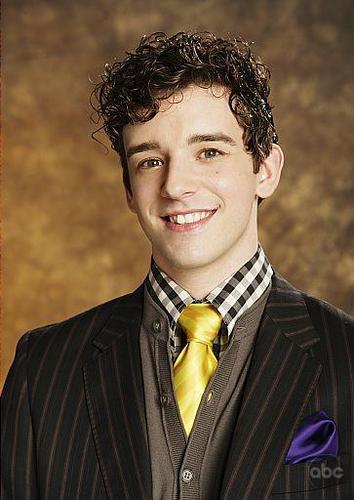
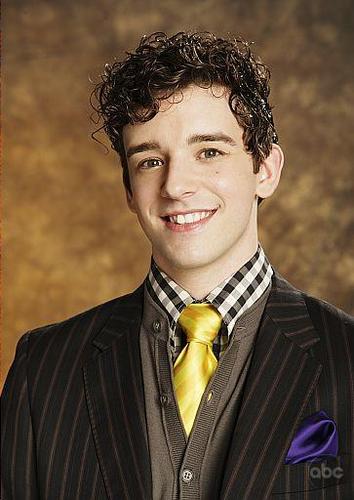
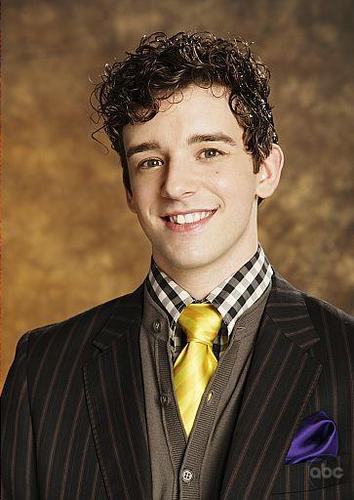
HarryHayApril1996AnzaBorego And on Another Coast altogether, some interesting news involving Ugly Betty actor, Michael Urie, who  Michael%20urie plays "Marc St. James," the catty, ambitious and hilarious assistant to Vanessa Williams delicious "Wilhemina Slater"…word in today's papers that he will star in The Tempermentals, a play by Jon Marans starting April 30 at the Barrow Group Studio Theater. The play is about the origins of the Mattachine Society, started by Harry Hay in 1950 when "tempermental" was a code word for Gay.

The Temperamentals tells the story of two men – the communist Harry Hay and the young Viennese refugee and designer Rudi Gernreich, weaving together the personal and the political to tell a sadly relatively unknown (to some) chapter in Gay history. It explores the deepening love between two complex men, while they build the first Gay rights organization in the United States pre Stonewall.

If I am not mistaken, we actually saw an early version of this play as part of a small theater festival featuring new work a couple of years ago. It was wonderful then. Maybe, like the rest of us, it's only gotten better with age?

That's all the word we have on it. Will report more when we know it!

And now…a little history courtesy of the Sisters: